Start with the numbers
The model, at a glance
Selected trims in the Rs 55–61 lakh band. The top eligible trim is shown first; expand details for other eligible variants. Labelled buzz exceptions are within Rs 2 lakh.
| Vehicle | Selected catalog price | Fuel | Selected variant |
|---|---|---|---|
| 01Jaecoo J5 | Rs 56.99 lakh | Electric | FWD |
Ex-showroom prices exclude registration, road tax and insurance. Specifications can vary by trim. See individual source-check dates ↓
Where The J5 Slots Into Nepal's Growing EV Shelf
Nepal's electric SUV segment has moved fast in the last two years, and the Jaecoo J5 arrives in 2025 as one of the more style-forward entries in it. Brought in by SPG Automobiles Pvt. Ltd., the same distributor handling Omoda and Jaecoo in Nepal, the J5 is priced from Rs 54.99 lakh to Rs 60.99 lakh ex-showroom across three variants. That places it firmly in premium EV territory, above the mainstream compact electric SUVs Nepali buyers have gotten used to and closer to the segment where design and cabin experience are expected to do as much work as the powertrain.
It's a car that leans on presence rather than blending in. Jaecoo has built the J5 around a design language that borrows unapologetically from Land Rover's playbook, and that's very much the point of the exercise for a market where badge-driven SUV styling carries real weight in resale conversations and social standing alike.
The Styling Does The Heavy Lifting, And It Works
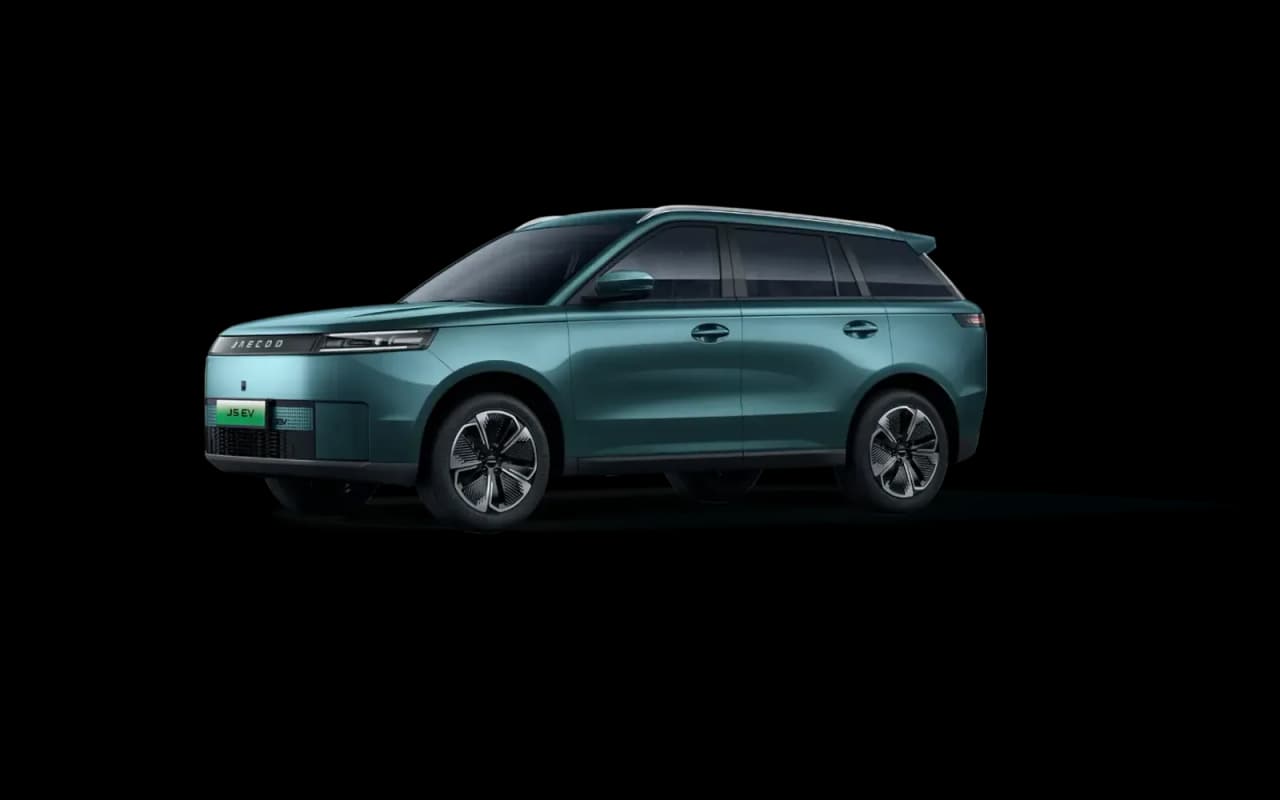
The J5's body panels are flat, clean, and largely free of the swage lines and creases that clutter a lot of compact SUVs. It reads as a solid, block-like shape rather than a sculpted one, and the hood is designed to wrap over the front fenders in a seam that directly echoes the signature Range Rover look. A horizontal character line runs the full length of the car from headlight to taillight, giving it a stately, planted silhouette rather than anything sporty.
The window line is squared off and the A-pillar sits upright, both choices that reinforce the boxy theme instead of chasing the swoopy coupe-SUV look most competitors default to. Up front, a large vertical-slat chrome grille dominates the fascia with prominent JAECOO branding across it, a deliberate signal that this isn't trying to hide its EV status behind a blanked-off panel the way some rivals do. At the back, blacked-out taillights sit under a large roof spoiler with an integrated third brake light, and the car rides on 18-inch alloys with a semi-closed, aerodynamic design that suits the EV underpinnings.

Build quality impressions from the metal itself are solid rather than flashy: panel gaps are tight and consistent, and the overall stance, at 4,380mm long, 1,860mm wide and 1,650mm tall on a 2,620mm wheelbase, gives it proportions that look bigger in photos than the numbers suggest.
Equipment Levels That Punch Above The Price In Places
The cabin is where Jaecoo has clearly spent development money. Comfort and convenience features run deep for the class: a soft-wrapped instrument panel, multi-colour ambient lighting spread across the first and second rows, a heated steering wheel, six-way power driver seat adjustment, driver seat heating, and passenger seat ventilation are all present. Sun visors on both sides get illuminated vanity mirrors, a small touch that buyers notice on long night drives.
Rear passengers get a properly considered set of details too. The second row splits 6/4, gets its own three-headrest setup, an armrest with integrated cup holders, a map pocket, and its own ambient lighting and trunk illumination. None of this is unusual on its own, but having all of it together at this price point tells you Jaecoo built the J5 to feel like a step above its actual segment, not just a car with a premium badge stuck on a budget interior.
A Single 155kW Motor That Prioritises Smooth Delivery Over Speed

Under the skin, the J5 runs a single permanent magnet synchronous motor producing 155kW and 288Nm of torque, driving the front wheels. The 0-100 km/h sprint takes 7.7 seconds, which is respectable for daily use but not a figure that will worry hot hatches or performance EVs. This is a car tuned for confident, linear response in city traffic and highway cruising, not outright pace.
The suspension setup pairs independent rear suspension with a multi-link rear arrangement, and stopping duties are handled by ventilated discs up front and solid discs at the rear. On paper this is a conventional, well-sorted setup rather than anything exotic, and that's arguably the right call for a market where potholes, speed bumps and mixed road surfaces are the daily reality rather than the exception.
Ground Clearance That Nepali Roads Will Actually Use
At 185mm, ground clearance on the J5 is generous for what is fundamentally a road-focused EV, and the approach and departure angles of 20 degrees and 29.8 degrees respectively suggest Jaecoo engineered it with rougher terrain in mind, not just tarmac. This won't make it an off-roader in any serious sense, the single-motor FWD layout rules that out, but it does mean the usual gravel driveways, unpaved approach roads and monsoon-battered stretches common across the Kathmandu Valley and the hills shouldn't trouble it the way lower-riding EVs can struggle.
Front and rear wheel tracks of 1,580mm and 1,590mm give the car a wide, stable footprint, which should translate to composed cornering manners, though we'd flag that as an expectation based on the numbers rather than a claim we're making from behind the wheel.
Battery And Charging Numbers That Matter More Than The Spec Sheet Suggests
The J5's headline number for most buyers will be the 461 km driving range, backed by a 58.9kWh lithium iron phosphate battery pack. LFP chemistry is the right choice for durability and cost in this segment, and the battery's energy density of 165 Wh/kg is a reasonable, unremarkable figure that puts it in line with expectations for the class.
Charging is where the J5 earns real credit. A 130kW DC fast charge capability gets a meaningful top-up in just 28 minutes, which is genuinely useful for anyone doing Kathmandu-Pokhara runs or similar intercity trips where charging infrastructure is improving but still patchy. AC home charging tops out at 6.6kW, adequate for an overnight top-up but not fast if you're relying on it exclusively.
What The Cabin Feels Like To Actually Sit In

Interior ergonomics lean toward comfort over sportiness. The five-seat cabin uses soft-touch materials throughout, and the layout is built around a multi-function steering wheel and a driver-focused dash that doesn't overload the user with buttons. Front row seats get independent headrests, and the general impression is of a cabin designed to feel calm rather than busy, something buyers moving up from smaller hatchbacks and compact SUVs will likely appreciate.
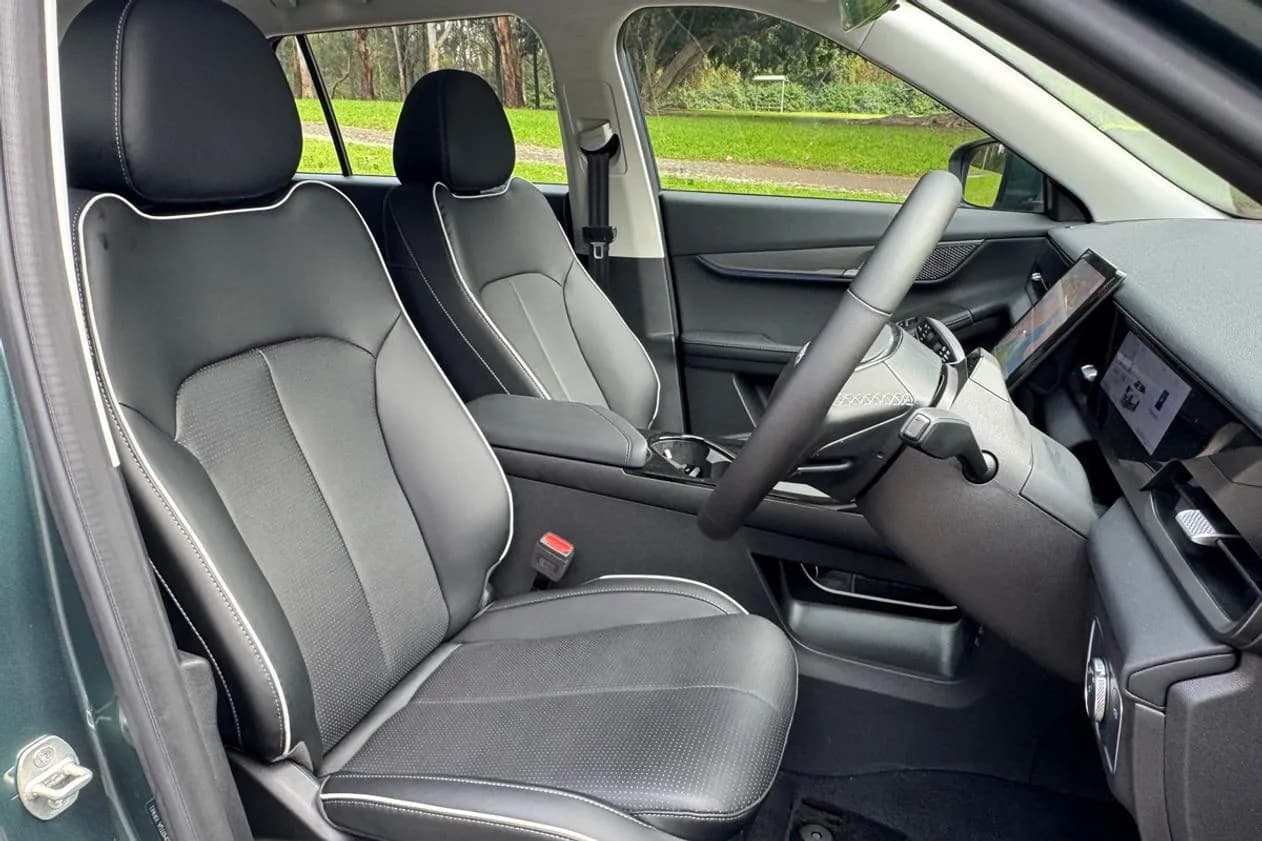
Second-row space is helped by the 2,620mm wheelbase, which should translate to reasonable knee room for a car of this footprint, though exact rear legroom figures aren't part of our verified specification set and we won't guess at them here.
Pricing Across Three Variants, And Where The Value Sits
The J5 range breaks down into three variants:
- Jaecoo J5 Long Range — Rs 54,99,000
- FWD (155 kW) — Rs 56,99,000
- Jaecoo J5 — Rs 60,99,000
The naming here is a little unusual, with "Long Range" sitting at the bottom of the price ladder rather than the top, so buyers should confirm exact spec differences at the showroom rather than assuming a strict hierarchy from the names alone. Based on what we know, the FWD variant at Rs 56,99,000 is the one carrying the confirmed 155kW motor output, and unless the top Rs 60,99,000 variant brings genuinely significant upgrades in comfort or tech, the middle variant looks like the sensible pick for buyers who want the full performance figure without stretching to the top of the range.
At a starting price of Rs 54.99 lakh, the J5 sits well above budget-focused electric SUVs in Nepal, and buyers writing a cheque this size will rightly cross-shop it hard against established alternatives.
The BYD Atto 3 Is The Obvious Cross-Shop On Price And Range
The BYD Atto 3 has built a strong reputation in Nepal as a value-focused electric SUV, and it's the most natural rival for anyone looking at the J5's lower variants. Where the J5 leans on its Range Rover-adjacent styling to justify its price, the Atto 3 competes more on established brand trust in the EV space and a proven service network. Buyers who care more about a known charging and service ecosystem than styling drama will find the Atto 3 the safer bet; buyers who want to stand out in a parking lot will lean toward the J5.
The Hyundai Ibrid Kona Electric Brings Brand Weight The J5 Doesn't Have Yet
The Hyundai Kona Electric carries the advantage of Hyundai's long-established dealer and service presence across Nepal, something a new entrant like Jaecoo simply cannot match yet. The Kona Electric's smaller, more conventional SUV styling won't turn heads the way the J5's boxy design does, but for buyers whose priority is after-sales confidence over showroom drama, that established network is a genuine point in Hyundai's favour. The J5 counters with a longer claimed range and a notably faster DC charge time, both of which matter for anyone doing regular intercity distances.
Our Verdict
The Jaecoo J5 is a confident first EV statement from a brand that clearly understands what Nepali SUV buyers respond to: bold, boxy styling, a loaded cabin, and specs that read well on paper. The 461 km range and 28-minute fast-charge capability are genuinely competitive numbers, and the 185mm ground clearance means it won't feel out of its depth on the roads that actually make up most of Nepal's driving. Where it asks the hardest questions is price. At Rs 54.99 lakh to Rs 60.99 lakh, it's competing against brands with years of service history and charging support already built out here. For buyers drawn to its design and comfortable with backing a newer name in the market, the J5 is a strong, well-equipped choice. For buyers who prioritise a proven network above all else, it's worth a serious test drive against the alternatives before signing anything.
Explore full specifications, variants & ownership context
Know the product
Key specifications, features & ownership context
Choose a variant to see its recorded specifications and features. Equipment and prices can change across trims.
Latest catalog and directory records supplement the original analysis. Figures may have changed since publication; individual specification and price-check dates appear below.
Rs 56.99 lakh ex-showroom · source checked 26 Oct 2026
Battery & charging
| Specification / feature | FWD |
|---|---|
| Battery | 58.9 kWhVerified specification · 19 Aug 2026 |
| Claimed range | 461 km (WLTP)Verified specification · 19 Aug 2026 |
Safety & driver assistance
| Specification / feature | FWD |
|---|---|
| Airbags | 6 airbagsResearched · confirm · 23 Sept 2026 |
Dimensions & weight
| Specification / feature | FWD |
|---|---|
| Ground clearance | 185 mmVerified specification · 19 Aug 2026 |
Claimed range uses the stated test cycle. Different cycles are not a like-for-like range comparison; actual range depends on roads, load, speed and weather.
Showroom & service support
Distributor: SPG Automobiles Pvt. Ltd. (Omoda & Jaecoo Nepal)
86 listed brand showrooms · 36 listed brand service locations
Listed cities include Banepa, Bardibas, Bhairahawa, Bhaktapur, Bharatpur, Biratnagar and 17 more.
Brand-wide directory coverage. Confirm that your nearest workshop supports this exact model, powertrain and warranty work; ask about parts availability and booking time.
Market buzz & buyer priorities
Compiled discussion, including buyer reactions and ownership reports; this is not a verified owner survey or a reliability score. Research dated 14 Oct 2026.
What people like
- smooth drive, instant torque, low maintenance, overall driving comfort
Concerns to investigate
- EV parts and service may be expensive
- resale value of EVs is not great
Use these facts alongside the article’s full analysis. Check the final quotation, warranty terms and exact equipment before booking.
Evidence & next steps
Check the details before you buy
Use this guide to build a shortlist. Ask for a written quotation for your chosen variant, including registration, taxes, insurance, finance charges and any charger installation. Confirm the nearest authorised workshop supports that model.
Price sources and dates
These are the recorded distributor-source checks for the selected overview trims. They are separate from the article update and catalog read dates; they do not mean every trim was rechecked today. Confirm the final price with the distributor.
Overview photos come from the corresponding model records; additional article photos carry their own credits. Running costs depend on usage, energy prices, maintenance, insurance and resale value.