Start with the numbers
Compare at a glance
Top available variants, with prices in Nepalese rupees. Expand details to choose another variant.
| At a glance | Deepal Nevo Q05 | Jaecoo J5 |
|---|---|---|
| Ex-showroom price | Rs 51.99 lakh | Rs 56.99 lakh |
| Fuel | Electric | Electric |
| Selected variant | Ultra | FWD |
Ex-showroom prices exclude registration, road tax and insurance. Specifications can vary by trim. See individual source-check dates ↓
Where Each Sits in the Nepali Market
On price and positioning, these two do not actually sit on top of each other, even though many buyers will cross‑shop them.
- Deepal Nevo Q05 (via MAW Vriddhi AutoCorp) is a compact electric SUV with four variants priced roughly between Rs 46.99 lakh and Rs 51.99 lakh. It is built in Thailand and imported as a premium yet attainable EV, aiming at buyers stepping up from smaller crossovers and mainstream compact SUVs.
- Jaecoo J5 (via SPG Automobiles) is a larger, more powerful EV SUV with three variants in the Rs 54.99 lakh to Rs 60.99 lakh band, positioned as a premium mid‑size EV below the Rs 65 lakh mark.
The Nevo Q05 clearly plays the value and tech card in the compact EV space, often being compared to similarly priced EVs that prioritise range and features over sheer size. The Jaecoo J5, by contrast, is marketed as a feature‑loaded, big‑battery, big‑power SUV for buyers willing to spend more for comfort, performance and road presence.
Network presence is a major differentiator in the Nepali context:
- Deepal/Changan: 35 showrooms and 2 service centres listed, a relatively lean network for a new EV brand.
- Jaecoo/Omoda: 81 showrooms and 25 service centres, which is a far broader footprint for sales and after‑sales.
For buyers outside the main urban centres, that network disparity can be as important as the spec sheet.
Looks, Road Presence and Design
Without diving into styling tastes, the two cars project notably different personas.
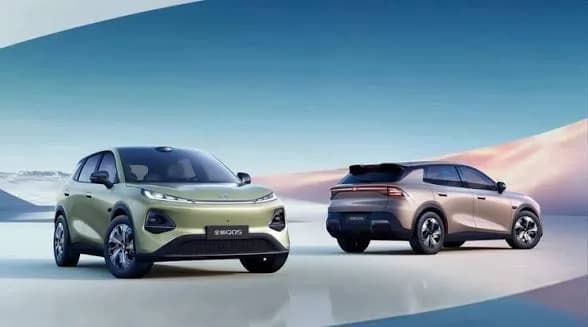
- The Nevo Q05 is a compact SUV with a length of 4,435 mm, width of 1,855 mm and height of 1,600 mm. Its proportions are closer to the new wave of urban EV crossovers, leaning on a clean, tech‑centric design with details like the Aurora Pink colour option giving it a more youthful, lifestyle flavour.
- The Jaecoo J5 FWD variant measures 4,380 mm long, 1,860 mm wide and 1,650 mm tall, sitting slightly shorter but a bit taller, with a more upright SUV stance. With 185 mm ground clearance, roof rails, spoiler, LED headlamps, automatic lighting functions and a visibly "rugged‑premium" exterior package, it comes across as the more traditional SUV.
In showrooms, the Nevo Q05 tends to feel sleeker and more minimalist, leaning on flush surfaces and a strong EV identity. The Jaecoo looks more substantial and outdoors‑ready, with its roof rack, spoiler, LED daytime running lights, rain‑sensor wipers and electric tailgate contributing to a richer visual impression.
Buyers who want their EV to look clearly modern and different from ICE SUVs may gravitate to the Nevo. Those who still want a conventional SUV silhouette with EV underpinnings will likely prefer the Jaecoo’s more robust styling.
Features and Equipment: Tech vs Comfort
Both cars take the tech game seriously, but they lean in different directions.
Deepal Nevo Q05
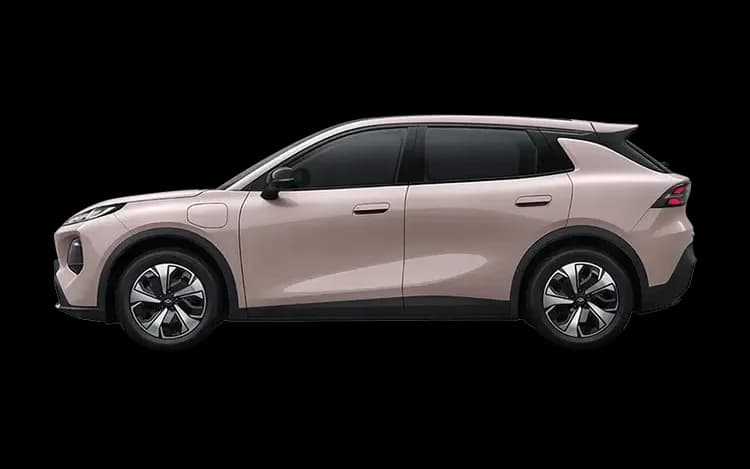
Across MaxNADA, Max, UltraNADA and Ultra variants, the Nevo Q05 focuses heavily on in‑car tech and ADAS:
- Infotainment and connectivity
- 14.6‑inch central touchscreen
- 10.17‑inch digital instrument cluster
- Apple CarPlay and Android Auto
- Connected features and smartphone connectivity
- Surround‑view camera technology
- Convenience
- 50W wireless charger on all listed variants
- 540° camera system (giving an extended view around and even under the car)
- Safety and ADAS
- 18 ADAS functions across the range
- 540° camera system assisting in parking and low‑speed manoeuvres
The Nevo Q05’s cabin is clearly designed around the large central display and digital cluster. For buyers who value a modern EV cockpit, strong camera coverage and ADAS, this is its core appeal.
Jaecoo J5
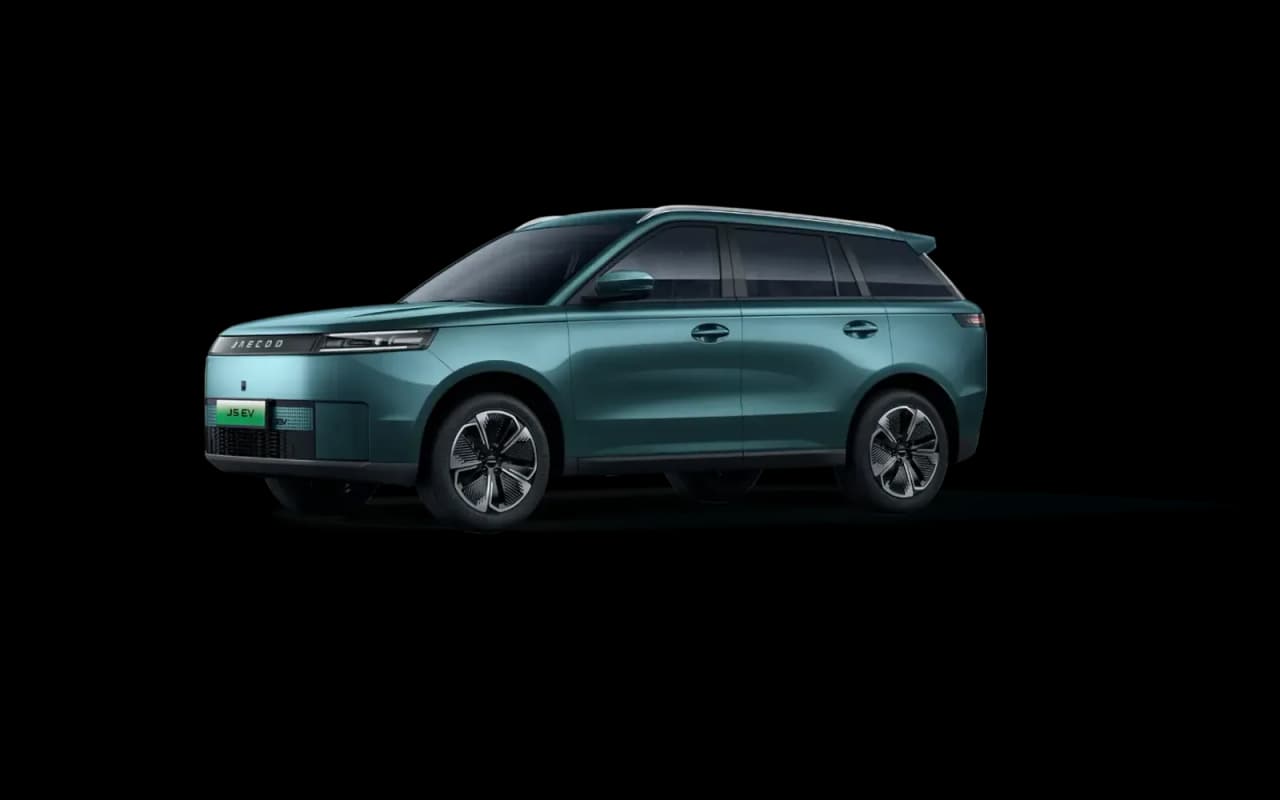
The Jaecoo J5 FWD variant, while also strong on tech, pushes hard on comfort, ambience and small usability touches:
- Infotainment and tech
- 15.6‑inch central control LCD
- 9.2‑inch instrument cluster
- Apple CarPlay and Android Auto
- Offline intelligent voice control
- 8‑speaker audio
- Multiple USB and Type‑C charging points front and rear
- Comfort and interior richness
- Soft‑wrapped instrument panel, leather door panels, imitation leather steering wheel and faux leather seats
- Multi‑colour ambient lighting in first and second rows; second row reading lights
- Panoramic glass roof with electric sunshade and silent glass
- Two‑zone air conditioning with PM2.5 filter and separate second‑row outlet
- Extensive seat comfort: driver seat 6‑way power adjustment with heating, passenger seat ventilation, independent headrests, 6/4 split‑fold rear seats with three headrests and armrest with cupholders
- Numerous convenience touches: sun visors with illuminated vanity mirrors and bill fold, glove box with damping, coat rack, trunk net, sunglass holder, power trunk door, one‑touch opening/closing for all windows
On the safety and ADAS side, the J5 lists a long catalogue: lane departure warning, lane keeping assist, blind‑spot monitoring, adaptive cruise control, rear cross traffic alert and emergency braking, traffic jam assist, multiple collision‑avoidance and braking support systems, plus standard electronic braking aids.
In practical showroom terms, the J5 feels more luxurious and feature‑rich day‑to‑day: nicer materials, more seat adjustments, better climate control, panoramic glass roof and a long list of convenience details. The Nevo Q05 feels tech‑forward and minimalist, but less indulgent on creature comforts.
Motor, Battery and Performance
This is where the Jaecoo J5 pulls clear performance‑wise, while the Nevo Q05 fights back on efficiency and price.
Deepal Nevo Q05
All four Nevo Q05 variants share the same motor and drivetrain hardware:
- Motor: Permanent magnet synchronous motor
- Power: 120 kW (163 PS)
- Drivetrain: Front‑wheel drive (FWD)
- 0–100 km/h: 8.2 seconds
- Top speed: 160 km/h
Battery and range (for Max and Ultra, which specify figures):
- Battery type: Lithium iron phosphate (LFP)
- Battery capacity: 51.9 kWh
- Electric driving range (NEDC): 462 km
- Battery warranty: 8‑year manufacturer’s warranty on MaxNADA and UltraNADA
- Vehicle warranty: 5 years / 150,000 km whole‑vehicle coverage on Max and Ultra
In real Nepali usage, that 120 kW output and 8.2‑second 0–100 km/h figure make the Nevo Q05 brisk rather than genuinely quick. Its LFP pack is sized sensibly for daily commutes and inter‑city runs, with its claimed 462 km NEDC range giving it a strong headline in its price band.
Jaecoo J5
The Jaecoo J5 FWD variant is clearly tuned for stronger performance:
- Motor: Permanent magnet synchronous motor
- Power: 155 kW
- Torque: 288 Nm
- Drivetrain: FWD, single motor
- 0–100 km/h: around 7.7 seconds (with some materials suggesting ~7.3–7.7 s)
Battery and charging:
- Battery type: LFP
- Battery energy: 58.9 kWh
- Energy density: 165 Wh/kg
- Driving range: 461 km (claimed)
- DC fast charging: up to 130 kW, with a 28‑minute fast‑charge time quote
- AC charging: 6.6 kW on ordinary charging
The J5 combines a slightly larger battery with noticeably higher peak motor output. In day‑to‑day driving, that translates into stronger acceleration, particularly at highway speeds and on uphill sections. Its DC fast‑charging capability also looks more aggressive on paper, which matters for users planning regular long‑distance runs once fast‑charger infrastructure fills out.
Against that, the Nevo Q05 offers near‑par claimed range from a smaller battery and lower power output, so buyers focused on efficiency, adequate performance and lower purchase cost will find it compelling.
Ride, Handling and Comfort
Direct instrumented back‑to‑back ride and handling tests are outside our remit, but we can draw meaningful inferences from hardware and positioning.
Nevo Q05
The Nevo Q05’s wheelbase is 2,735 mm, which is long for its size, and contributes to stability and cabin space. Ground clearance figures are not listed in the dataset, but the car’s overall height (1,600 mm) and compact‑SUV stance suggest a focus on urban comfort rather than aggressive off‑road credentials.
With only FWD and a relatively modest power output, the Nevo Q05 will likely feel secure and predictable rather than sporty. The emphasis appears to be on quietness, smooth acceleration and ease of driving in city traffic, aided by its strong camera and ADAS suite.
Jaecoo J5
The J5 FWD variant presents a more overtly SUV‑oriented chassis setup:
- Wheelbase: 2,620 mm
- Ground clearance: 185 mm
- Suspension: Independent front and multi‑link rear suspension
- Approach angle: 20°
- Departure angle: 29.8°
The higher ground clearance, multi‑link rear suspension and stated approach/departure angles make the J5 better suited to rough, broken Nepali roads, mild trails and steep driveways. It remains FWD rather than AWD, so this is not a hardcore off‑roader, but it clearly has more tolerance for bad surfaces than the Nevo.
Inside, the J5’s richer seat and climate package is likely to translate to more comfortable long‑distance cruising, especially for families: ventilated front passenger seat, heated driver seat, two‑zone AC with PM2.5 filtration, better rear‑seat amenities and more attention to NVH through silent glass.
In short, the Nevo feels more like a refined urban EV, while the J5 feels like a comfort‑oriented mid‑size SUV built to handle mixed road conditions.
Practicality, Space and Running Costs
Cabin and Boot Space
On paper, boot capacity is slightly in favour of the Jaecoo, though the Nevo’s numbers are also strong.
- Nevo Q05 Max/Ultra
- Boot space: 450 L
- Underfloor trunk storage: 90 L
- Maximum trunk space: 1,380 L with rear seats folded
- Jaecoo J5 FWD
- Boot space: 480 L
The J5 offers a marginally larger standard boot, backed by a full complement of practical touches like trunk net, storage box for the spare tyre, power trunk door and multiple cargo‑friendly features. The Nevo counters with impressive underfloor storage and a very good seats‑folded figure, which matters for those who occasionally carry bulky loads.
Passenger space is respectable in both, but the Nevo’s longer wheelbase (2,735 mm vs 2,620 mm) suggests better legroom and interior length efficiency, whereas the J5 uses its height and SUV stance to add headroom and give a more commanding seating position.
Running Costs and Ownership
Running costs for both should be relatively similar in pure energy terms: LFP chemistry, roughly mid‑50s to high‑50s kWh battery sizes and comparable claimed ranges.
Where they diverge is service and support:
- The Nevo Q05 offers 8‑year battery warranty on certain variants and 5 years / 150,000 km vehicle warranty on Max and Ultra, giving strong peace of mind on the core EV components.
- The Jaecoo J5 relies more on its wider distributor network (81 showrooms, 25 service centres). For owners outside Kathmandu and a few big cities, that reach is a major practical advantage, especially in early years when EV troubleshooting still depends heavily on authorised workshops.
Resale and long‑term reliability are still open questions for both brands, as they are relatively new in Nepal. That said, the broader Jaecoo/Omoda presence and their aggressive push at major expos may help build familiarity faster.
Price, Variants and Value Side by Side
Here is how the key variants line up:
| Model / Variant | Ex‑showroom price (approx) | Battery (kWh) | Claimed range (km) | Power (kW) | Boot (L) | Ground clearance |
|---|---|---|---|---|---|---|
| Nevo Q05 MaxNADA | Rs 46.99 lakh | 51.9* | 462* | 120 | — | — |
| Nevo Q05 Max | Rs 48.99 lakh | 51.9 | 462 (NEDC) | 120 | 450 | — |
| Nevo Q05 UltraNADA | Rs 49.99 lakh | 51.9* | 462* | 120 | — | — |
| Nevo Q05 Ultra | Rs 51.99 lakh | 51.9 | 462 (NEDC) | 120 | 450 | — |
| Jaecoo J5 Long Range | Rs 54.99 lakh | 58.9 | 461 | 155 | — | 185 mm |
| Jaecoo J5 FWD | Rs 56.99 lakh (intro) | 58.9 | 461 | 155 | 480 | 185 mm |
| Jaecoo J5 (top) | Rs 60.99 lakh | 58.9* | 461* | 155* | — | 185 mm |
\*Battery and range assumed the same across each family where not separately specified, but not formally disclosed for every variant.
Discounts and offers also shape the value story:
- Nevo Q05: At launch, the Max trim carried an introductory NADA Auto Show price of Rs 46.99 lakh, later moving to Rs 48.99 lakh. The Ultra saw a similar structure with a post‑show price of Rs 51.99 lakh.
- Jaecoo J5: The FWD variant was officially launched at Rs 60.99 lakh, with an intro booking offer of Rs 56.99 lakh—effectively about Rs 4 lakh off for early adopters.
Taken at face value, the Nevo Q05 gives buyers a full EV SUV package, strong ADAS and tech and good range starting below Rs 50 lakh. The Jaecoo asks for a higher outlay but returns extra power, richer comfort equipment, more ground clearance and a wider network.
Which Wins for Which Kind of Nepali Buyer?
Pick the Deepal Nevo Q05 if:
- You want a modern EV SUV with genuinely strong range and competent performance at the lowest possible entry price in this comparison.
- You prioritise tech, ADAS and camera coverage over leather, panoramic roofs and luxury trimming.
- Your usage is predominantly urban and highway on reasonably surfaced roads, so ground clearance and off‑road angles matter less.
- You value a long battery and vehicle warranty and are comfortable with a smaller, more concentrated service network.
Within the range, the Max variant stands out as the sweet spot: you get the full battery, motor and ADAS package, 450 L boot and core tech, at a price that undercuts the Jaecoo J5 by several lakhs.
Pick the Jaecoo J5 if:
- You want stronger performance, with noticeably faster acceleration and more effortless highway cruising.
- You care about comfort and ambience: panoramic glass roof, richer seat functions, two‑zone AC, extensive ambient lighting and more premium cabin materials.
- You often drive on rough or variable roads, where the extra 185 mm ground clearance, multi‑link rear suspension and more SUV‑like stance pay off.
- You value a wider sales and service footprint, whether for convenience or peace of mind as EV ownership spreads beyond Kathmandu.
The FWD variant at its offer price around Rs 56.99 lakh is particularly compelling: you get the full powertrain, battery and feature set, plus the big 480 L boot, at a meaningful discount to the official Rs 60.99 lakh tag.
Verdict: How We’d Frame the Choice
For Nepali buyers cross‑shopping these two, the decision is less about right or wrong and more about which axis matters most.
- The Deepal Nevo Q05 is the better value EV here. It delivers competitive range, solid performance, a very modern cabin and robust ADAS at a noticeably lower price, especially in the Max variant. For urban families and first‑time EV buyers looking to keep the budget below Rs 50–52 lakh while still wanting space and tech, the Nevo Q05 is the more rational choice.
- The Jaecoo J5 is the more complete SUV. It offers more power, richer comfort and convenience features, higher ground clearance and a much broader network. For buyers treating this as their primary family SUV, planning mixed road use and willing to spend into the high‑50s or 60 lakh bracket, the J5 feels worth the stretch.
Put simply: if you’re stepping into EVs and watching the budget, Nevo Q05 Max is the smarter buy; if you want a genuinely plush, powerful mid‑size SUV that just happens to be electric, the Jaecoo J5 FWD at its offer price is the more satisfying long‑term companion.
Explore full specifications, variants & ownership context
Compare the exact variants
Specifications, features & ownership context
Choose a variant for each vehicle. The facts below follow that exact trim; the article explains the trade-offs.
Latest catalog and directory records supplement the original analysis. Figures may have changed since publication; individual specification and price-check dates appear below.
Deepal Nevo Q05
Rs 51.99 lakh ex-showroom · source checked 21 Oct 2026
Jaecoo J5
Rs 56.99 lakh ex-showroom · source checked 21 Oct 2026
Battery & charging
| Specification / feature | Deepal Nevo Q05 | Jaecoo J5 |
|---|---|---|
| Battery | 51.9 kWhResearched · confirm · 19 Sept 2026 | 58.9 kWhVerified specification · 19 Aug 2026 |
| Claimed range | 462 km (NEDC)Researched · confirm · 29 Sept 2026 | 461 km (WLTP)Verified specification · 19 Aug 2026 |
Safety & driver assistance
| Specification / feature | Deepal Nevo Q05 | Jaecoo J5 |
|---|---|---|
| Airbags | 6 airbagsResearched · confirm · 19 Sept 2026 | 6 airbagsResearched · confirm · 23 Sept 2026 |
Dimensions & weight
| Specification / feature | Deepal Nevo Q05 | Jaecoo J5 |
|---|---|---|
| Boot space | 471 LResearched · confirm · 19 Sept 2026 | 480 LVerified specification · 19 Aug 2026 |
Claimed range uses the stated test cycle. Different cycles are not a like-for-like range comparison; actual range depends on roads, load, speed and weather.
Deepal Nevo Q05
Showroom & service support
Distributor: MAW Vriddhi AutoCorp (Changan / Deepal Nepal)
44 listed brand showrooms · 9 listed brand service locations
Listed cities include Bhaktapur, Bharatpur, Birtamode, Butwal, Itahari, Kathmandu and 2 more.
Brand-wide directory coverage. Confirm that your nearest workshop supports this exact model, powertrain and warranty work; ask about parts availability and booking time.
Market buzz & buyer priorities
Compiled discussion, including buyer reactions and ownership reports; this is not a verified owner survey or a reliability score. Research dated 13 Oct 2026.
What people like
- Real world range of 340km is appreciated
- Battery size of 51kwh is seen positively
- Potential range close to 400km is noted
More feedback
- High-quality, premium interior finish and cabin space
- Competitive pricing for the feature set provided
- Generous boot space and practical storage solutions
Concerns to investigate
- Indicated mileage on screen is not actual
- Real mileage affected by load and conditions
- Vague and light steering feel at highway speeds
More feedback
- Lack of a physical spare wheel (tyre repair kit provided)
What buyers ask for
- Real-world range and charging infrastructure access
- Ground clearance for varied road conditions
Nepal ownership context
- Backed by a 5-year or 150,000 km whole-vehicle warranty in Nepal.
- Ground clearance of 185 mm is generally considered adequate for city driving.
- Service network is currently concentrated in Kathmandu, with expansion needed for wider regional support.
More feedback
- Directly competes with the BYD Atto 2 in the local market.
- Nepali buyers are comparing the Q05 mainly on price, claimed range, ground clearance, equipment and the strength of MAW Vriddhi's service and parts support.
- The model is still new in Nepal, so resale value and real-world ownership costs are not yet established through a large local owner base.
Jaecoo J5
Showroom & service support
Distributor: SPG Automobiles Pvt. Ltd. (Omoda & Jaecoo Nepal)
86 listed brand showrooms · 36 listed brand service locations
Listed cities include Banepa, Bardibas, Bhairahawa, Bhaktapur, Bharatpur, Biratnagar and 17 more.
Brand-wide directory coverage. Confirm that your nearest workshop supports this exact model, powertrain and warranty work; ask about parts availability and booking time.
Market buzz & buyer priorities
Compiled discussion, including buyer reactions and ownership reports; this is not a verified owner survey or a reliability score. Research dated 14 Oct 2026.
What people like
- smooth drive, instant torque, low maintenance, overall driving comfort
Concerns to investigate
- EV parts and service may be expensive
- resale value of EVs is not great
Use these facts alongside the article’s full analysis. Check the final quotation, warranty terms and exact equipment before booking.
Evidence & next steps
Check the details before you buy
Use this guide to build a shortlist. Ask for a written quotation for your chosen variant, including registration, taxes, insurance, finance charges and any charger installation. Confirm the nearest authorised workshop supports that model.
Price sources and dates
These are the recorded distributor-source checks for the selected overview trims. They are separate from the article update and catalog read dates; they do not mean every trim was rechecked today. Confirm the final price with the distributor.
Overview photos come from the corresponding model records; additional article photos carry their own credits. Running costs depend on usage, energy prices, maintenance, insurance and resale value.