Where the Hyundai Palisade sits in the Nepali market
The Hyundai Palisade is positioned as Hyundai’s flagship SUV in Nepal, distributed by Laxmi Intercontinental Pvt. Ltd., with an ex‑showroom price of around Rs 2.36 crore for the GLS 4WD AT variant.
That immediately places it in the rarefied band of full‑size, three‑row family SUVs that sit above mainstream mid‑size options. In practical showroom terms, this is a car for:
- Families that have outgrown Tucson/Santa Fe‑type SUVs and want something genuinely full‑size
- Buyers cross‑shopping high‑spec versions of ladder‑frame SUVs from Japanese brands
- Executives who want a chauffeur‑driven alternative to traditional luxury sedans
With 38 showrooms and 42 service centres across Nepal, Hyundai’s network gives the Palisade an important advantage: it is a very expensive vehicle, but it is not trapped in a tiny support footprint. For buyers outside the Valley, that matters more than badge prestige.
Looks, design and build
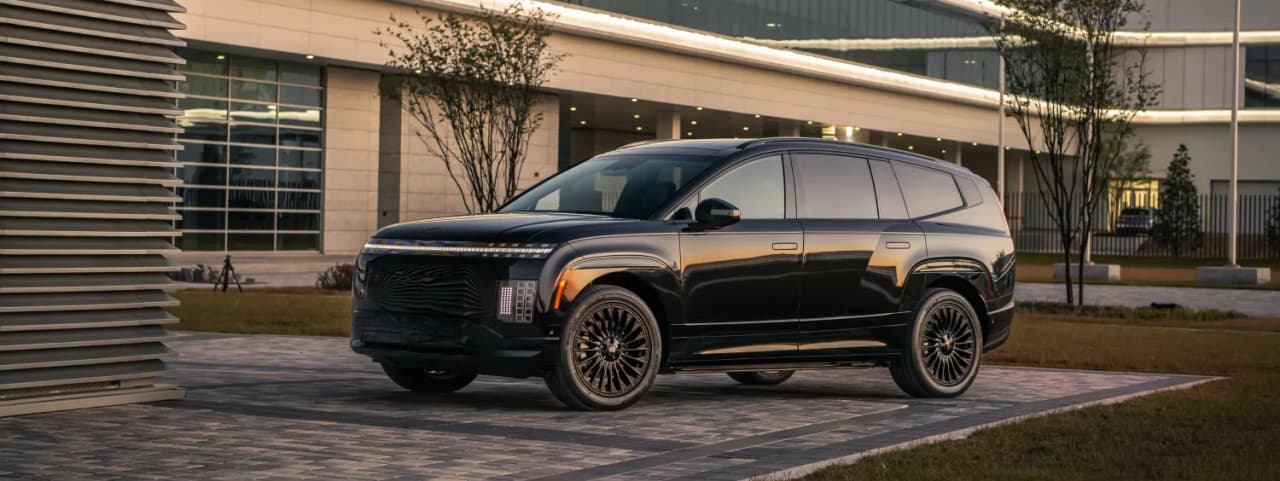
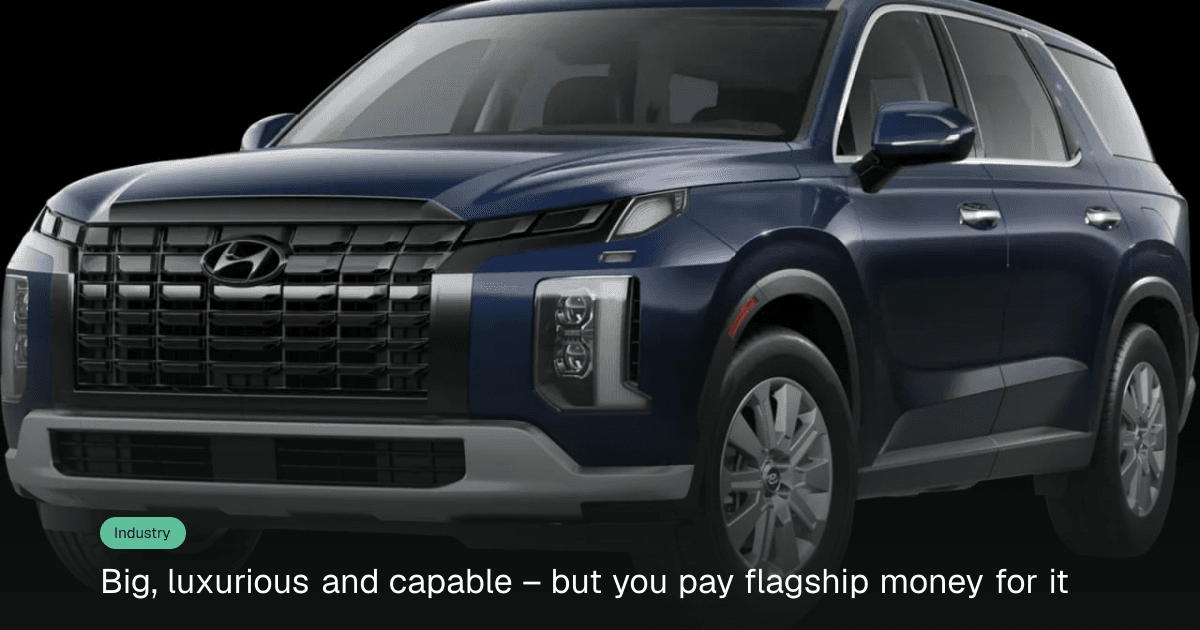
The Palisade’s design leans heavily into the “modern premium” brief. In GLS 4WD AT form, it has the upright, imposing stance buyers expect from a flagship SUV, but layered with contemporary detailing rather than old‑school ruggedness.
Key exterior highlights include:
- LED headlamps as standard on the GLS 4WD AT
- A smart power tailgate, which is particularly useful in tight urban parking and for family use
- Substantial body proportions: 4,980 mm length and 1,975 mm width, set on a long 2,900 mm wheelbase
The footprint is almost MPV‑like, and that pays off inside. The numbers tell the story:
- Head room (1st/2nd/3rd row): 1,035 (997) / 1,019 (985) / 944 mm
- Leg room (1st/2nd/3rd row): 1,120 / 1,077 / 798 mm
- Shoulder room (1st/2nd/3rd row): 1,555 / 1,545 / 1,402 mm
Those are generous figures by Nepali standards. In showroom inspection, the cabin comes across as genuinely roomy in the first two rows, with a third row that is usable rather than token. The overall build impression is of a vehicle designed for families who use all three rows regularly.
Features and equipment
Hyundai has clearly loaded the Palisade GLS 4WD AT with comfort and convenience kit to justify its flagship status and pricing. Stand‑out items include:
- 10.25‑inch LCD touchscreen infotainment system
- Wireless smartphone charging
- Three‑zone full automatic air conditioning
- Ventilated driver seat
The three‑zone climate control is particularly significant for Nepal: independent control across the cabin makes long journeys more comfortable for rear passengers, and the system is better equipped to deal with both summer heat and winter chill in the hills.
On the driving side, the Palisade offers:
- Drive modes: Comfort / Eco / Sport / Smart
- Multi Terrain Control: Snow / Mud / Sand
This combination lets the driver tailor throttle response and drivetrain behaviour for city commuting, highway cruising or rougher surfaces. In day‑to‑day use, most owners will live in Comfort and Eco; Sport and Smart will appeal to those who are more sensitive to throttle mapping and gearbox logic.
Engine, drivetrain and performance
For Nepal, the Palisade GLS 4WD AT is offered with a familiar, proven diesel powertrain:
- Engine: 2.2 TCI diesel, inline 4‑cylinder
- Displacement: 2,199 cc
- Maximum power: 193 PS @ 3,800 rpm (EU2/EU3); 200 PS @ 3,800 rpm
- Maximum torque: 45.0 kg‑m @ 1,750–2,750 rpm
- Transmission: 8‑speed shift‑by‑wire automatic
- Drive system: HTRAC all‑wheel drive
The headline here is torque. Roughly 441 Nm (45.0 kg‑m) arriving from 1,750 rpm gives the Palisade the low‑end shove that a heavy, three‑row SUV needs in hilly terrain and with a full load. The power figure, at around 200 PS, is adequate rather than dramatic, but in this class torque delivery matters more than outright horsepower.
The 8‑speed shift‑by‑wire automatic brings smoothness and efficiency. In practice, this type of gearbox tends to favour relaxed, early upshifts in Comfort/Eco and hold gears longer in Sport. For Nepali buyers moving up from older 5‑ or 6‑speed automatics, the Palisade’s transmission should feel more modern and decisive, particularly on the highway.
Hyundai’s HTRAC all‑wheel drive system adds confidence in wet and broken conditions. Coupled with the Multi Terrain Control (Snow/Mud/Sand), it gives the Palisade genuine capability beyond tarmac, even though this is not a hardcore off‑roader.
Ride, handling and comfort
Underneath, the Palisade uses a suspension layout aimed squarely at ride comfort:
- Front suspension: McPherson strut
- Rear suspension: Multi‑link
- Brakes: Ventilated disc (front) / Disc (rear)
- Tyres: 245/60 R18 or 245/50 R20
The multi‑link rear is a clear step up from simpler torsion beam or leaf setups found in more utilitarian SUVs. In this segment, it is chosen to improve composure over uneven surfaces while keeping the third row comfortable.
Tyre choices tell their own story. The 245/60 R18 setup, with a taller sidewall, will generally be the more forgiving option on broken rural roads. The 245/50 R20 is visually striking but sacrifices some sidewall cushion; buyers who prioritise ultimate comfort over stance may prefer the smaller wheels.
The cabin remit is clear: make long family journeys in all three rows as painless as possible. The spacious head, leg and shoulder room measurements are backed up by ventilated seating for the driver and strong climate control for all occupants. For chauffeur‑driven owners, the second row is where the Palisade shines, with generous legroom and width.
Practicality and running costs
On practicality, the Palisade scores strongly:
- Three full rows of seating with usable third‑row space
- A long wheelbase that helps cabin packaging and ride comfort
- Smart power tailgate that simplifies loading
For families, the ability to combine adult‑friendly second row seating with a third row that does not feel like an afterthought is a genuine selling point. The shoulder room figures in particular show that three across in the second row is viable.
Running costs are a more nuanced picture. The 2.2‑litre diesel is inherently more efficient than a large petrol V6 and offers strong torque, which suits Nepali driving patterns. However:
- The Palisade is a large, heavy SUV, so absolute fuel consumption will still be higher than mid‑size crossovers.
- Tyres in 18‑ and especially 20‑inch sizes will be expensive to replace.
- Routine servicing will be priced at flagship levels, even though parts commonality with other Hyundai diesels helps.
Hyundai’s nationwide network mitigates some of that: with 42 service centres, owners can at least access authorised servicing without having to rely on grey‑market workshops.
Price, variant and which one to pick
In Nepal, the Palisade is currently listed in:
- GLS 4WD AT – Rs 2,35,96,000 (ex‑showroom)
That sits within the broader ex‑showroom figure of around Rs 2.36 crore for the model. There are no lower‑spec Palisade variants officially detailed in the current dataset, so buyers effectively have one fully‑loaded configuration to choose from.
At this price point, expectations are very high. The GLS 4WD AT does meet them on equipment, space and drivetrain sophistication, but it is not a value play in the conventional sense. It is a flagship, and is priced like one.
For buyers considering the Palisade, the choice is less “which variant?” and more “does this single high‑spec diesel AWD version fit my use case?” If you:
- Regularly carry five to seven passengers
- Need diesel torque and AWD for hilly or mixed terrain
- Want a modern, feature‑rich cabin rather than a utilitarian ladder‑frame feel
…then the GLS 4WD AT configuration makes sense as the default.
How it compares with its real rivals in Nepal
In the Nepali context, the Palisade’s real rivals are large, three‑row SUVs from Japanese and other Korean manufacturers that cluster around the Rs 1.5–2.5 crore band. These typically offer:
- Diesel engines with similar or slightly higher displacement
- Either ladder‑frame construction with part‑time 4WD, or monocoque construction with AWD
- Strong resale and long‑term reliability reputations
Compared with ladder‑frame rivals, the Palisade offers:
- A more car‑like ride and handling thanks to its multi‑link rear and monocoque construction
- A more luxurious, feature‑loaded cabin in this GLS trim
- Less of an overtly rugged, off‑road‑oriented image
Compared with other monocoque three‑row SUVs, the Palisade leans harder into outright cabin space and comfort, and its equipment level in Nepal is competitive. Its main weakness, relative to some competitors, is price: it nudges into territory where some buyers will start to consider badge‑heavy luxury imports, even if those lack the service coverage Hyundai offers.
Nepali portal coverage over recent months has been limited, with only one article in the last 90 days, but across international coverage the Palisade has generally been praised for its cabin, comfort and equipment, while criticism tends to focus on fuel economy and performance being adequate rather than exciting. Those patterns map reasonably well onto what Nepali buyers can expect from this diesel AWD configuration.
Verdict: who the Hyundai Palisade suits
The Palisade in GLS 4WD AT form is an unapologetically big, expensive and comfortable SUV. It makes the most sense for:
- Large families who genuinely need three usable rows and travel long distances
- Buyers in hilly regions who want diesel torque and AWD, but prefer a refined, car‑like experience over ladder‑frame toughness
- Executives and business owners who want a chauffeur‑driven vehicle with a commanding presence and premium feel
It will be overkill for smaller families who rarely use the third row, and its pricing means it is not the natural upgrade path from compact SUVs. For that core group of buyers who value space, comfort and modern tech more than badge prestige, and who see real benefit in Hyundai’s nationwide sales and service network, the Palisade is a serious, if expensive, contender.
For everyone else, especially those who primarily drive within the city with fewer passengers, mid‑size SUVs or more affordable three‑row options will offer a more sensible balance of purchase price and running costs. The Palisade is best viewed as what it is: Hyundai’s flagship SUV in Nepal, designed to deliver maximum comfort and space for those willing to pay flagship money.
Current prices on Nepal AutoMart
- Hyundai Palisade price in Nepal: Rs 2.36 crore ex-showroom
Writes on vehicle pricing, taxation and the Nepali auto market from ongoing tracking of distributor price lists. Editorial policy.