Start with the numbers
The model, at a glance
Top available variants, with prices in Nepalese rupees. Expand details to choose another variant.
| Vehicle | Ex-showroom price | Fuel | Selected variant |
|---|---|---|---|
| 01Hero Xoom 110 | Rs 2.8 lakh | Petrol | Xoom 110 OBD II |
Ex-showroom prices exclude registration, road tax and insurance. Specifications can vary by trim. See individual source-check dates ↓
- Segment-first cornering lights activate when leaning into turns
- 155 mm ground clearance and 12-inch wheels for bad roads
- 19.2-litre underseat storage with its own LED light
- 5-year/50,000 km warranty from Hero/CG Motors backing it
- 8.05 bhp output trails some 125cc scooter rivals
- Fuel filler is underseat, inconvenient at a crowded pump
- Entry variants pair a front disc with a rear drum only
- Stock front visor does little against highway wind blast
Hero's scooter range has always played catch-up to TVS and Honda in Nepal, and the Xoom 110 is the clearest attempt yet to close that gap with something more than badge value. Priced between Rs 2.56 lakh and Rs 2.8 lakh ex-showroom across four variants, brought in by CG Motors Pvt. Ltd. since 2023, it sits squarely in the 110cc commuter-scooter bracket but dresses itself up with features that competitors in this price band usually withhold for their 125cc flagships. Cornering lights, a full digital cluster with Bluetooth, and 12-inch wheels on a sub-Rs 3 lakh scooter are an unusual combination, and it's worth working out whether the substance matches the spec sheet.
A Scooter That Looks Like It Costs More Than It Does
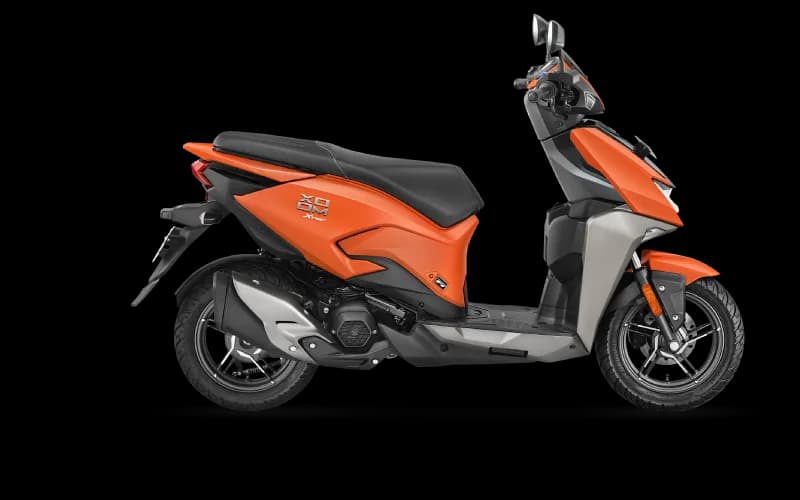
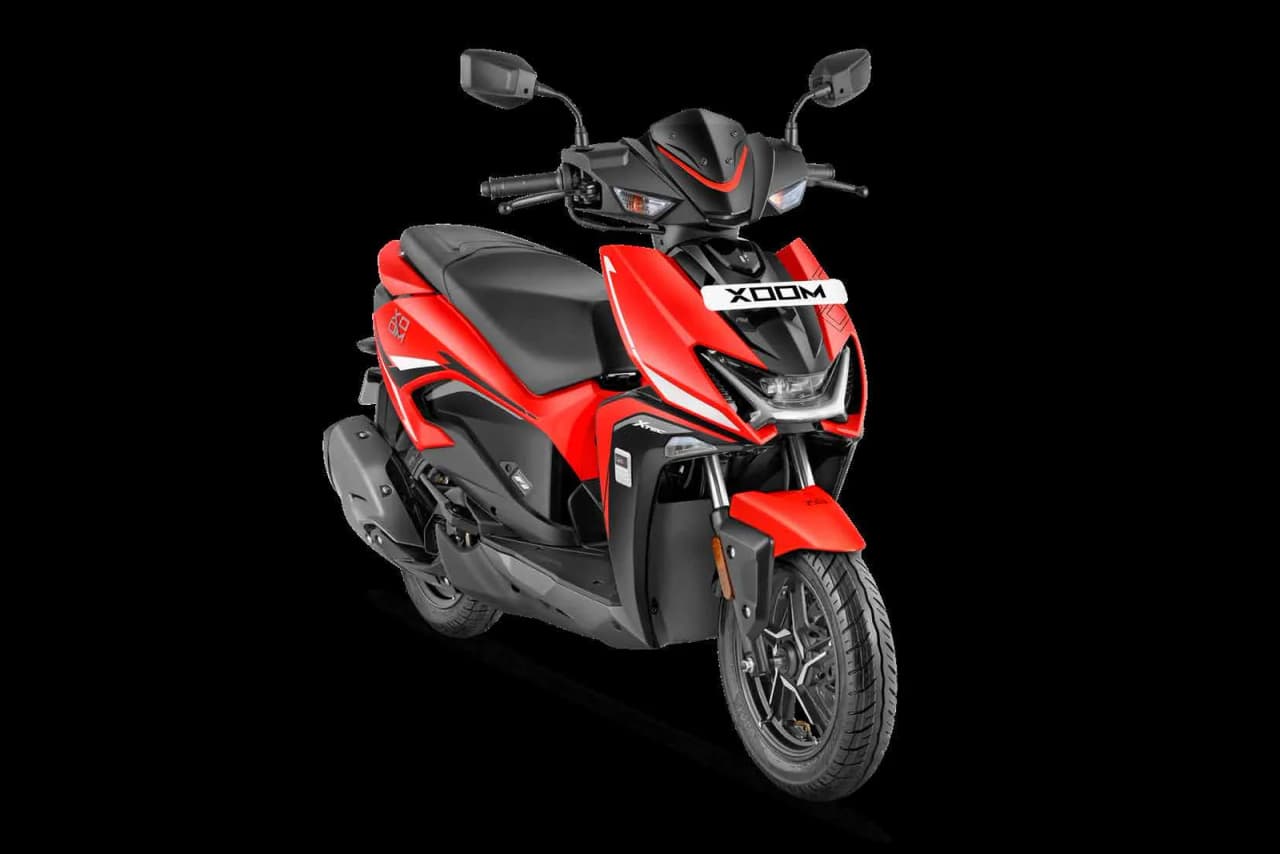
The Xoom 110's design is the first thing that separates it from the usual 110cc crowd. Instead of the rounded, inoffensive shapes most commuter scooters settle for, Hero has gone with sharp panel creases and an adventure-inspired silhouette that looks closer to a crossover scooter than a basic runabout. The front fascia carries an H-shaped LED DRL signature flanking prominent LED headlamps, and the rear picks up the theme with an H-pattern LED taillight cluster. It's a design built to be noticed in traffic, and in a segment where most buyers keep a scooter for years, that kind of visual distinctiveness matters more than it gets credit for.
The standout engineering touch, though, is the apron-mounted cornering lights — a feature genuinely rare at this price point anywhere in Nepal's two-wheeler market. These lights trigger when the scooter leans into a turn, throwing extra illumination into the direction of travel rather than just straight ahead. On poorly lit stretches around the Valley's outskirts or on hill roads at night, that's a real, usable safety feature rather than a marketing line.
Build quality reads as solid rather than flashy, and the 12-inch alloy wheels front and rear give the Xoom 110 a planted, substantial stance that most 110cc scooters — usually running on smaller 10 or 12-inch steel wheels with thinner rubber — simply don't have. Kerb weight comes in at 108 kg for the drum variant and 109 kg for disc-equipped versions, which is on the heavier side for the class but consistent with the larger wheels and more robust frame.
Four Colours, One Colour That Suits The Styling Best
Hero offers the Xoom 110 in Red, Blue, Black and White. The white colourway tends to show off the panel creases and the H-shaped LED detailing most clearly, since the sharp lines catch light differently against a pale body than they do on darker paint. Black leans the design toward something more understated, while Red and Blue push it closer to the sporty, youth-oriented image Hero is clearly chasing with this scooter. None of the four changes the mechanical package; it's a styling choice only, which is as it should be at this price.
Where The Feature List Earns Its Keep
This is the section where the Xoom 110 genuinely stands apart from the 110cc pack. The instrument cluster is fully digital with a blue-backlit LCD, and it pairs with a smartphone over Bluetooth to surface call and notification alerts right on the dash — a feature set you'd expect to pay considerably more for elsewhere. Hero's i3S idle stop-start system cuts the engine at traffic lights and restarts it the moment the throttle is rolled on, which should meaningfully help fuel use in Kathmandu's stop-start congestion rather than just on paper.
Practical touches round out the package: a USB charging port sits below the front apron storage pockets for topping up a phone mid-commute, and the headlight switch has an integrated pass-light trigger built in, useful for overtaking on narrow roads where a horn alone doesn't always register. The top OBD II variants also carry the badge of Hero's "Revolutionary i3S Technology" branding alongside the standard features, though the core electronics — digital cluster, Bluetooth, i3S — run across the range rather than being reserved for the flagship.
An 8.05 bhp Engine That's Tuned For The City, Not The Highway
The Xoom 110 runs a 110.9cc air-cooled, four-stroke engine with fuel injection, putting out 6.0kW (8.05 bhp) at 7,250 rpm and 8.70 Nm of torque at 5,750 rpm. That's a modest figure on paper, and it's the one area where the scooter's otherwise premium feel comes back down to earth: Hero claims 0-60 km/h in 9.35 seconds, which is adequate for city traffic but not a number that will impress anyone cross-shopping against 125cc rivals.
In practice, that output is tuned for low and mid-range responsiveness rather than outright speed, which suits what most buyers will actually use a scooter for — quick gaps in traffic, short overtakes, getting away cleanly from a signal. The variomatic drive and dry centrifugal clutch keep power delivery smooth through the rev range, without the jerkiness some CVT-based scooters show at low speed. Hero's own figures also claim a fuel economy of 50-55 km/l, which, combined with the 5.2-litre tank, works out to a realistic range of roughly 200 km between fill-ups — solid territory for a daily commuter, even allowing for the usual gap between claimed and real-world mileage in heavy traffic.
Ground Clearance That Actually Matters On Nepali Roads
The 155 mm ground clearance is not a throwaway spec here. Combined with the 12-inch wheels, it's genuinely useful on speed bumps, broken edges and unpaved patches that define large stretches of road even within Kathmandu, let alone outside it. Scooters with smaller wheels and lower clearance routinely scrape their underbellies on exactly this kind of terrain; the Xoom 110 is built to shrug it off.
The riding stance feels elevated for a 110cc scooter, which combined with the wider 100/80-12 rear tyre gives it stability through corners that smaller-wheeled rivals in this bracket don't match. The front gets telescopic hydraulic shock absorbers and the rear a unit-swing setup with spring-loaded hydraulic damping — a conventional combination, but one tuned to feel composed rather than soft or vague through corners. Handling at city speeds feels planted and easy to place through traffic gaps, which matters more day to day than outright cornering clearance.
Seating And Storage Built With The Pillion In Mind
The seat uses a two-tier design, with distinct texturing for rider and pillion. The pillion portion gets a deliberately rougher surface to stop sliding forward under hard braking — a small detail, but one that shows some actual thought about two-up riding rather than treating the pillion seat as an afterthought. Seat height sits at 770 mm, manageable for most adult riders without tiptoeing.
The footwell floorboard is textured for grip rather than relying on folding footpegs, which works well for riders carrying shopping or standing briefly over rough patches. Discreet rear grab handles are built into the tail rather than bolted on as an obvious afterthought, keeping the rear-end styling clean while still giving the pillion something secure to hold.
Braking That Inspires More Confidence Than The Numbers Suggest
The OBD II variants pair a front disc brake with a rear drum, and that front disc does the heavier lifting convincingly — stopping power feels strong and predictable, both from a dead stop and when braking into the lean for a corner. The ZX FI BS6 trim, by contrast, is specified with a rear drum and the equivalent combination without the OBD II electronics. There's no ABS or combined braking system confirmed across the range, so buyers wanting that layer of electronic assistance will need to look at pricier 125cc rivals.
A Genuinely Useful Boot, With One Annoying Trade-off
Underseat storage measures 19.2 litres and comfortably swallows a full-face helmet, with its own LED light for finding things in the dark — a feature that sounds small until you're digging through a scooter boot after sunset. The inner front apron adds two open glove pockets for quick-access items like a phone or toll cards, plus a central hook for hanging grocery bags, both genuinely useful for the kind of errands most owners actually run a scooter for.
The one recurring gripe is that the fuel filler sits under the seat rather than on an external flap. That means unloading the boot, or at least clearing it, every time the scooter needs fuel — a minor but real annoyance at a crowded pump on a tight schedule. The stock front visor is also on the small side and does little to cut wind blast at speed, though it's the kind of thing an aftermarket accessory easily fixes.
What Each Variant Actually Buys You
The range runs four deep, and the gaps between trims are worth understanding before paying more than necessary:
- Xoom 110 VX FI BS6 — Rs 2,55,900, the entry point into the 110.9cc engine, fuel injection and the core feature set
- Xoom 110 ZX FI BS6 — Rs 2,64,900, steps up within the same BS6 platform, running a rear drum brake
- Xoom 110 OBD II — Rs 2,79,900, the OBD II-compliant flagship with front disc brake and the full specification sheet
- Xoom Combat Edition OBD II — Rs 2,79,900, mechanically identical to the standard OBD II at 109 kg kerb weight, differentiated mainly by its cosmetic Combat treatment
For most buyers, the Xoom 110 OBD II is the one to budget for. At Rs 2,79,900 it adds the front disc brake over the ZX, and the OBD II compliance keeps it current against upcoming emissions norms — a detail that matters for resale value down the line. The Combat Edition at the same price is worth considering only if the cosmetic treatment genuinely appeals; mechanically there's nothing extra to pay for.
The TVS Ntorq 125 Brings More Power For A Price Not Yet Comparable
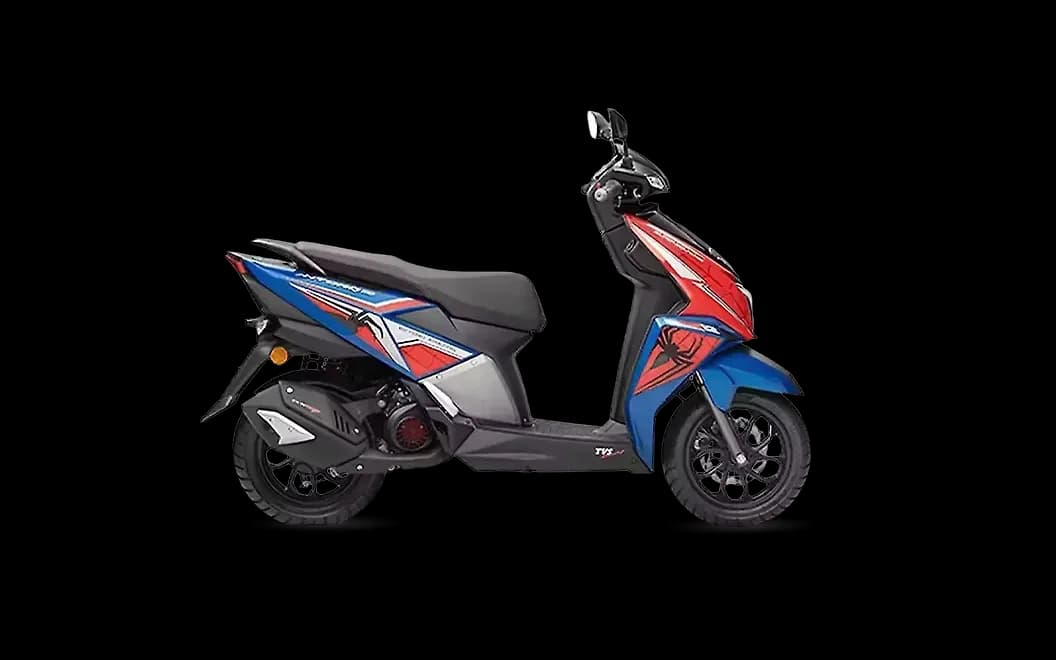
The TVS Ntorq 125 is the scooter most buyers cross-shop against the Xoom 110, and the comparison is straightforward on paper: a 124.8cc engine against the Xoom's 110.9cc, which should translate to a noticeable edge in outright acceleration and highway cruising. We can't put a confirmed rupee figure against it here since pricing isn't verified in our data, but the Ntorq 125 has built its reputation on sportier dynamics and a more playful throttle response, while the Xoom 110 counters with its cornering lights, bigger wheels and higher ground clearance — strengths the Ntorq doesn't match.
The TVS Jupiter Plays It Safer On Mechanicals
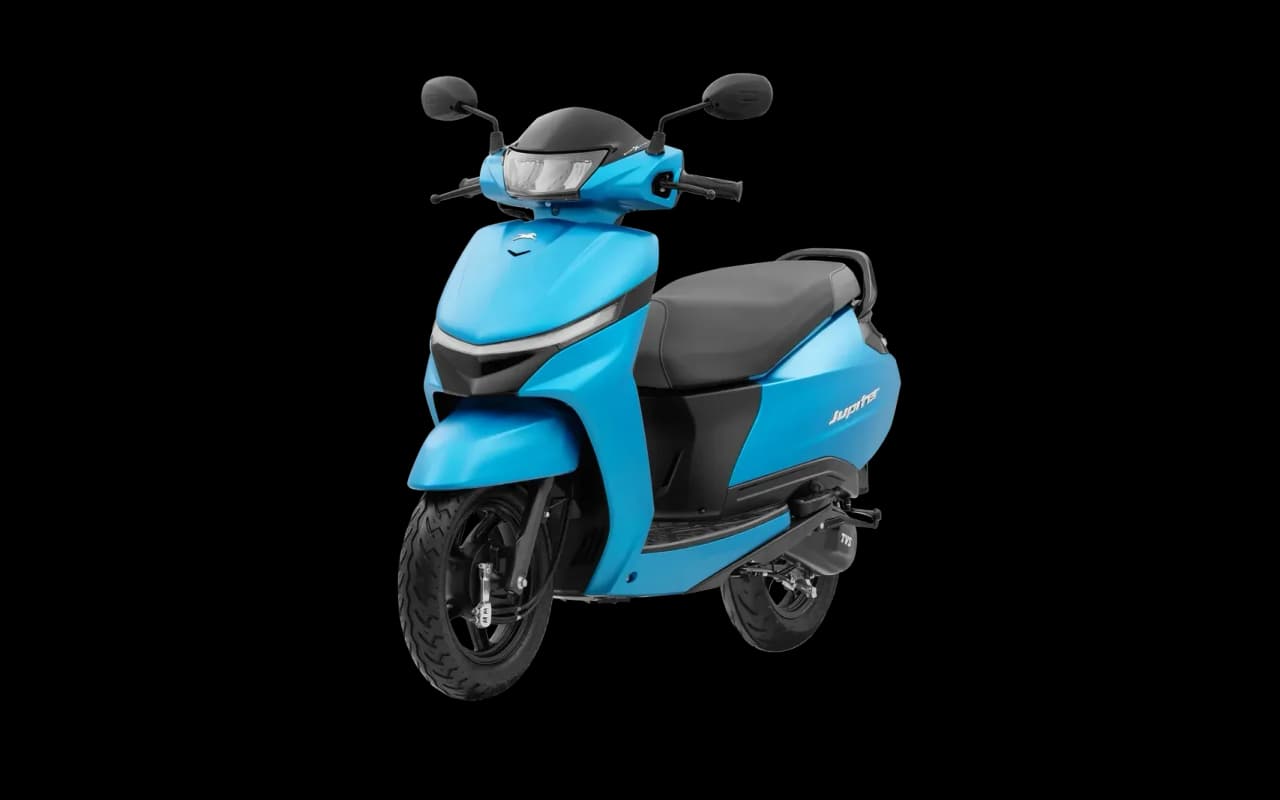
The TVS Jupiter, at 113.3cc, sits closer to the Xoom 110 on displacement but takes a more conservative approach to both styling and features — it's built as a straightforward family commuter rather than a styling-led scooter. Buyers who want the simplest, most predictable ownership experience tend to gravitate to the Jupiter; buyers who want their scooter to look and feel more modern, with Bluetooth and cornering lights thrown in, lean toward the Xoom 110. Price comparisons aren't confirmed in our data, so this is a feature and positioning call rather than a value one for now.
Running Costs And What Backs The Scooter After Purchase
Hero's claimed 50-55 km/l efficiency, helped by the i3S stop-start system, keeps running costs competitive for a daily commuter doing the usual Kathmandu mix of traffic and short hops. The 5-year/50,000 km warranty from Hero, through CG Motors, is a genuinely long cover period for this segment and should ease concerns about reliability over the ownership period. Service support runs through 38 service centres centres and 93 showrooms across the country, so buyers outside the Valley aren't left stranded for routine maintenance.
Owner sentiment broadly backs the fuel-efficiency and feature claims, though some riders flag seat comfort as falling short on longer rides, and real-world mileage swings noticeably depending on how much stop-start traffic a rider actually deals with day to day. Resale is harder to call with confidence this early: our own used-price model estimates a three-year-old, well-kept Xoom 110 at roughly Rs 1.66 lakh to Rs 2.03 lakh, about 72% of the confirmed entry price, though this is based on a thin sample of five listings and should be read as a rough guide rather than a guarantee.
Verdict
The Hero Xoom 110 earns its keep on features and road presence rather than outright performance. Cornering lights, 12-inch wheels, 155 mm ground clearance and a genuinely useful 19.2-litre boot with its own light make it one of the more thoughtfully equipped scooters under Rs 3 lakh in Nepal, and the 5-year warranty backs that up with real reassurance. The 8.05 bhp engine is the honest trade-off: adequate for city use, outpaced on paper by 125cc rivals like the TVS Ntorq 125, and the underseat fuel filler is a small daily annoyance rather than a dealbreaker. For buyers who want a stylish, well-equipped daily scooter that handles rough roads with ease and don't need outright speed, the Xoom 110 OBD II at Rs 2,79,900 is the variant worth signing for.
Explore full specifications, variants & ownership context
Know the product
Key specifications, features & ownership context
Choose a variant to see its recorded specifications and features. Equipment and prices can change across trims.
Latest catalog and directory records supplement the original analysis. Figures may have changed since publication; individual specification and price-check dates appear below.
Rs 2.8 lakh ex-showroom · source checked 23 Oct 2026
Engine & performance
| Specification / feature | Xoom 110 OBD II |
|---|---|
| Engine displacement | 110.9 ccResearched · confirm · 22 Sept 2026 |
| Max power | 8.2 PSVerified specification · 27 Aug 2026 |
Brakes, tyres & suspension
| Specification / feature | Xoom 110 OBD II |
|---|---|
| ABS | CBSResearched · confirm · 22 Sept 2026 |
Dimensions & weight
| Specification / feature | Xoom 110 OBD II |
|---|---|
| Ground clearance | 155 mmVerified specification · 27 Aug 2026 |
Showroom & service support
Distributor: CG Motors Pvt. Ltd.
93 listed brand showrooms · 38 listed brand service locations
Listed cities include Baglung, Banepa, Banganga, Bhairahawa, Bhaktapur, Bharatpur and 41 more.
Brand-wide directory coverage. Confirm that your nearest workshop supports this exact model, powertrain and warranty work; ask about parts availability and booking time.
Market buzz & buyer priorities
Compiled discussion, including buyer reactions and ownership reports; this is not a verified owner survey or a reliability score. Research dated 18 Oct 2026.
What people like
- Modern and sporty design that stands out in city traffic
- Effective i3S idle start-stop technology for fuel efficiency
- Feature-rich digital console with Bluetooth and navigation
More feedback
- Good acceleration for a 110cc commuter scooter
Concerns to investigate
- Some riders find the seat comfort lacking for longer durations
- Perceived as less powerful compared to some 125cc competitors
- Real-world mileage varies significantly based on traffic conditions
What buyers ask for
- Ground clearance for varied road conditions
- Value for money and initial purchase price
Nepal ownership context
- Well-suited for Kathmandu's stop-and-go traffic due to the i3S system.
- Service network is widely accessible through authorized Hero dealerships across the country.
- Resale value is generally supported by Hero's established brand presence in the Nepali market.
Use these facts alongside the article’s full analysis. Check the final quotation, warranty terms and exact equipment before booking.
Evidence & next steps
Check the details before you buy
Use this guide to build a shortlist. Ask for a written quotation for your chosen variant, including registration, taxes, insurance and finance charges. Confirm the nearest authorised workshop supports that model.
Price sources and dates
These are the recorded distributor-source checks for the selected overview trims. They are separate from the article update and catalog read dates; they do not mean every trim was rechecked today. Confirm the final price with the distributor.
Overview photos come from the corresponding model records; additional article photos carry their own credits. Running costs depend on usage, energy prices, maintenance, insurance and resale value.