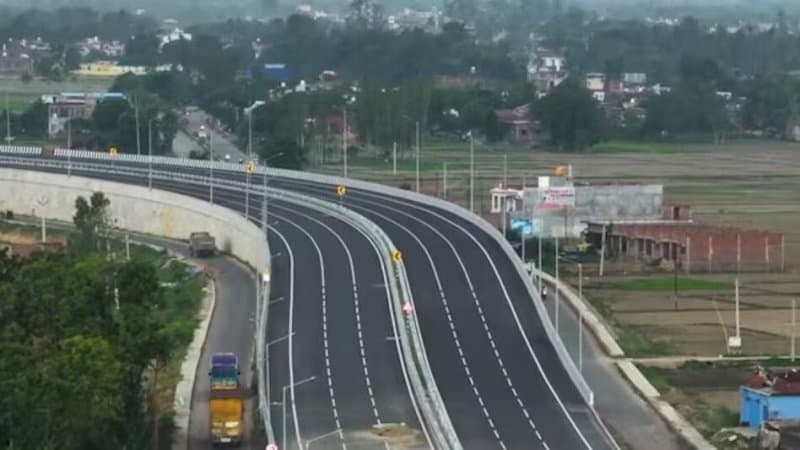
India is close to finishing work on the new four-lane Gorakhpur–Sunauli highway, a change that will directly affect Nepali travellers and transport operators using the Sunauli border.
What is changing on the Gorakhpur–Sunauli route?
- The existing two-lane road between Gorakhpur and Sunauli has long been known for frequent traffic jams and slow-moving trucks.
- The new project upgrades this stretch to a four-lane highway over about 80 km (around 79.5 km), with better traffic flow and controlled access.
- According to the Indian side, roadworks are almost complete, and the corridor is being developed as a major cross-border transit route.
Why Sunauli matters for Nepali road users
- The Sunauli border in Maharajganj district of Uttar Pradesh is one of the busiest India–Nepal road crossings.
- It sees heavy daily movement of tourists, pilgrims, traders and freight vehicles from both countries.
- For many private cars, buses and cargo trucks from Nepal heading to Delhi–NCR, Noida, Ghaziabad, Lucknow and Bihar, this is a preferred gateway.
Expected impact on travel time
- According to the Indian authorities, once the new highway is fully operational, road travel between Nepal’s border and Delhi could be done in about 8 hours.
- For Nepali drivers, this means:
- More predictable drive times on India’s side
- Less time lost in border-side congestion
- Potentially lower fuel costs due to smoother, more consistent speeds
Highway design and safety features
The corridor is being built as an expressway-type route, not a simple widening of the existing village road. Key features mentioned by the Indian side include:
- Multiple overbridges, flyovers, underpasses and small bridges to separate local and through traffic
- CCTV cameras at important points for monitoring
- Emergency call boxes to assist in breakdowns or accidents
- Electronic display signboards for real-time information and warnings
- The route is engineered to be expandable to six lanes in future, with capacity for long-term traffic growth
What it means for Nepal’s vehicle owners and operators
For Nepali vehicle buyers, especially those who regularly use their cars, buses or trucks for cross-border runs, the main points are:
- Shorter and smoother road access to Delhi–NCR and major UP/Bihar cities
- More attractive conditions for religious tourism, such as pilgrim trips by bus or van
- Better support for regional trade, with freight trucks facing fewer jams near Sunauli
- Likely improvement in driver safety and comfort due to modern highway standards
As the corridor enters full operations, Nepali motorists traveling to India will still need to plan for border formalities and Indian road regulations. They can, however, expect the Gorakhpur–Sunauli section to be faster and more reliable than in the past.
Writes on vehicle pricing, taxation and the Nepali auto market from ongoing tracking of distributor price lists. Editorial policy.