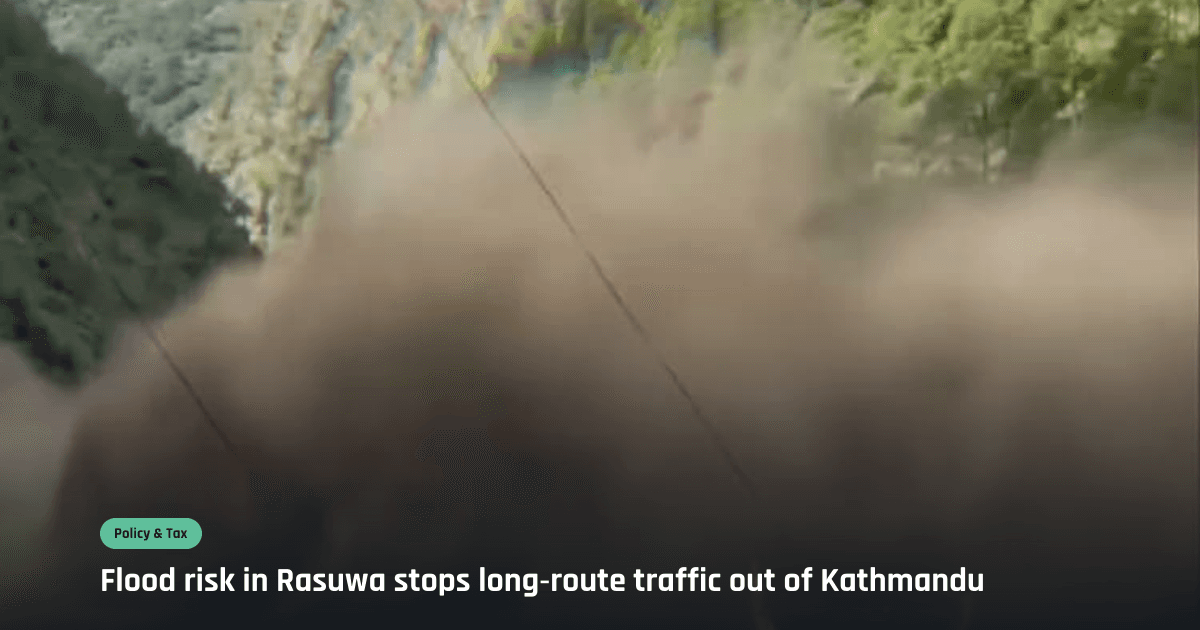
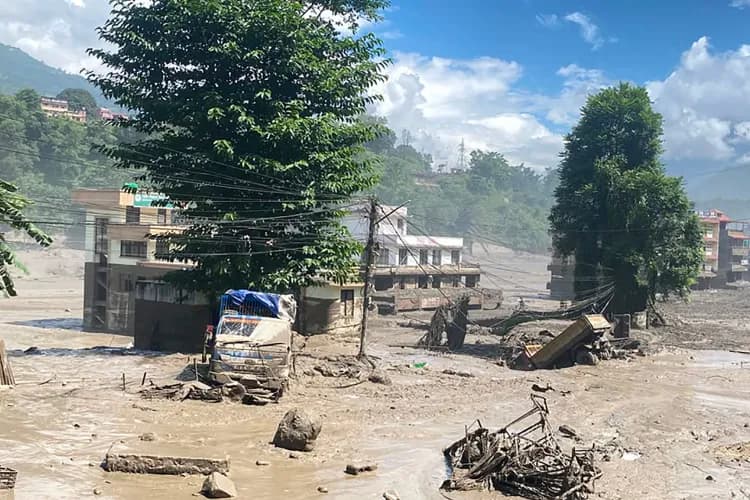
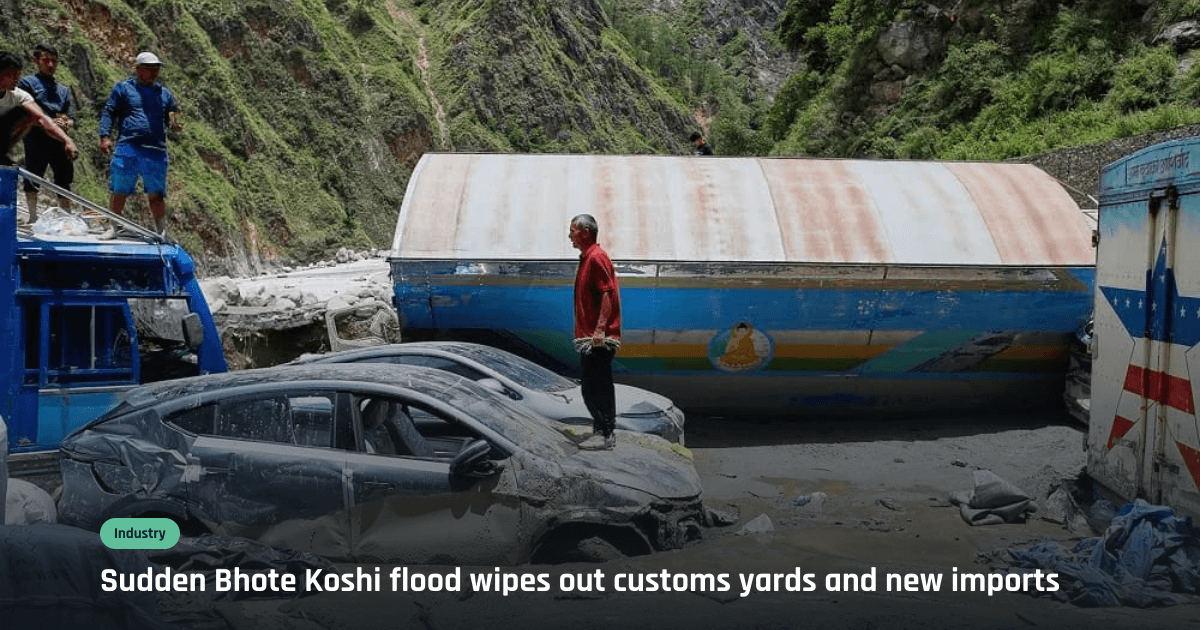
A major flood in Rasuwa has caused heavy damage to transport and energy infrastructure, affecting everyday movement and future electricity supply for Nepali users.
Roads and bridges washed away
Authorities report that about 41 km of road in the district has been washed away or made unusable.
At least 24 bridges have been hit:
- 6 concrete bridges
- 8 Bailey bridges
- 10 suspension bridges
With multiple crossings gone on key routes, travellers and cargo vehicles face long detours or complete closures until temporary access can be rebuilt.
Damage to buildings and services
The flood has damaged around 28 government and public buildings, 8 community schools, 3 private schools, 14 banks and financial institutions, and 1 fuel station.
Initial data also counts harm to about 1,500 private houses, meaning many families have lost homes or are unsafe to stay, adding pressure on local transport and support services.
Hydropower projects hit hard
Floodwaters on the Bhote Koshi, Trishuli and Langtang rivers have severely impacted hydropower schemes.
Officials say 8 hydropower projects in the district have suffered full damage or serious impact:
- Rasuwagadhi 111 MW
- Bhote Koshi 120 MW
- Chilime 20 MW
- Langtang Khola 20 MW
- Upper Trishuli-1 216 MW
- Mailung Khola 5 MW
- Upper Trishuli-3A 60 MW
- Trishuli-3B 37.3 MW
These plants are important parts of Nepal’s power mix. Long outages or repairs here can affect future supply, especially in peak seasons, and may delay some planned expansions of electric mobility.
Assessment still ongoing
Officials describe these figures as preliminary. A more detailed reassessment of roads, bridges, private housing and hydropower assets is underway, and the real scale of damage may increase.
For vehicle owners and transport operators using Rasuwa routes, this means continued disruption, possible route changes, and a long rebuild period before normal traffic can resume.
How this developed
1 updateGovernment announces customs and loan relief for flood-hit vehicle businesses
The government has announced a special relief package for businesses affected by the flood in the Bhote Koshi and Rasuwa areas. This includes a full customs duty exemption for the re-import of vehicles damaged or washed away by the flood. Additionally, special banking facilities have been introduced to help businesses purchase new vehicles at low interest rates. The registration of flood-damaged commercial vehicles will be canceled, and local authorities have been requested to provide relief on local fees and business taxes for a certain period.
Writes on vehicle pricing, taxation and the Nepali auto market from ongoing tracking of distributor price lists. Editorial policy.