China has announced a new national standard for how electric vehicles (EVs) measure and show battery health on the dashboard, aiming to reduce confusion and mistrust among buyers.
What changes in battery information
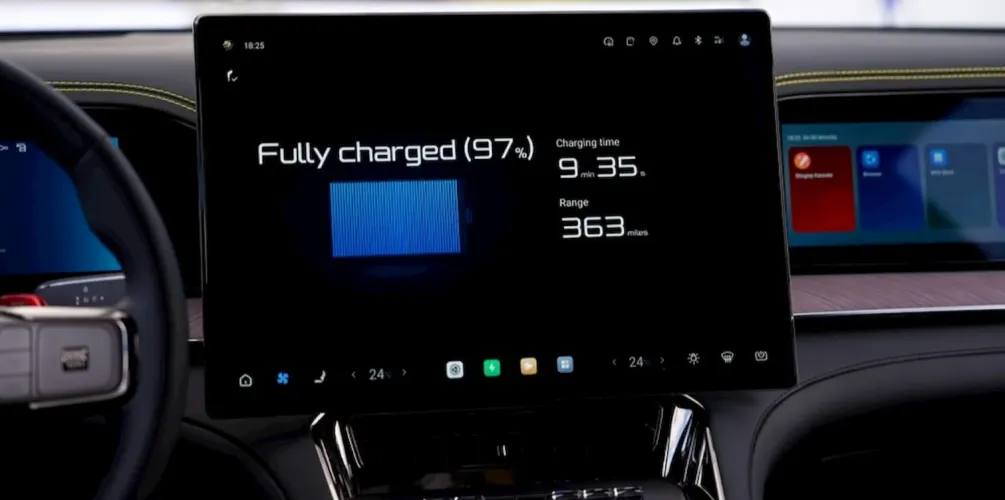
Until now, most EVs mainly showed state of charge (SOC) – how much energy is left for the current trip. The new Chinese standard adds a clearer measure called available energy (SOCE), which tells drivers how much capacity is left compared to when the battery was new.
Under the new rule: - The difference between the SOCE shown on the dashboard and the result from actual battery testing must be no more than 5%. - This is meant to stop dashboards from showing overly optimistic battery health that does not match real-world performance.
Non-driving energy must be counted
EVs use battery power not only for driving but also for features like air-conditioning, infotainment and other electronics when the car is stopped.
China now requires that: - This non-driving energy use is converted into virtual mileage and shown on the dashboard. - The error in this non-driving energy calculation must be within 3%.
This helps drivers understand how much range they lose when keeping AC or other systems on while parked or in traffic.
Minimum battery capacity over time
For smaller EVs, the standard also sets minimum battery capacity levels based on vehicle age and distance driven. According to the new framework: - At 5 years or 100,000 km, at least 82% of the original battery capacity must remain. - At 8 years or 160,000 km, at least 75% must remain. - At 10 years or 200,000 km, at least 70% must remain.
For example, if an EV originally has a 100 kWh battery, after 5 years and 100,000 km it should still have at least 82 kWh of usable capacity.
Recommended, not mandatory – for now
This new battery standard is described as a recommended national framework, not yet a compulsory safety regulation. That means: - Manufacturers that do not meet it will not immediately face fines or forced recalls. - However, it creates a clear reference for what is considered acceptable battery accuracy and durability.
Why this matters for EV buyers and used EVs
Even though the rule is from China, it highlights trends that are important for markets like Nepal where EV adoption is growing.
Key benefits for consumers if similar standards are followed: - More reliable battery health readings, making it easier to judge the condition of a used EV. - Clearer grounds for warranty claims when battery capacity drops faster than promised. - Fairer pricing of second-hand electric cars, because buyers and sellers can refer to standardised capacity expectations.
As more EVs enter Nepal – including models imported from China and other countries – such standards could push brands to be more transparent about battery health and long-term performance, helping buyers make better decisions and protect their investment.
Writes on vehicle pricing, taxation and the Nepali auto market from ongoing tracking of distributor price lists. Editorial policy.