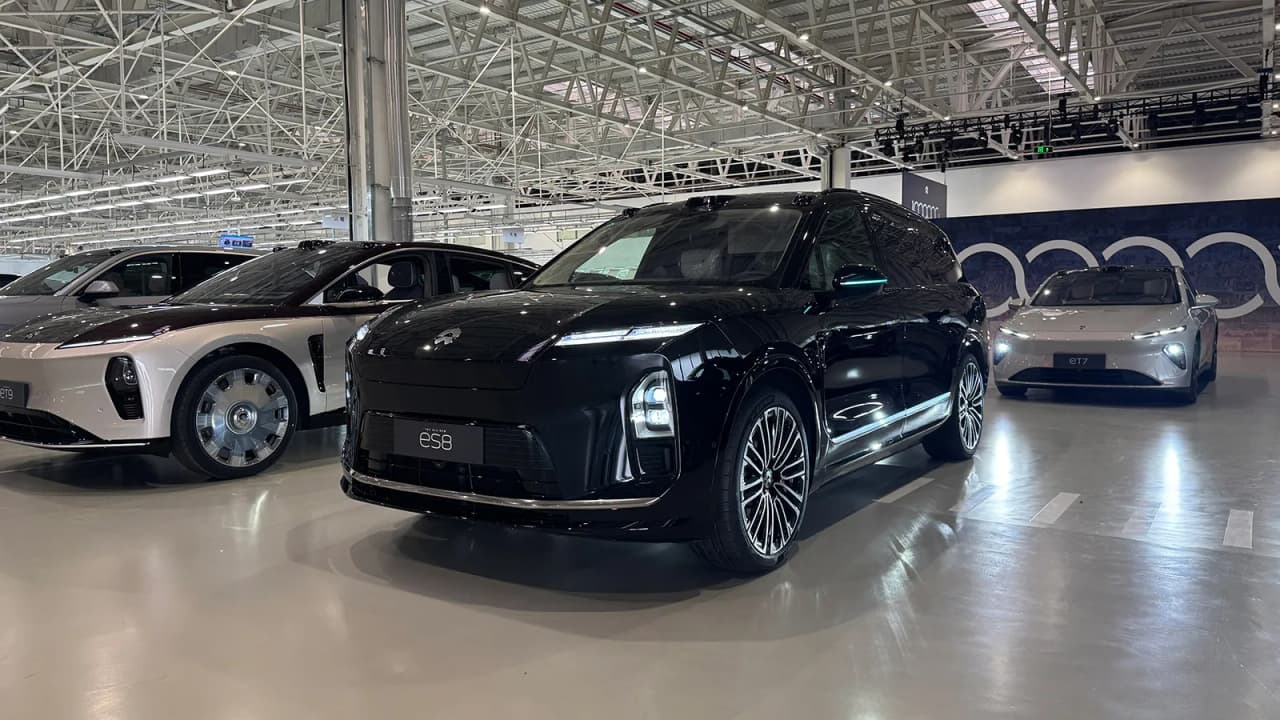
China's Ministry of Industry and Information Technology (MIIT) has started a fresh round of on-site inspections at major carmakers Nio, Chery and JAC in Anhui province, aiming to tighten quality and safety oversight in the country's intensely competitive auto market.
What China is doing
- Inspectors visited factories of Nio, Chery and JAC to review their vehicle safety processes, production consistency and compliance with national standards.
- Officials randomly collected finished vehicles and battery packs from the production lines and sent them to accredited labs for detailed testing.
- The checks cover intelligent and connected vehicle safety, autonomous and driver-assistance systems, software and data security, and battery performance.
- A similar inspection round was carried out a week earlier at GAC Aion and Xpeng, indicating a broader push to raise EV safety standards across China.
MIIT has told car and motorcycle manufacturers to identify potential safety risks more proactively, improve testing and verification, and avoid aggressive marketing that overstates the capabilities of advanced driver-assistance or autonomous features.
Why this matters for Nepal
China is a key source of vehicles, parts and EV technology for Nepal, and Chery and JAC are among the Chinese brands increasingly looking at export markets. While their presence in Nepal is still limited compared to Indian brands, dealers have been exploring JAC pickups and commercial vehicles and Chery crossovers for future introduction.
Stricter Chinese oversight could affect Nepal in several ways:
- Safety and reliability: EVs and battery packs that eventually reach Nepal via official imports or grey channels are more likely to have undergone tougher factory testing and compliance checks. For Nepali buyers wary of EV battery safety or software glitches, this is a positive signal.
- Model approvals and delays: If a model needs rework to meet new Chinese standards, its export timeline could be pushed back, which might delay the arrival of new Nio, Chery or JAC EVs that Nepali distributors are evaluating.
- Pricing pressure: Enhanced testing and compliance can add cost at the manufacturing stage. Depending on how brands absorb these costs, retail prices in Nepal could edge up, especially for vehicles imported in small volumes.
- Technology transfer to India: Indian automakers such as Tata Motors are already collaborating with Chinese companies like Chery on premium EV technology, according to industry reports. Tighter Chinese rules around software, batteries and autonomous features can indirectly raise the technology baseline for Indian EVs.
For Nepal, which imports most passenger vehicles from India, better-regulated Chinese EV tech feeding into Indian models could mean safer and more mature EVs at future price points around Rs 20–40 lakh, once they are formally introduced in the Nepali market.
What Nepali buyers should watch
- Whether Chery or JAC announce official launches or distributor tie-ups in Nepal over the next 1–2 years.
- How India-based EVs that may incorporate Chinese components (batteries, motors, software) position their safety features and driver-assistance systems.
- Any shift in EV prices if manufacturers pass on higher compliance costs.
For now, Nepali car buyers do not see immediate showroom changes, but the regulatory tightening in China is a structural move that could shape the safety, technology and pricing of future Chinese and India-built EVs headed to Nepal.
Writes on vehicle pricing, taxation and the Nepali auto market from ongoing tracking of distributor price lists. Editorial policy.