Where The Sealion 7 Actually Sits In Nepal's EV Ladder
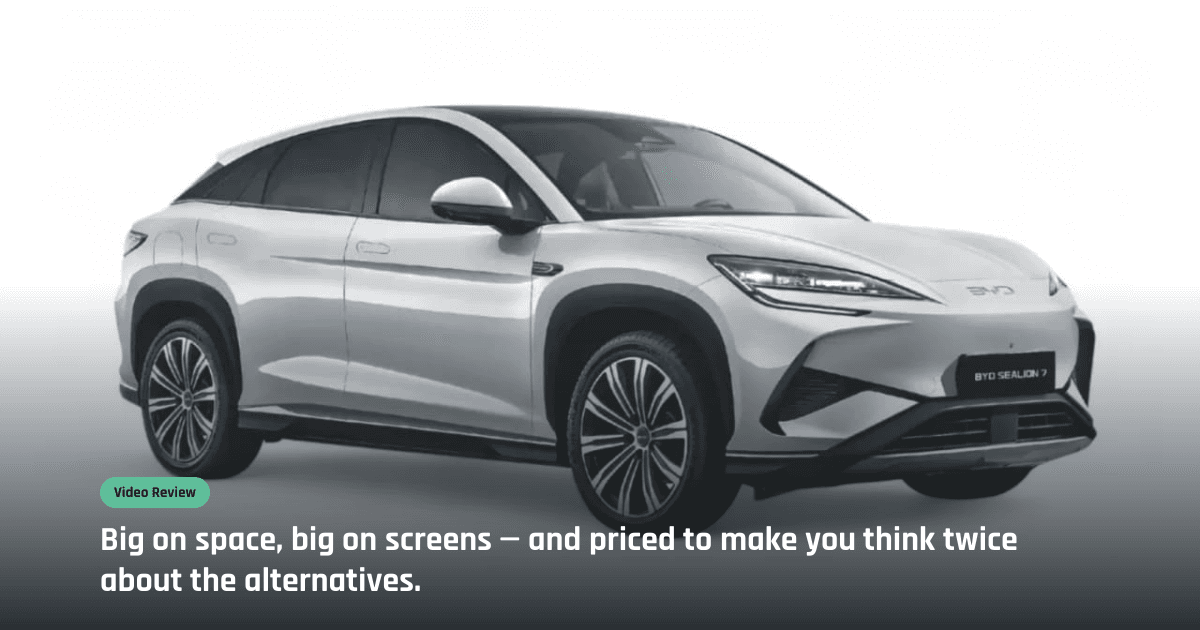
Cimex Inc. Pvt. Ltd. has brought the BYD Sealion 7 into Nepal for 2025 as a proper mid-large electric crossover, not an entry-level EV, and the pricing reflects that positioning squarely. Across its three listed variants — the base 100 kW version at Rs 78 lakh, the Premium at Rs 79,85,000, and what BYD documents as the single official Nepal-spec Premium trim at Rs 79,99,000 — this is a car aimed at buyers who have already outgrown compact electric hatchbacks and crossovers and are shopping in the Rs 75-80 lakh EV bracket with cash or import-adjusted budgets to match. That bracket in Nepal is thin but growing, and the Sealion 7 walks into it with size, tech and battery capacity that few rivals at this exact price currently match.
It's worth being clear about what "Sealion 7" means here versus what international buyers might expect. The car sold in markets like the Philippines gets a dual-motor AWD setup pushing well over 500 hp. That is not the car Cimex is bringing to Nepal. Our verified specifications show a single 100 kW motor, 170 kW peak output and 380 Nm of torque, built on BYD's e-Platform 3.0 Evo architecture with Cell-to-Body construction. It is still quick and still substantial, but Nepali buyers should walk in expecting a refined family crossover, not a performance SUV.
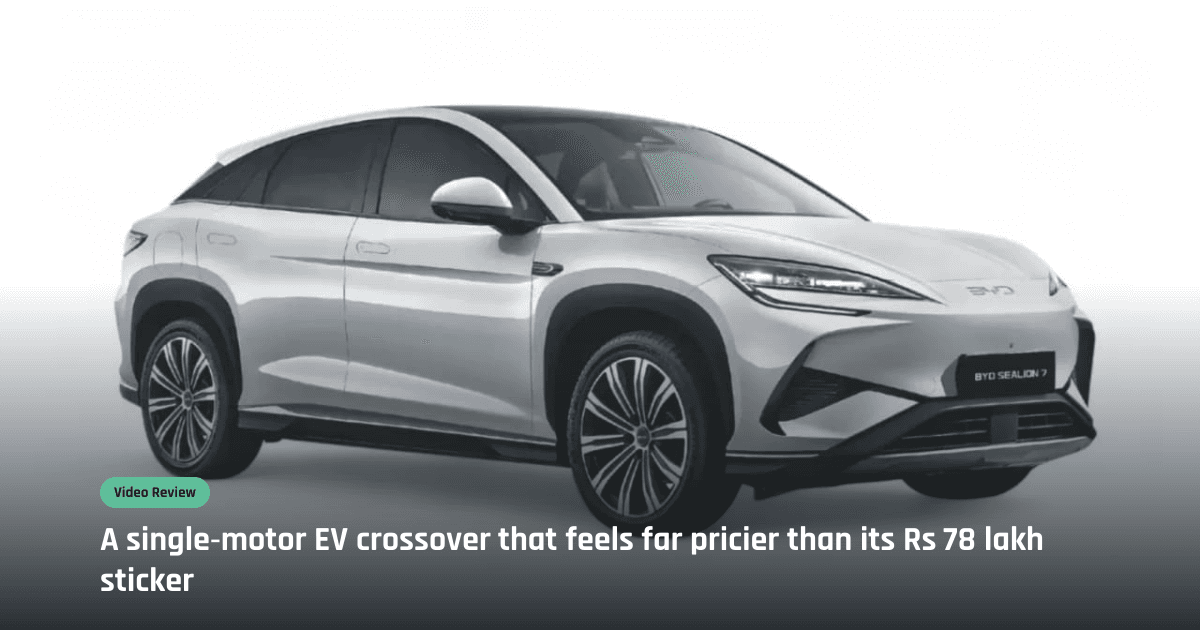
Ocean Aesthetics, But With A Fastback Roofline That Actually Suits The Segment
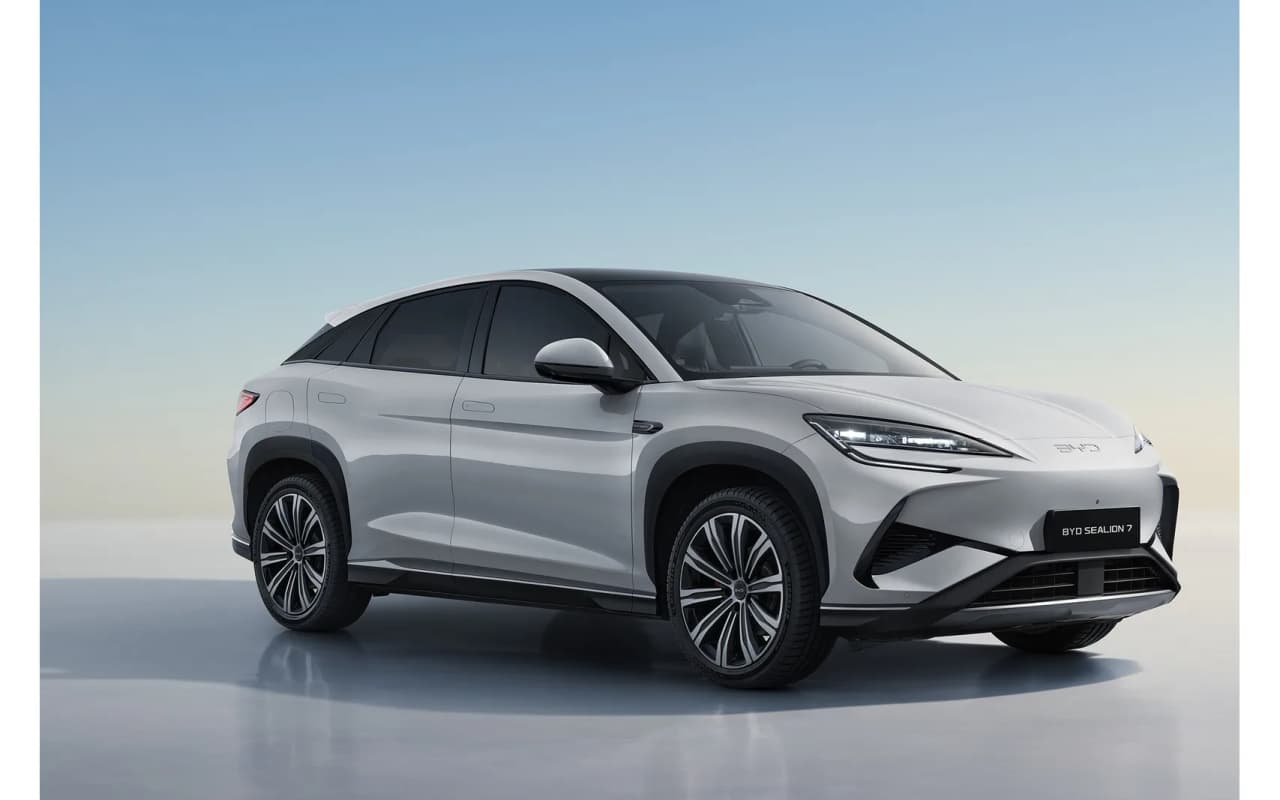
The Sealion 7's design language, credited to BYD's "Ocean Aesthetics" direction under designer Wolfgang Egger, gives it a stance that reads more muscular than most electric crossovers at this price. The fastback roofline is the single biggest design decision on the car — it sacrifices a bit of outright headroom at the very back of the roof but gives the Sealion 7 a silhouette that looks considerably more expensive than its Rs 79 lakh price tag suggests. U-shaped LED headlamps at the front and a full-width rear light bar bookend the body, while flush-fitting door handles and dual character lines running along the flanks keep the surfacing from looking plain in profile.
The 20-inch multi-spoke alloy wheels fill the arches properly and are a genuine strength — cars in this segment often ship on smaller wheels to save cost, and BYD hasn't done that here. Combined with the 4,830 mm length, 1,925 mm width and 2,930 mm wheelbase, the Sealion 7 photographs and parks like a genuinely large vehicle, which is exactly the impression buyers moving up from a compact SUV are looking for.
Only One Real Colour Choice On Nepali Showroom Floors
The unit we've seen presented in showroom contexts comes in a matte satin grey-blue finish, and it suits the car's crossover-coupe proportions well — the satin texture plays nicely against the sharp character lines rather than washing them out the way a high-gloss white or silver might. Nepal's line-up doesn't stretch to a wide palette the way some rival brands do, and buyers looking for a strong colour statement — a bright red or a two-tone roof, for instance — won't find that choice here. If the matte grey-blue isn't to your taste, options for now appear limited, and that's worth checking directly with Cimex before booking rather than assuming a colour will be available.
A Cabin Built Around Two Screens And A Card Instead Of A Key
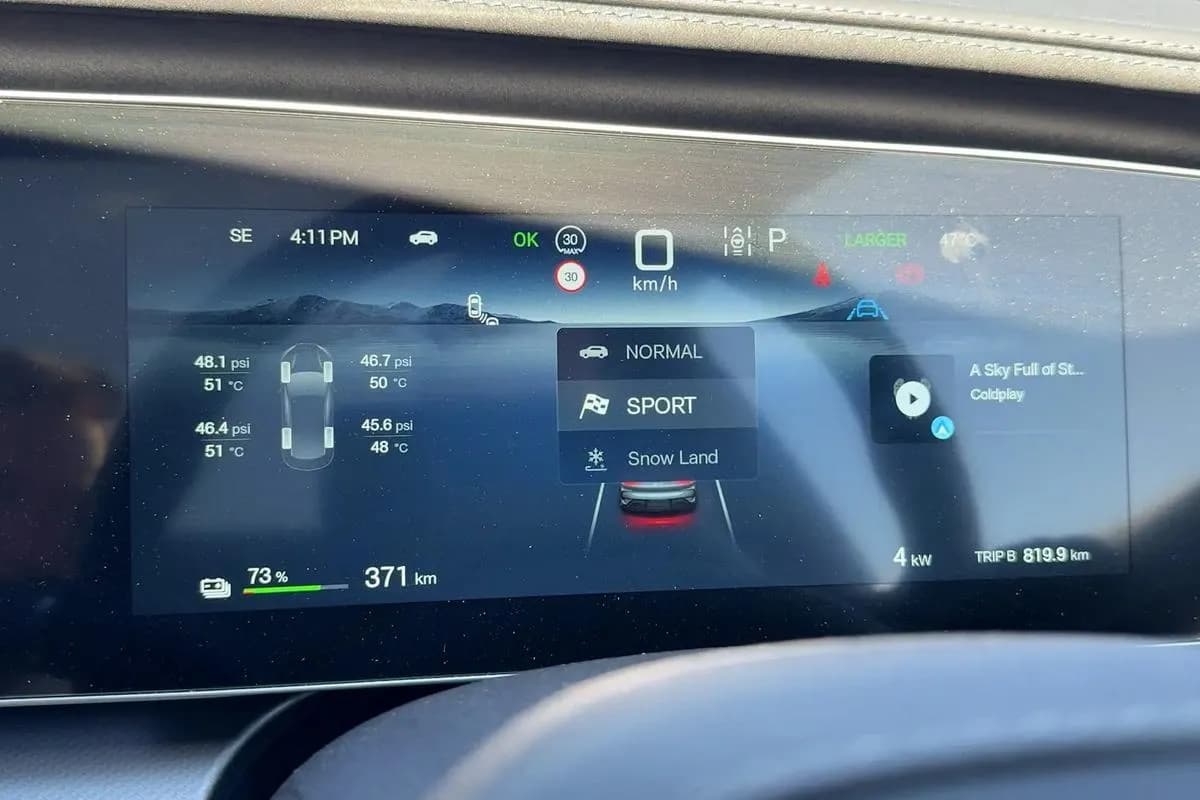
Step inside and the Sealion 7's equipment list reads like a car costing considerably more. The 15.6-inch rotating touchscreen dominates the centre console and runs both wireless Apple CarPlay and wireless Android Auto, which matters in Nepal, where forcing buyers to plug in a cable for basic phone mirroring feels dated at this price point. Ahead of the driver sits a 10-inch digital instrument cluster paired with a head-up display, and the steering wheel itself carries the controls for adaptive cruise and the car's ADAS settings — a detail that matters because it means the safety systems are adjusted without diving into touchscreen menus while moving.
The NFC card key deserves specific mention. Rather than relying solely on a fob, the Sealion 7 lets owners tap a card against the console to start and operate the car, which is a genuinely useful backup in a market where key fobs get lost, borrowed, or left with valets. The 50-watt wireless charging pad with built-in cooling vents is another feature that sounds minor on paper but solves a real problem — wireless charging pads that overheat and throttle charging speed are a common annoyance, and BYD has engineered around it here. A 12-speaker audio system, 128-colour ambient lighting, a four-spoke flat-bottom steering wheel and Nappa leather seat trim round out a cabin that, on equipment alone, undercuts what buyers might expect to pay for this level of kit.
A Single Motor, But Enough Torque To Never Feel Strained
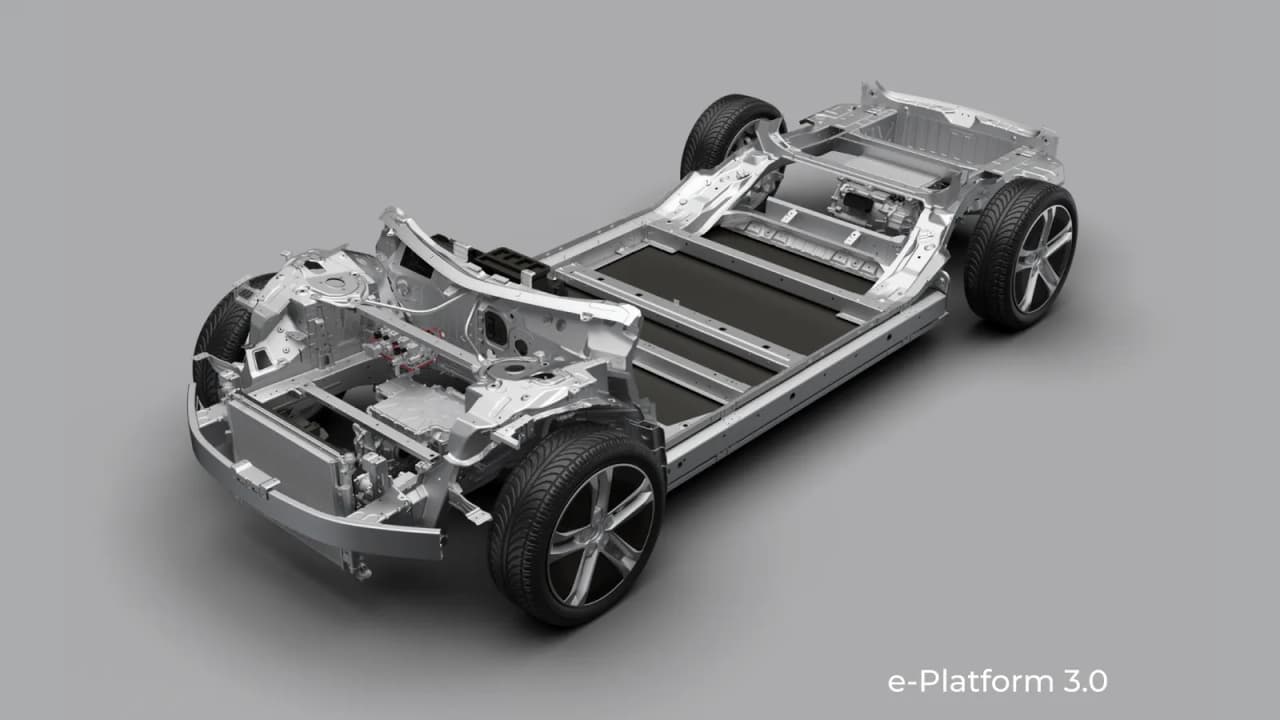
Nepal's Sealion 7 runs a single 100 kW motor with a 170 kW peak and 380 Nm of torque, drawing from a 71.8 kWh battery pack integrated directly into the body structure via BYD's Cell-to-Body method. This is not the dual-motor AWD car offered in some other markets, and buyers should set expectations accordingly — this is a comfortable, quick-enough family crossover rather than a performance flagship. What the torque figure does deliver is confident, immediate response from a standstill and at typical Kathmandu Valley and highway overtaking speeds, without the car ever feeling like it's working hard.
The Cell-to-Body construction is also a structural story, not just a battery one — integrating the pack into the chassis stiffens the whole car, which should pay off in refinement and crash structure alike, even if Nepal's verified data doesn't extend to independent crash-test figures for this market.
Wheels, Weight And Where The Ride Should Excel
At 1,620 mm tall and riding on a 2,930 mm wheelbase, the Sealion 7 has the proportions of a car that should settle well over longer distances, with the wheelbase in particular working in its favour for stability on the open highway stretches between Kathmandu and the Tarai. The 20-inch wheels are handsome but worth flagging for buyers focused purely on ride comfort over Nepal's less forgiving urban roads — larger wheels typically mean less sidewall to absorb sharp potholes, so we'd recommend a proper showroom test over rough tarmac before assuming ride comfort matches the car's visual polish.
Rear-Seat Space That Genuinely Rivals Larger SUVs
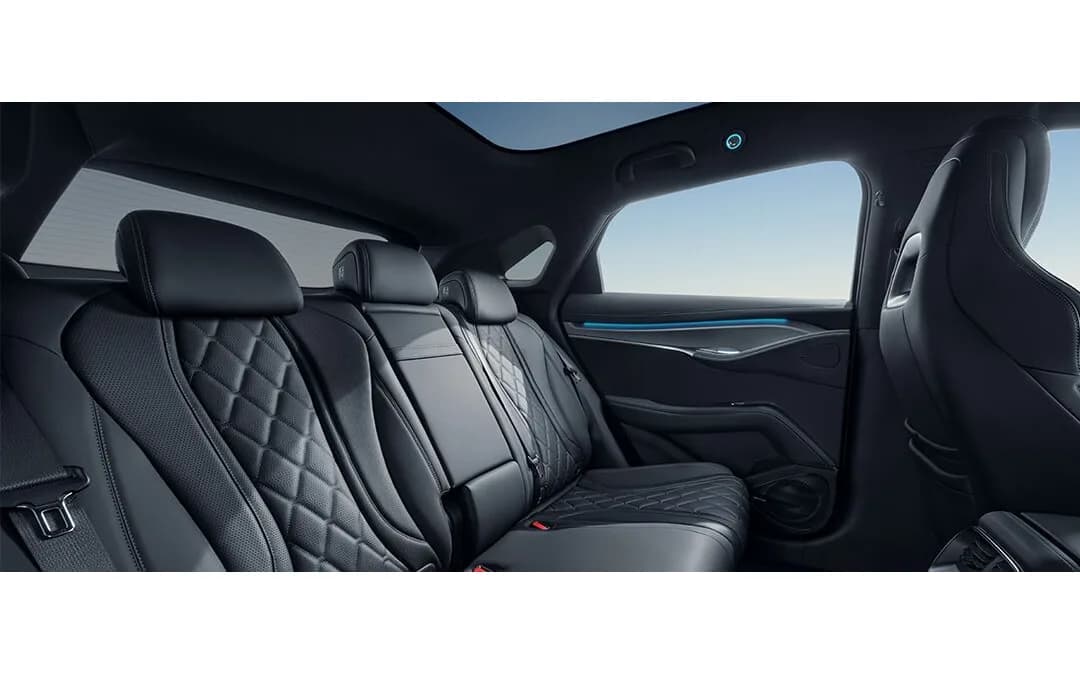
This is where the Sealion 7 makes its strongest case. The rear cabin offers knee room, legroom and headroom that stand out even against larger nameplates, and the seat cushions themselves are shaped to give proper thigh support rather than the flat, short bench many crossovers fit to save cost. For Nepali buyers who are shopping this car as a family vehicle — often with parents or in-laws in the back seat for extended periods — this is not a minor detail. It's the difference between a car that's comfortable for a 20-minute city run and one that holds up over a three-hour drive to Pokhara or Chitwan.
Up front, the power-adjustable, ventilated front seats with a massage function are a genuine luxury-tier addition rarely seen at this price in Nepal, and the panoramic glass roof's physical sunshade cover is a practical touch that buyers in a country with intense summer sun will appreciate — a fixed glass roof without a proper cover turns into a greenhouse by early afternoon, and BYD has avoided that mistake here.
Eleven Airbags And A Sensor Suite That Does The Watching For You
Safety on the Sealion 7 is comprehensive rather than token. Eleven airbags, a 360-degree camera system built from 11 cameras, 12 ultrasonic sensors and 5 mm-wave radar units feed into BYD's DiPilot 100 Level 2 driver assistance system — badged internationally as "God's Eye." Combined with tyre pressure monitoring and front and rear parking sensors, this is a car whose safety spec sheet would be considered strong even in markets with stricter mandatory equipment rules than Nepal's. For buyers cross-shopping against pricier SUVs, the Sealion 7's safety kit is a legitimate point in its favour.
Boot Space, A Frunk, And Storage That Thinks About Real Use
Boot capacity runs over 500 litres and expands to 1,700 litres with the rear seats folded, with additional hidden storage beneath the boot floor for cables or valuables out of sight. The 58-litre front trunk is a small but genuinely useful bonus for an EV at this price — enough for a charging cable or a couple of soft bags without eating into rear boot space. Rear passengers get dual air vents, USB-A and USB-C charging ports and a fold-out armrest, all details that matter more on longer family trips than they do in a five-minute showroom walkaround.
What Rs 79.99 Lakh Actually Buys You Day To Day
The 71.8 kWh battery is rated for up to 440 km on a full charge, which is a genuinely usable figure for Nepali driving patterns — comfortably enough for a Kathmandu-to-Pokhara run with margin to spare, and well beyond what most owners will need for daily city use. Running costs on electricity alone will undercut a comparable petrol or diesel SUV by a wide margin over ownership, though buyers should factor in home or workplace charging infrastructure, which remains inconsistent outside the major cities.
The Three Variants Barely Differ, So Buy On Availability
Nepal's Sealion 7 line-up is unusually tight: Rs 78 lakh for the base 100 kW version, Rs 79,85,000 for the Premium, and Rs 79,99,000 for what appears to be essentially the same Premium specification. The gap between the top two trims is negligible — under Rs 15,000 — which suggests buyers shouldn't spend much time agonising over which "Premium" variant to choose and should instead focus on what's actually available at the showroom when they're ready to book. The bigger decision is whether to spend the extra roughly Rs 2 lakh over the base car at all; given how close the Premium pricing sits to the entry variant, and assuming the Premium carries the fuller equipment list detailed above, it looks like the sensible pick for most buyers.
The BYD Atto 3 Undercuts It Substantially On Price
Within BYD's own Nepal line-up, the Atto 3 sits well below the Sealion 7 on price and size, making it the natural first comparison for anyone stretching their budget toward Rs 78-80 lakh. The Atto 3 suits buyers who want BYD's build quality and EV drivetrain but don't need the Sealion 7's rear-seat space or full-size crossover footprint. Anyone cross-shopping the two should be honest about whether they actually need the Sealion 7's extra size, because the Atto 3 covers much of the same daily-use ground for meaningfully less money.
The BYD Tang Offers Three Rows, But Loses The Rear-Seat Comfort Edge
BYD's own Tang is the closer size and price rival within the brand, offering a third row that the Sealion 7 doesn't. But the Sealion 7's second-row thigh support and overall rear comfort are noticeably stronger, which matters more for buyers who will rarely use a third row anyway. Anyone genuinely needing seven seats should lean toward the Tang; anyone prioritising how comfortable four or five people are on a long drive should lean toward the Sealion 7.
Our Verdict: A Space-And-Tech Flagship For A Narrow But Real Buyer
The BYD Sealion 7 is not trying to be Nepal's cheapest EV, and it shouldn't be judged as one. What Cimex has brought in is a genuinely well-equipped, spacious, well-specified electric crossover that happens to compete in a price band with very few direct alternatives locally. The single-motor Nepal-spec car won't match the performance figures quoted for other markets' dual-motor version, and buyers should go in with that expectation set correctly. But for what it is — a comfortable, tech-forward family EV with real rear-seat space, strong safety provisioning and a usable 440 km range — it's a compelling case for anyone with the Rs 79 lakh budget and no strict need for all-wheel drive.
It suits buyers who value cabin space and passenger comfort over outright performance, who want a fully-loaded interior without shopping into the premium European EV bracket, and who are comfortable buying into BYD's still-young but expanding service network in Nepal through Cimex. It's less suited to buyers chasing outright driving thrills, colour choice, or the widest possible variant spread — none of which the Nepal line-up currently offers.
Writes on vehicle pricing, taxation and the Nepali auto market from ongoing tracking of distributor price lists. Editorial policy.