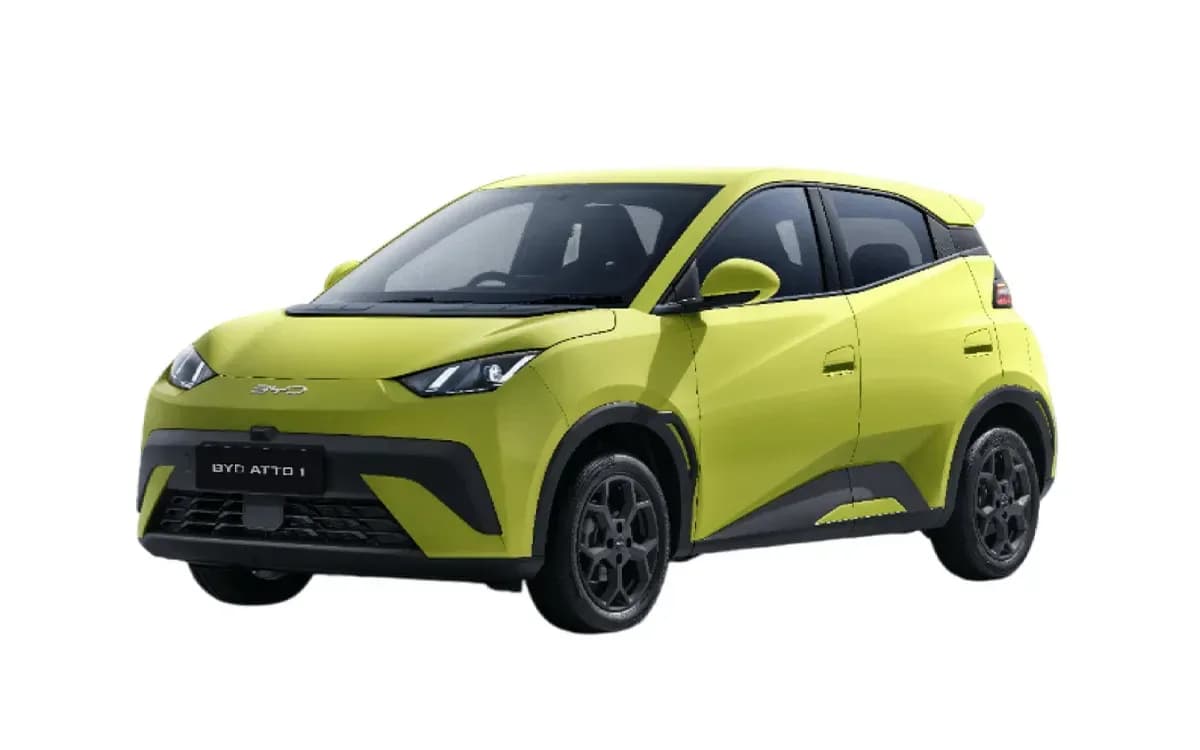
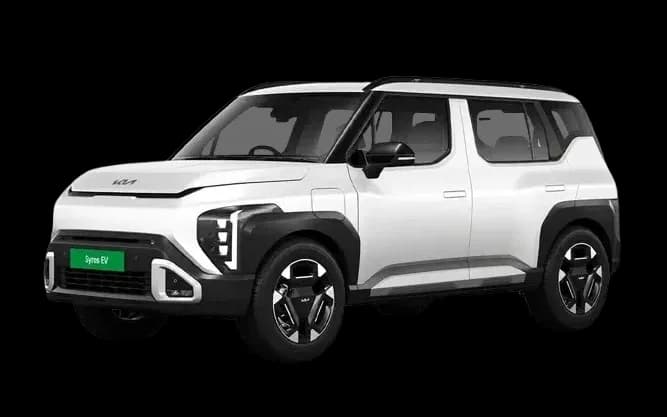
Start with the numbers
Compare at a glance
Top available variants, with prices in Nepalese rupees. Expand details to choose another variant.
| At a glance | BYD Atto 1 | Kia Syros EV |
|---|---|---|
| Ex-showroom price | Rs 34.8 lakh | Rs 37.9 lakh |
| Fuel | Electric | Electric |
| Selected variant | Premium | HTK |
Ex-showroom prices exclude registration, road tax and insurance. Specifications can vary by trim. See individual source-check dates ↓
Where Each EV Sits in the Nepali Market
On paper, the BYD Atto 1 and Kia Syros EV are direct rivals: both are electric, both sit under Rs 40 lakh ex‑showroom, and both target buyers moving up from small petrol hatchbacks and crossovers.
- BYD Atto 1 Premium (Long Range) 2026 Facelift: Rs 34.8 lakh ex‑showroom, distributed by Cimex Inc. Pvt. Ltd., with 62 showrooms and 26 service centres.
- Kia Syros EV Single Variant: Rs 37.9 lakh ex‑showroom, distributed by Continental Trading Enterprises (Kia Nepal), with 37 showrooms and 29 service centres.
The Atto 1 comes in cheaper, with a clear value pitch: long‑range Blade battery tech at a hatchback price, appealing strongly to first‑time EV buyers and budget‑minded city users who still want to do occasional intercity runs.
The Syros EV, by contrast, leans on Kia’s brand perception, more sophisticated cabin, and a richer feature set. It is positioned as a compact crossover that feels more "grown‑up" than budget Chinese EVs, even if its range focus is more urban than highway.
In terms of network, BYD’s footprint with 62 showrooms is wider for touchpoints, but Kia’s long presence and after‑sales reputation mean many buyers will simply feel more familiar and reassured with a Kia badge. Tata still leads the overall mass‑market network race, but between these two, Kia holds a strong brand advantage while BYD offers more aggressive pricing and EV‑specific credentials.
Design and Road Presence
Visually, these two EVs speak very different design languages.
BYD Atto 1
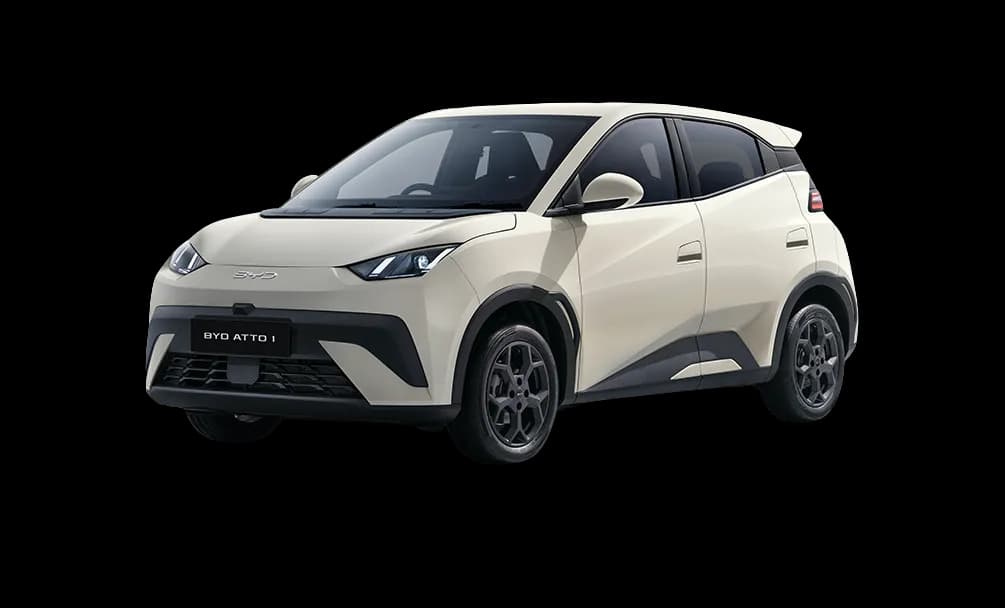
The Atto 1 is a compact hatchback with slim, angular headlight clusters, character lines sweeping from the front wheel arches to the rear doors, and a full‑width LED light bar at the back. It rides on 16‑inch alloy wheels with 185/55 R16 tyres.
The overall effect is youthful and tech‑forward rather than rugged. The Atto 1 looks like a modern city hatch with a bit of EV flair, but it does not pretend to be a crossover or SUV. Buyers who like clean, slightly futuristic hatchback styling will be comfortable here, while those looking for a taller, more imposing stance may find it a touch modest.
Kia Syros EV
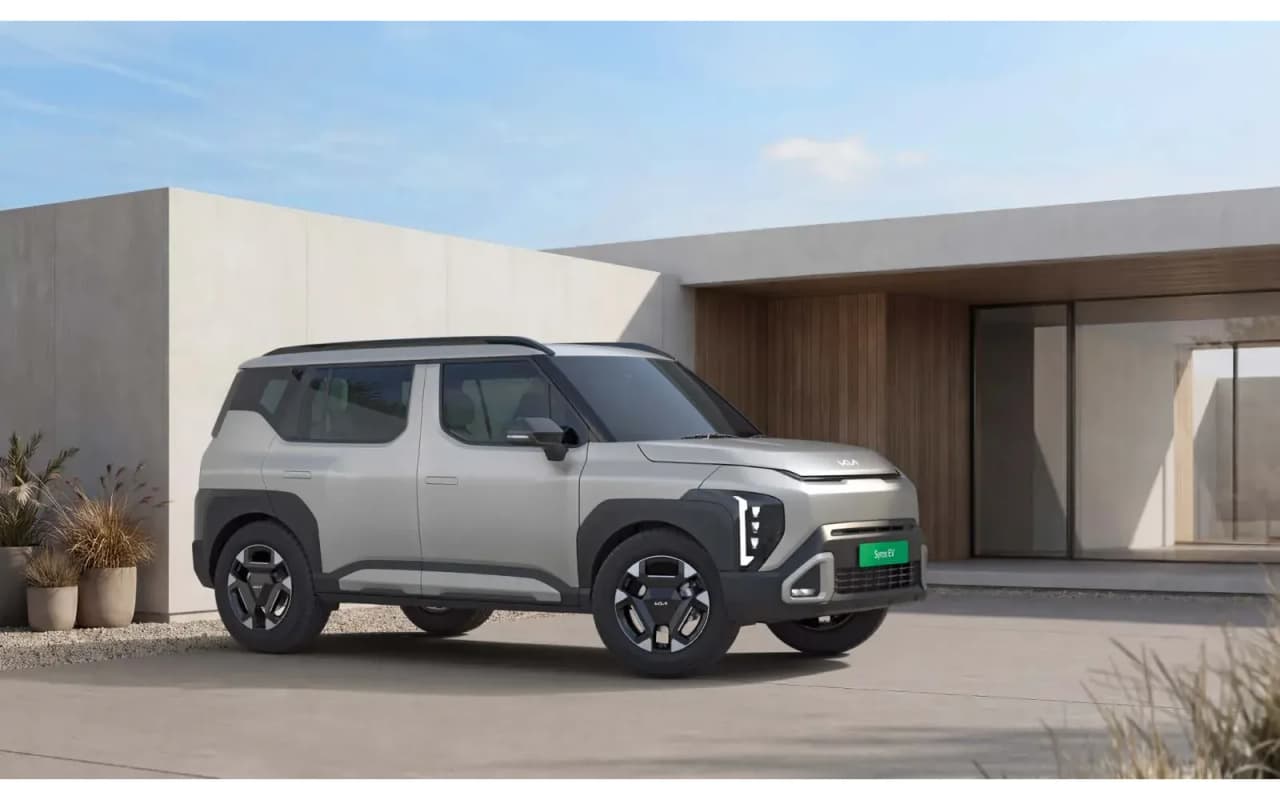
The Syros EV sits clearly in the compact crossover camp. Its front bumper is revised with a slimmer cooling slot above the number plate and triangular pods housing LED fog lamps. The charging port sits on the front left fender, and a tri‑spoke alloy wheel design unique to the EV reinforces its electric identity.
The battery pack protrudes slightly and is visible from the side, subtly reminding you this is a converted EV, not a ground‑up electric-only platform. At the rear, differentiation is minimal apart from an EV badge, so it looks familiar to anyone who has seen the ICE version.
For Nepali buyers, the Syros’ crossover stance will feel more substantial on the road and more aligned with the current trend towards SUV‑ish shapes. The Atto 1, meanwhile, will appeal to buyers who prioritise compact dimensions and clean design over road presence.
Features and Equipment: Tech vs Value
Infotainment and Digital Experience
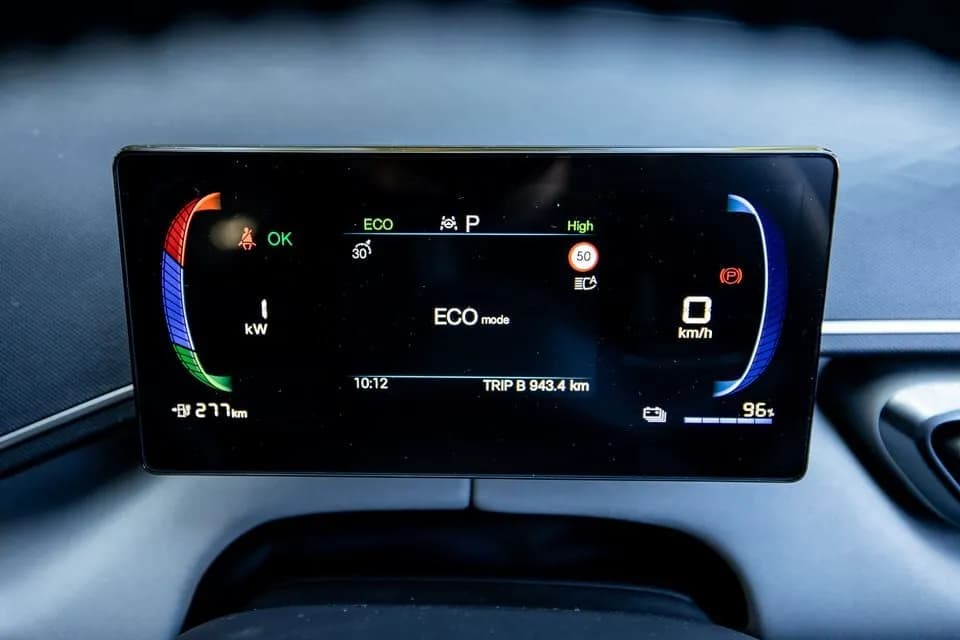
This is where the Kia Syros EV opens up a clear advantage.
- Syros EV brings dual 12.3‑inch screens for instrumentation and infotainment plus a separate 5‑inch climate control display. It includes EV‑specific displays showing battery status, nearby charging points, and energy consumption, plus wireless Android Auto and Apple CarPlay. Connected car features such as remote start, remote cooling, phone‑as‑key, scheduled charging, and remote battery preconditioning are standard.
- Atto 1 Premium (Long Range) gets a 10.1‑inch display. Its strengths lie more in EV‑specific tech and connectivity within BYD’s ecosystem, but in pure screen real estate, interface polish and connected features, it cannot match the Syros EV’s dual‑screen, connected‑car spread.
For buyers who prioritise a modern, tech‑heavy cabin with big screens and remote features, the Syros EV is the more satisfying choice.
Comfort and Interior
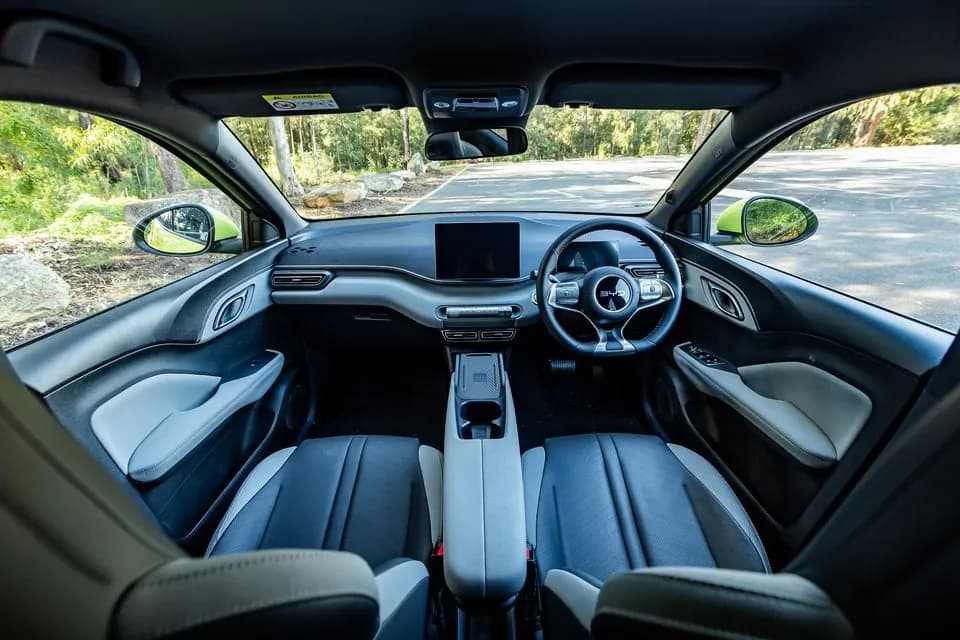
- Atto 1 Premium (Long Range) offers 6‑way power‑adjustable driver’s seat, a power‑adjustable front passenger seat, and grey synthetic leather trim seats. For a car around Rs 34.8 lakh, these are generous creature comforts, especially for the driver.
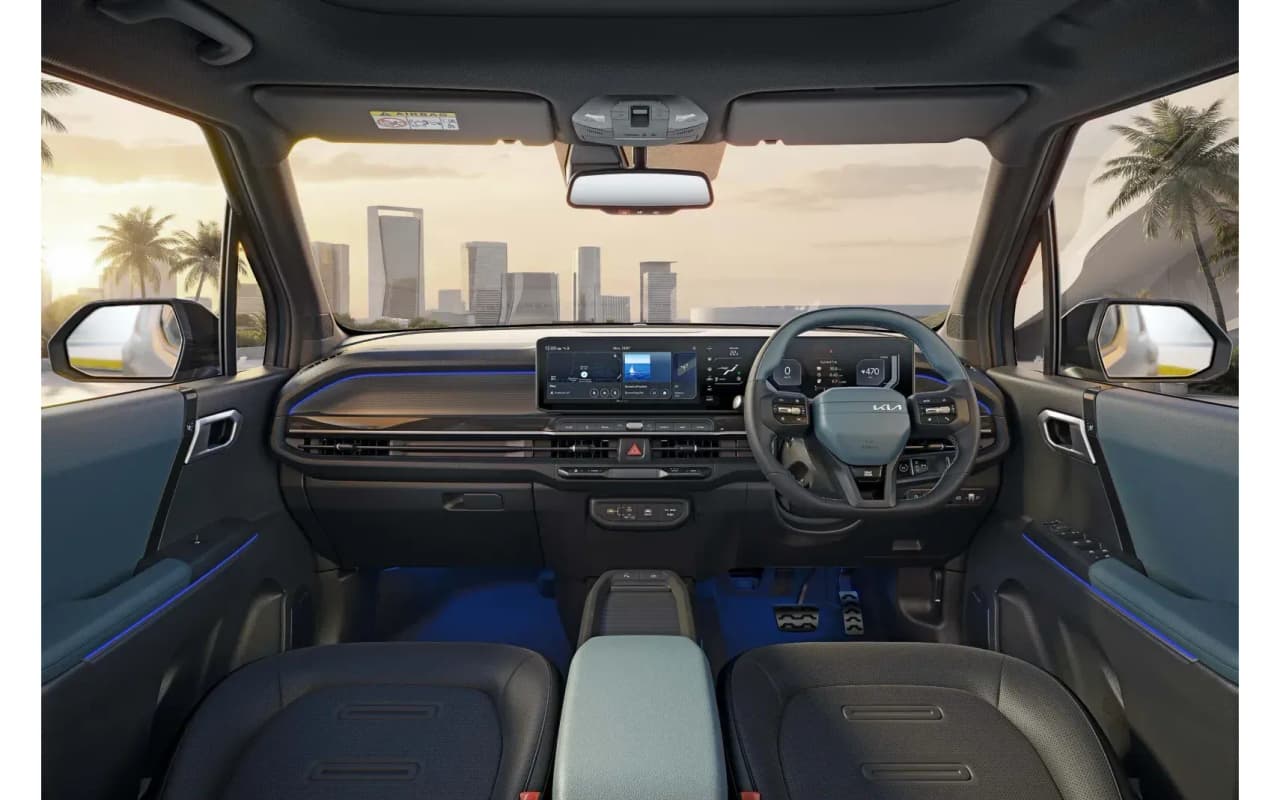
- Syros EV pushes comfort further. It removes the conventional transmission tunnel and gear selector, using a drive mode selector mounted on a stalk that also carries the start/stop switch, freeing up cabin space. Front seats get ventilation and partial power adjustment for fore/aft movement and recline. Rear seats slide forward and backward, and the rear floor is fully flat, which helps legroom and foot placement.
The Syros cabin also features ambient lighting with 64 colours flowing into the footwells, adding a premium feel. The rear seat can comfortably accommodate a passenger over six feet tall, although there is no rear centre headrest, which is a small ergonomic compromise.
Overall, the Atto 1 gives you solid comfort features in a smaller package; the Syros EV steps up with more space, ventilation, and adjustable rear seating that makes longer city commutes and occasional highway trips more pleasant, especially for rear passengers.
Storage and Practicality Inside
Here, the Syros EV takes a clear lead.
- Syros EV offers 390–465 litres of boot space depending on rear seat position, a space‑saver spare tyre under the boot floor, and a small 16‑litre frunk under the bonnet. Inside, there is a large glovebox, dashboard shelf, generously sized door pockets, two adjustable cup holders in the centre console, a storage box beneath the armrest, and a floating centre console with a storage shelf underneath.
- Atto 1 Premium provides a 50:50 split‑folding rear seat and underfloor storage area in the boot, but notably no spare wheel.
For small families or anyone who regularly carries luggage or shopping, the Syros EV’s flexible boot and numerous storage solutions feel more like a traditional crossover. The Atto 1 is workable for city life and occasional trips, but its modest rear seat and boot space, combined with the lack of a spare wheel, will feel more limiting for extended road journeys.
Safety and Driver Assistance
On safety hardware, both cars offer a serious package, but the Syros EV’s driver‑assistance tech is more comprehensive.
BYD Atto 1
The Atto 1 Premium features ventilated front discs, rear discs, hydraulic brake assist, and tunable regenerative braking. Electric power‑assisted steering and a parking brake deceleration control system underline its EV‑centric engineering. It comes with six airbags, though there is no front‑centre airbag.
Higher trims in the broader Atto family offer autonomous emergency braking, adaptive cruise control, and lane‑keep assist, but blind‑spot monitoring and rear cross‑traffic alert are absent. On this Premium 2026 facelift, the core active safety suite is competitive for the segment but not segment‑topping.
Kia Syros EV
The Syros EV’s single variant includes six airbags, ESC, hill start assist, a tyre pressure monitor, and ISOFIX child seat mounts. All four wheels have disc brakes.
Crucially, it comes standard with a Level 2 ADAS suite including auto emergency braking, lane keep assist, high beam assist, adaptive cruise control, parking collision avoidance, and leading vehicle departure alerts. This means much more active support in traffic and on highways, reducing fatigue and adding an extra layer of protection when used responsibly.
In simple terms: Atto 1 has very solid passive safety and braking, especially considering its price, but the Syros EV delivers a more advanced, integrated driver‑assistance experience out of the box.
Motor, Performance and Driving Character
The available data paints a partial but still useful picture of how these cars will feel on Nepali roads.
BYD Atto 1
The Premium (Long Range) variant uses a motor rated at 45 kW with 135 Nm of torque. Acceleration is quoted at 5.5 seconds, though the exact benchmark (for example, 0–50 km/h) is not specified.
With a 38.88 kWh battery and 300 km claimed range, the Atto 1 is tuned more for efficiency and range than outright power. In city use, that torque should be sufficient for brisk responses up to typical urban speeds. For highway work and uphill climbs, the power figure is modest compared with larger EVs in the market, but acceptable for a compact hatch in this price band.
Kia Syros EV
The Syros EV uses a permanent magnet synchronous motor driving the front wheels. Exact power and torque figures for the Nepali specification are not disclosed in the dataset, but the character is described as smooth and quiet urban performance, clearly aimed at calm city driving rather than performance thrills.
Regenerative braking has four levels (0–3) controlled via paddle shifters. A long press on the left paddle activates one‑pedal driving mode, allowing near‑complete control with just the accelerator in dense traffic. This makes the Syros feel more modern and EV‑specific in everyday driving, and many owners quickly come to appreciate the convenience.
From an editorial standpoint, the Atto 1 feels like the more range‑focused, efficiency‑driven hatch, while the Syros EV feels like the more polished daily commuter with refined behaviour and sophisticated regen controls. Neither is aimed at enthusiast performance; both target comfort and ease.
Ride, Ground Clearance and Comfort on Nepali Roads
Ground clearance is especially important for Nepal, and again the two cars diverge.
- Atto 1 Premium: 175 mm ground clearance, 2,500 mm wheelbase, weight 1,690 kg.
- Syros EV: 197 mm ground clearance, which is 7 mm higher than its ICE counterpart.
The Atto 1, at 175 mm, is respectable for a hatchback and adequate for most city roads and well‑maintained highways. However, on rough village tracks, steep speed breakers and under‑construction surfaces, the Syros’ extra clearance and crossover stance will simply be more forgiving.
When combined with the Syros’ more spacious cabin, flat rear floor, and sliding rear seats, it feels better tailored to carrying passengers in comfort over uneven city and peri‑urban routes. The Atto 1’s ride should be perfectly acceptable for its class, but expectations must be set: this is a compact hatch, not a micro‑SUV, and its rear seat and boot space are modest for long family road trips.
Battery, Range and Running Costs
This is where the Atto 1 strikes one of its strongest blows.
BYD Atto 1
The Premium (Long Range) 2026 facelift carries a 38.88 kWh battery with a claimed 300 km range, described as WLTP‑style, which is strong for a compact hatch at this price. Charging power is around 40 kW DC, which is somewhat behind newer high‑speed EVs but acceptable in this bracket.
The Atto 1 uses BYD’s Blade battery technology, widely regarded for safety and longevity. Combined with BYD’s EV focus and warranty practices on other models, the Atto 1 presents a very reassuring battery story for buyers concerned about long‑term degradation.
This 300 km range makes the Atto 1 particularly attractive to buyers who:
- Commute daily within the Valley.
- Occasionally drive intercity routes without wanting range anxiety.
- Want to avoid frequent fast‑charging stops on highways.
Kia Syros EV
For the Syros EV, the dataset emphasises its warranty rather than a precise range figure.
The battery pack adds roughly 200 kg to the vehicle’s weight and comes with a 15‑year or unlimited kilometre battery warranty for the first owner. That warranty length is exceptional and a major confidence booster, especially for cautious buyers worried about EV battery replacement costs.
The likely trade‑off is that the Syros EV is primarily city‑focused in its range and tuning. For most urban Nepali use cases, the range will be adequate, but for frequent long highway runs or multiple intercity trips in a week, buyers may prefer the Atto 1’s clearly stated 300 km capability.
Running Costs
For both cars, electricity costs versus petrol savings are similar in broad terms, but the Atto 1’s stronger usable range can reduce how often owners need to rely on fast‑charging infrastructure. The Syros EV counters with an ultra‑long battery warranty, improving perceived total cost of ownership over 10–15 years.
Price, Variants and Value: Side‑by‑Side
Both line‑ups are intentionally simple in Nepal.
- BYD Atto 1 Premium (Long Range) 2026 Facelift: Rs 34.8 lakh.
- Kia Syros EV Single Variant: Rs 37.9 lakh.
There are no variant layers to navigate on the Syros EV. The Atto 1 Premium is the long‑range, richer‑spec variant within the Atto 1 family and carries a modest price bump compared with shorter‑range entries, justified by its 300 km range and feature set.
Key Comparison Table
| Aspect | BYD Atto 1 Premium (Long Range) | Kia Syros EV Single Variant |
|---|---|---|
| Ex‑showroom price | Rs 34.8 lakh | Rs 37.9 lakh |
| Body style | Compact hatchback | Compact crossover |
| Battery | 38.88 kWh | Not disclosed (adds ~200 kg) |
| Claimed range | 300 km | City‑focused, not officially specified |
| DC charging power | 40 kW (approx.) | Not disclosed |
| Motor layout | Front electric motor, 45 kW, 135 Nm | Front permanent magnet synchronous motor |
| Ground clearance | 175 mm | 197 mm |
| Infotainment | 10.1‑inch display | Dual 12.3‑inch screens + 5‑inch climate display |
| Seats | Power‑adjustable front seats, synthetic leather | Ventilated, partially power‑adjusted front seats, sliding rear seats |
| Boot & storage | Split‑fold rear seat, underfloor storage, no spare | 390–465 L boot, space‑saver spare, 16 L frunk, rich cabin storage |
| Safety & ADAS | 6 airbags, strong braking, limited ADAS | 6 airbags, ESC, Level 2 ADAS suite standard |
| Battery warranty | Not specified for this variant | 15‑year/unlimited km for first owner |
| Network footprint | 62 showrooms, 26 service centres | 37 showrooms, 29 service centres |
From a pure value perspective, the Atto 1 offers long‑range EV access at about Rs 3 lakh less, with respectable safety and comfort, making it one of the strongest value plays in Nepal’s Rs 30–40 lakh EV band.
The Syros EV charges more but gives back a more sophisticated cabin, better space, stronger ground clearance, richer infotainment and connected features, and a standout battery warranty with advanced ADAS. For many buyers, that extra spend will feel justified.
Which EV Suits Which Buyer?
Choose the BYD Atto 1 if:
- You want maximum range per rupee in a compact EV.
- Your budget sits firmly in the mid‑Rs 30 lakh band and stretching to Rs 38 lakh is difficult.
- Your use case involves a mix of city commutes and occasional intercity trips where range anxiety would be unwelcome.
- You value BYD’s Blade battery tech and EV‑focused engineering.
- You are comfortable with a smaller hatchback footprint and can live with modest rear seat and boot space.
Choose the Kia Syros EV if:
- You prioritise a refined, spacious cabin with more comfortable rear seating.
- You want big, modern screens, connected‑car features, and advanced regen controls including one‑pedal driving.
- Ground clearance and crossover styling matter for your regular routes and road conditions.
- You place high value on ADAS features like adaptive cruise control and auto emergency braking.
- A 15‑year/unlimited kilometre battery warranty gives you peace of mind for long‑term ownership.
Editorial Verdict
Viewed through a strict value lens, the BYD Atto 1 Premium (Long Range) is the stronger deal: lower price, clearly stated 300 km range, proven Blade battery tech, and solid safety in a compact package. For buyers whose priority is affordable, long‑range EV ownership with mostly city use and occasional highway trips, the Atto 1 is the more rational choice.
However, when the budget can comfortably stretch, the Kia Syros EV feels like the more complete everyday car. Its cabin quality, seating comfort, ground clearance, storage solutions, connected tech and Level 2 ADAS combine to deliver a more mature ownership experience, particularly for families and buyers who value brand reassurance and long‑term battery warranty.
In short: Atto 1 wins on value and range; Syros EV wins on comfort, tech and long‑term confidence. Nepali buyers should start by deciding whether range per rupee or overall cabin and brand experience matters more, then choose accordingly.
Explore full specifications, variants & ownership context
Compare the exact variants
Specifications, features & ownership context
Choose a variant for each vehicle. The facts below follow that exact trim; the article explains the trade-offs.
Latest catalog and directory records supplement the original analysis. Figures may have changed since publication; individual specification and price-check dates appear below.
BYD Atto 1
Rs 34.8 lakh ex-showroom · source checked 19 Oct 2026
Kia Syros EV
Rs 37.9 lakh ex-showroom · source-check date not recorded
Battery & charging
| Specification / feature | BYD Atto 1 | Kia Syros EV |
|---|---|---|
| Battery | 38.88 kWhResearched · confirm · 27 Aug 2026 | 42 kWhResearched · confirm · 14 Sept 2026 |
| Claimed range | 300 km (WLTP)Researched · confirm · 27 Aug 2026 | 443 km (MIDC)Researched · confirm · 14 Sept 2026 |
Dimensions & weight
| Specification / feature | BYD Atto 1 | Kia Syros EV |
|---|---|---|
| Ground clearance | 175 mmResearched · confirm · 27 Sept 2026 | 197 mmResearched · confirm · 14 Sept 2026 |
Drivetrain & transmission
| Specification / feature | BYD Atto 1 | Kia Syros EV |
|---|---|---|
| Transmission | AutomaticResearched · confirm · 27 Aug 2026 | AutomaticResearched · confirm · 14 Sept 2026 |
Claimed range uses the stated test cycle. Different cycles are not a like-for-like range comparison; actual range depends on roads, load, speed and weather.
BYD Atto 1
Showroom & service support
Distributor: Cimex Inc. Pvt. Ltd.
70 listed brand showrooms · 44 listed brand service locations
Listed cities include Anamnagar, Banepa, Bhairahawa, Bhaktapur, Bharatpur, Biratnagar and 11 more.
Brand-wide directory coverage. Confirm that your nearest workshop supports this exact model, powertrain and warranty work; ask about parts availability and booking time.
Market buzz & buyer priorities
Compiled discussion, including buyer reactions and ownership reports; this is not a verified owner survey or a reliability score. Research dated 14 Oct 2026.
What people like
- Higher battery capacity provides peace of mind
- Highly competitive pricing for the entry-level EV segment in Nepal
Concerns to investigate
- Concerns about long-term service and reliability
- high price compared to international market
- parts and service costs are high
More feedback
- Power in motor could be better
Nepal ownership context
- Buyers frequently compare it against the Dongfeng Nammi 01 for size and ground clearance.
- Resale value remains a point of speculation due to the model's relatively recent entry into the Nepali market.
- Service centers are primarily concentrated in major urban hubs, causing concern for owners in remote districts.
More feedback
- Its compact dimensions and reported 175 mm ground clearance make it suitable for Kathmandu streets, parking and speed breakers.
- Nepali buyers compare ownership support with competing EVs because service reach, repair time and spare-parts availability matter outside the Valley.
Kia Syros EV
Showroom & service support
Distributor: Continental Trading Enterprises Pvt. Ltd. (Kia Nepal)
43 listed brand showrooms · 30 listed brand service locations
Listed cities include Bhairahawa, Bhaktapur, Bharatpur, Biratnagar, Birtamode, Butwal and 13 more.
Brand-wide directory coverage. Confirm that your nearest workshop supports this exact model, powertrain and warranty work; ask about parts availability and booking time.
Market buzz & buyer priorities
Compiled discussion, including buyer reactions and ownership reports; this is not a verified owner survey or a reliability score. Research dated 13 Oct 2026.
What people like
- Features of Syros are better than Vigo
- Spare parts and service for Syros are cheaper
- Build quality of Syros is good
Concerns to investigate
- lack of rear camera and parking sensors
- NMC battery in Syros is less reliable than LFP battery in Vigo
- After-sales service for Syros is not good
More feedback
- Vigo E2 is preferred for better charging cycles
What buyers ask for
- features like rear camera and parking sensors
Nepal ownership context
- Continental Trading Enterprises is the authorized distributor for Kia in Nepal.
- The 197 mm ground clearance is frequently highlighted as a key advantage for navigating varied Nepali road conditions.
- Resale value and long-term service network remain key considerations for buyers given the model's recent entry into the market.
More feedback
- Its Nepal specification uses a 42 kWh liquid-cooled battery, a 99 kW motor, 255 Nm of torque and a claimed 443 km MIDC range.
- The 197 mm ground clearance, taller tyres and compact spare wheel are useful for uneven roads and long-distance travel in Nepal.
Use these facts alongside the article’s full analysis. Check the final quotation, warranty terms and exact equipment before booking.
Evidence & next steps
Check the details before you buy
Use this guide to build a shortlist. Ask for a written quotation for your chosen variant, including registration, taxes, insurance, finance charges and any charger installation. Confirm the nearest authorised workshop supports that model.
Price sources and dates
These are the recorded distributor-source checks for the selected overview trims. They are separate from the article update and catalog read dates; they do not mean every trim was rechecked today. Confirm the final price with the distributor.
Overview photos come from the corresponding model records; additional article photos carry their own credits. Running costs depend on usage, energy prices, maintenance, insurance and resale value.