Where This Bike Sits On Nepal's Roads
The Bajaj Pulsar 150 has been sold in Nepal since 2017 through HH Bajaj, and in that time it has settled into a very specific slot: the bike you buy when a 125 feels underpowered but a 160 or 200 feels like more commitment than you need. Priced between Rs 2.87 lakh and Rs 3.81 lakh depending on variant, it sits squarely in the mid-capacity commuter bracket that dominates urban and semi-urban riding across the country. This is not a bike bought for weekend highway runs to Pokhara, though it will do that job adequately. It is bought to be ridden every single day, through Kathmandu traffic, on Tarai roads, and up modest hill gradients, without drama and without a heavy service bill.
Six variants carry the Pulsar 150 name in Nepal right now, from the Standard at Rs 2,86,900 through to the TD UG at Rs 3,80,900, and that spread alone tells you how much Bajaj has stretched this one platform to cover different budgets and feature levels. We'll get into what separates them, but the short version is: this is a familiar, well-understood motorcycle in the Nepali market, and most of what you need to know about it is which variant to pick, not whether the underlying bike is any good.
A Look That's Barely Changed And Doesn't Need To
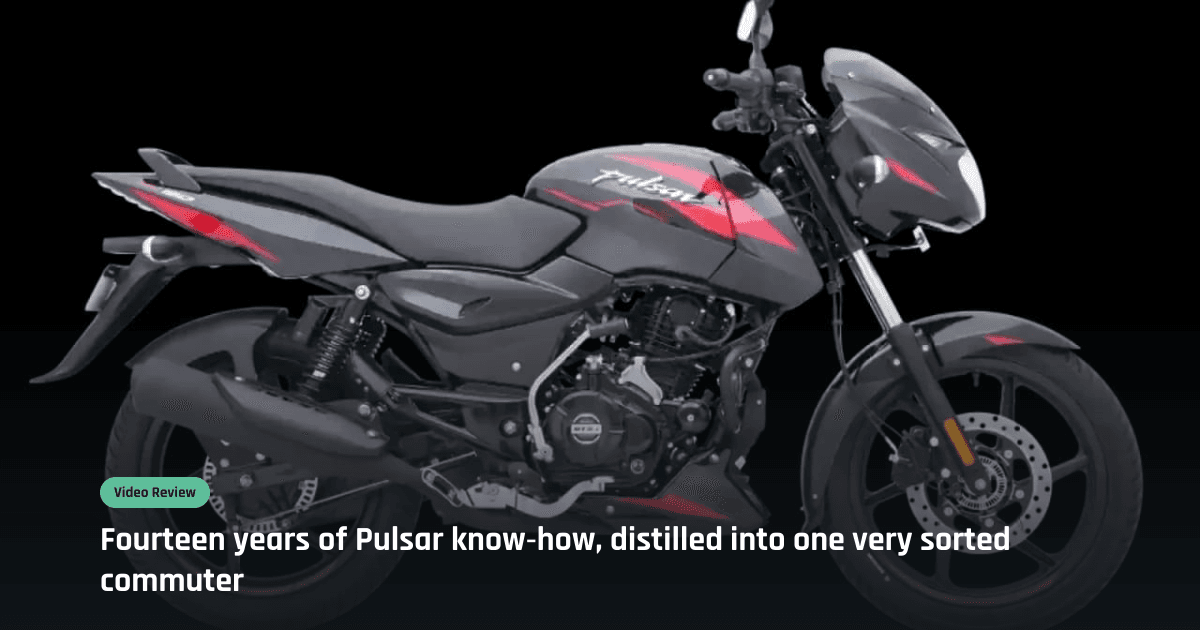
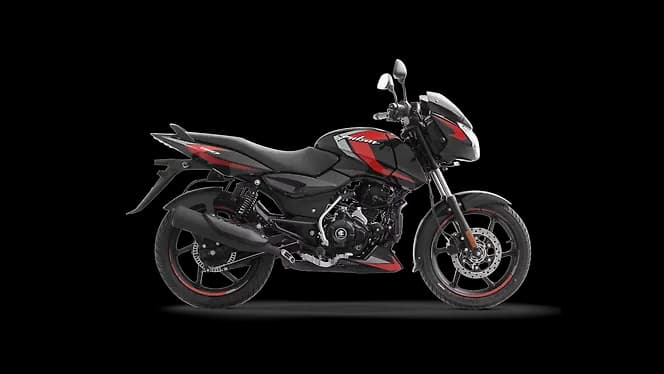
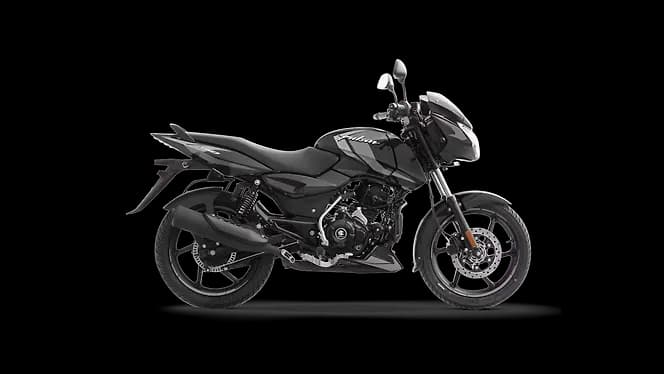
The Pulsar 150's design language is one Bajaj has carried for close to two decades now, and it shows in the details: the twin-strip LED taillight at the rear is instantly recognisable, and it remains one of the most distinctive elements on the bike even today. The tank shroud graphics extend rearward across the body rather than staying confined to the front, giving the bike a slightly longer, more stretched visual identity than its smaller Pulsar 125 sibling, whose graphics point forward instead. Depending on variant, the side panels get a full carbon-fibre-textured finish, which reads as a genuine styling upgrade over the plainer trims rather than just a sticker job.
Build quality across the panels, brake and gear levers, footpegs and silencer is consistent with what Bajaj has offered on this platform for years — nothing feels cut-price, but nothing feels particularly premium either. It's a bike that looks purposeful rather than flashy, which suits its role as a daily workhorse. At 2035mm long, 750mm wide, and with an 805mm seat height on this trim (dimensions do vary slightly by variant, with some measuring 2055mm long and 795mm seat height), it has a reasonably substantial road presence for a 150cc machine without tipping into bulky.
What You Actually Get For Your Rupees
Feature-wise, the Pulsar 150 range spans from fairly basic to genuinely well-equipped. Every variant gets a digital fuel gauge, call and SMS alerts, and Bajaj's mobile app connectivity, which is more than a lot of commuters at this price offer. Higher variants step up to a full digital LCD instrument cluster, while base trims make do with a simpler display — the kind of variant-by-variant feature staggering that's common across Bajaj's Pulsar range and worth checking carefully before you sign for a specific trim at the showroom.
The 15-litre fuel tank is generous for the segment and a genuine practical advantage: it means fewer fuel stops and a real-world tank range that comfortably outlasts most competitors' commuting needs. There's no LED headlight setup on this line-up to speak of in our verified specification data, so buyers wanting that particular styling flourish will need to look at how it's distributed across trims at the dealership rather than assuming it's standard.
The 150cc Engine Feels Right For City Traffic
The heart of the bike is a 149.5cc single-cylinder, air-cooled engine putting out 10.3 kW (14 PS) at 8500 rpm and 13.25 Nm of torque at 6500 rpm, running through a 5-speed manual gearbox with chain drive. On paper these aren't dramatic numbers, but they translate into exactly the kind of usable, low-end-biased performance that matters most in Kathmandu's stop-start traffic. The gear ratios are tuned so the bike pulls cleanly from low revs without demanding constant downshifts, and the initial pickup off a standing start is noticeably stronger than what you get from the smaller-capacity Pulsars in the same family.
This is where the extra displacement earns its keep: a rider weaving through Ring Road traffic or climbing a moderate incline on the way out of the valley doesn't need to work the gearbox nearly as hard as they would on a 125cc machine. The engine stays composed and smooth right up to around 70 km/h, which covers the vast majority of real-world riding in Nepal. Push it past 80 km/h, however, and vibrations start creeping into the bars and pegs — not alarming, but noticeable enough that we wouldn't call this a bike built for sustained highway cruising. Top speed sits around 110 km/h, which is adequate rather than exciting, and entirely in keeping with what this class of commuter is meant to deliver.
Riding Manners Built For Broken Tarmac, Not Racetracks
Suspension duties are handled by 37mm telescopic front forks and twin hydraulic shocks at the rear (some trims use a 31mm front unit), and the tune leans firmly towards comfort. Nepali roads are rarely glass-smooth, and this setup absorbs potholes and broken patches without transmitting harsh jolts through to the rider — exactly the priority a daily commuter needs. The 1345mm wheelbase on the higher-spec variants adds a planted, stable feel at speed, while the shorter 1320mm wheelbase on other trims keeps things nimble for weaving through tight city lanes.
Ground clearance of 165mm is sufficient for typical urban obstacles, speed bumps, and the odd rutted stretch without the underside scraping. Handling doesn't ask much of the rider — this isn't a bike that rewards aggressive cornering, and it doesn't try to be. It's tuned to be predictable and easy to manage at commuting speeds, which is precisely what most buyers in this segment are after.
Roomy Enough For Two, All Day Long
The single-piece seat is genuinely one of the better aspects of daily life with this bike — it's wide and well-padded for both rider and pillion, and the seating position is upright and relaxed rather than committed or sporty. At 150 kg kerb weight (148 kg on some variants), it's light enough to be manageable at low speed and while parking, yet substantial enough to feel stable with two people aboard.
The pillion grab rail is sturdy and sensibly positioned, which matters given how many of these bikes end up doing double duty as family transport. Seat height across variants ranges from 795mm to 805mm, accessible to most adult riders without requiring a tiptoe stance at traffic lights. This is a bike built around the reality that it will regularly carry a second person, sometimes with shopping or a child in tow, and the ergonomics reflect that priority throughout.
ABS Only On The Range-Topper, And That Matters
Braking is where the Pulsar 150 range genuinely splits by variant. The top-spec TD UG gets a 280mm ventilated front disc paired with single-channel ABS — a meaningful safety upgrade over the rest of the line-up, and one we'd actively steer safety-conscious buyers towards. Other variants in the range use disc setups without ABS, backed by a rear drum brake across the entire model line, including the flagship trim.
The gap between ABS and non-ABS variants isn't just a spec-sheet line item — on Nepali roads, where sudden braking for pedestrians, stray animals or other vehicles is a daily occurrence, ABS on the front wheel materially reduces the risk of a front-wheel lockup and low-side crash. If your budget stretches to the TD UG, the extra outlay buys genuine peace of mind, not just a badge.
A 15-Litre Tank That Rewards Fewer Fuel Stops
Running costs on the Pulsar 150 are respectable rather than class-leading. Real-world fuel economy sits around 40-45 km/l, which combined with the 15-litre tank gives a tank range comfortably north of 500 km for most riders — genuinely useful for anyone doing longer commutes between the valley and outlying towns, or riders who'd simply rather not visit the pump every few days.
Maintenance costs benefit from Bajaj's long-established parts and service network through HH Bajaj, which means spares are rarely hard to source and service intervals are well understood by mechanics across the country, from Kathmandu to smaller district towns. This familiarity is worth factoring into any ownership decision — a 150cc Pulsar is about as low-friction a bike to own and maintain as exists in the Nepali market.
Picking Your Way Through Six Variants
This is the part that actually requires homework before you visit a showroom. The Standard at Rs 2,86,900 is the entry point, with the SD at Rs 3,07,900 and Twin Disc at Rs 3,09,900 sitting just above it. Step up further and you reach the TD at Rs 3,80,900 and the SD UG at Rs 3,67,900, with the TD UG at Rs 3,26,900 rounding out the range. Note that pricing doesn't rise in a straight line with equipment across every trim, so it's worth cross-checking exactly what each variant includes — instrument cluster type, disc configuration, and crucially, ABS — rather than assuming a higher badge automatically means a higher spec.
Our recommendation for most buyers is to prioritise the ABS-equipped TD UG if the front disc and ABS combination matters to you, which it should. For buyers strictly on budget, the Standard or SD variants deliver the same core engine and comfort credentials, just without the braking safety net or the fuller digital cluster. Either way, the Pulsar 150 platform underneath is consistent and dependable — the decision is really about how much of the feature and safety ladder you want to climb.
The Honda X-Blade Offers A Sharper, Sportier Alternative
Anyone cross-shopping the Pulsar 150 in Nepal will inevitably look at the Honda X-Blade, which competes in a similar capacity bracket with sportier street-fighter styling and Honda's reputation for refinement and long-term reliability. Where the Pulsar 150 leans on strong low-end torque and a proven Bajaj service network, the X-Blade tends to appeal to buyers who want a more contemporary design language and Honda's typically smoother engine character at higher revs. The Pulsar 150's larger 15-litre tank and its ABS-equipped top variant remain genuine differentiators worth weighing against Honda's own strengths.
The TVS Apache RTR 160 Targets A More Sporty Rider
The other bike buyers consistently cross-check against the Pulsar 150 is the TVS Apache RTR 160, which positions itself with a more track-focused, sporty riding character and a design that leans harder into performance styling than practicality. Where the Pulsar 150 is tuned for comfortable, upright commuting with a soft edge to its suspension, the Apache RTR 160 tends to feel firmer and more eager to be pushed through corners. For buyers who want daily comfort and family-friendly ergonomics first, the Pulsar 150 remains the more sensible pick; for those chasing a sportier riding experience, the Apache is worth a serious look.
Our Verdict: Reliable, Familiar, And Worth The ABS Upgrade
The Bajaj Pulsar 150 continues to justify its long-standing popularity in Nepal not through any single standout feature, but through a well-rounded package that gets the fundamentals right: usable low-end power, a comfortable and spacious seat, a generous fuel tank, and — on the right variant — genuine ABS safety. It isn't a bike that excites past 80 km/h, and the rear drum brake across the entire range feels like a missed opportunity given how far the front-end braking has progressed on the TD UG.
For buyers who want a dependable daily commuter that handles family duties, absorbs rough roads without complaint, and comes backed by a mature parts and service network across Nepal, the Pulsar 150 remains an easy recommendation — provided you spend the extra for the ABS-equipped variant rather than settling for the cheapest trim on the shelf.
Writes on vehicle pricing, taxation and the Nepali auto market from ongoing tracking of distributor price lists. Editorial policy.