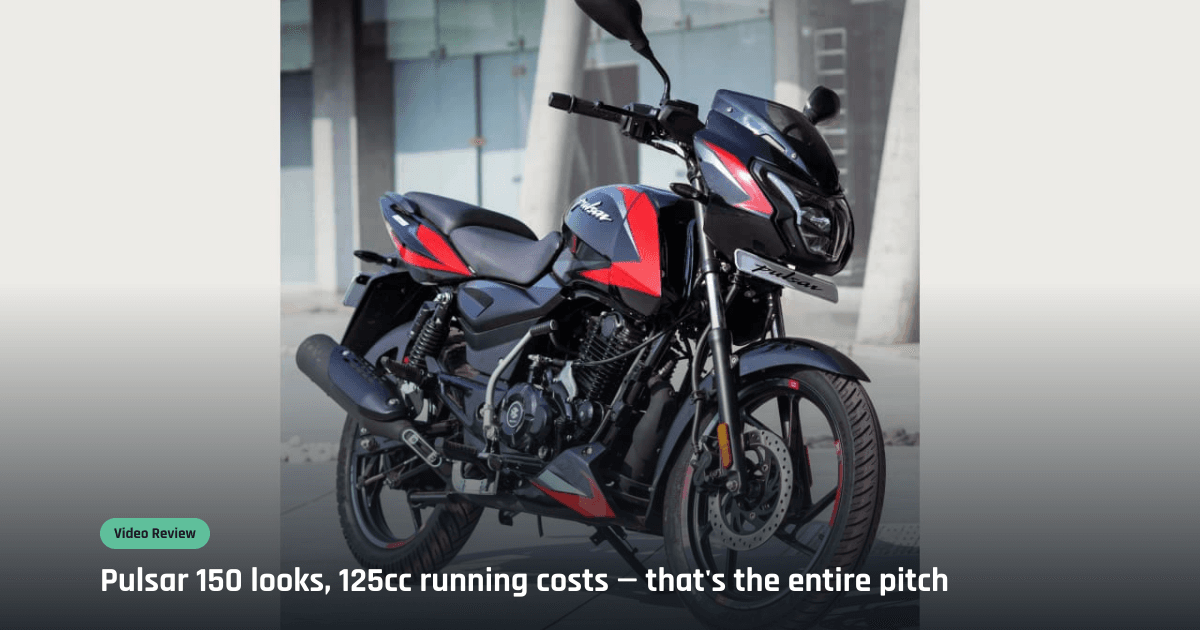
Where The Pulsar 125 Sits In Nepal's 125cc Crowd
The 125cc commuter segment in Nepal is arguably the most contested price bracket in the entire two-wheeler market, and the Bajaj Pulsar 125 has carved out a specific niche within it since its 2019 launch here through HH Bajaj. It doesn't compete on being the cheapest 125 you can buy, nor does it try to be a mileage-first appliance. Instead, it borrows heavily from the visual identity of the larger, more expensive Pulsar 150, and sells that styling at a lower price point with a smaller, more fuel-friendly engine underneath. That positioning — premium looks, mid-tier running costs — is exactly what has made it a consistent seller in showrooms across Kathmandu, Pokhara and the Tarai towns where young, style-conscious first-time buyers dominate footfall.
With ex-showroom pricing running from Rs 2.72 lakh to Rs 3.05 lakh across three variants, the Pulsar 125 sits comfortably in the price band where buyers are cross-shopping executive 125cc commuters rather than entry-level runabouts. It's a motorcycle bought as much for how it looks parked outside a college or office as for what it costs to run — and on both counts, it has a fairly clear story to tell.
Split Seats, Red Rim Tapes, And A Few Missing Stickers
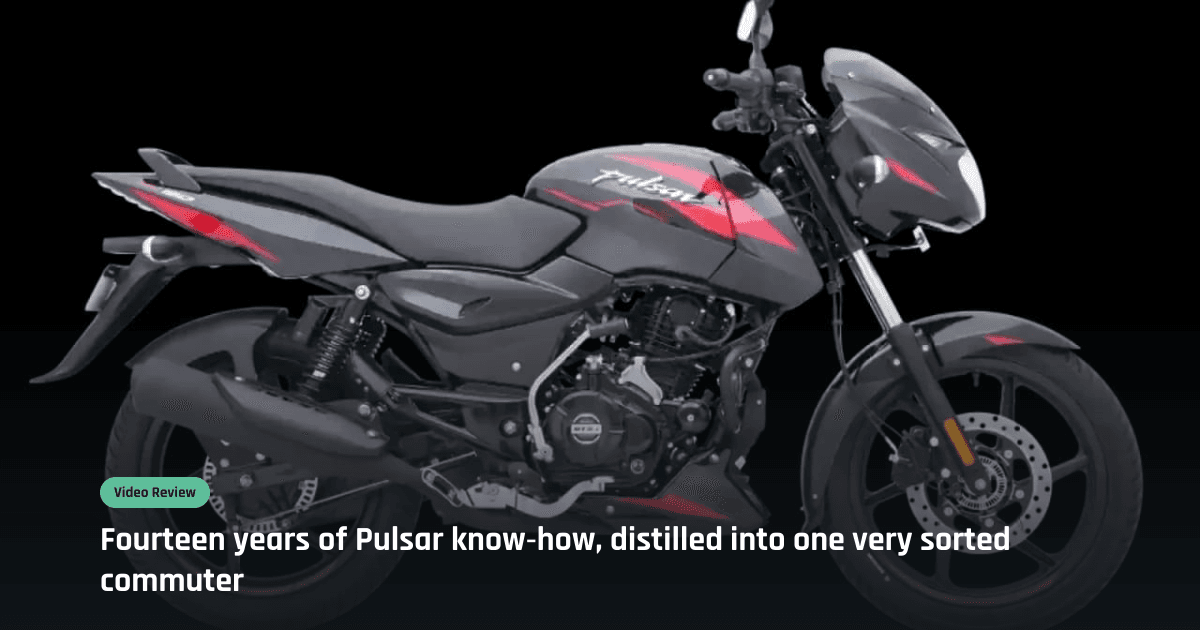
Park a Pulsar 125 next to a Pulsar 150 Split Seat and the resemblance is immediate and deliberate. The overall body shape, the tank shrouds, the split rear seat and split grab rails all echo the bigger bike closely enough that most passers-by wouldn't clock the difference at a glance. That's the entire point of this motorcycle's design brief, and it largely succeeds. The test-spec black alloy wheels with red rim tapes add a sporty accent that lifts what would otherwise be a fairly plain-looking commuter silhouette.
Where the illusion breaks down slightly is in the detailing. The Pulsar 125 misses some of the tank extension graphics and front mudguard decals that dress up the Pulsar 150, leaving it looking a shade plainer out of the showroom. It's a minor point, and one that a lot of owners solve themselves with aftermarket graphics kits within the first few weeks of ownership, but it's worth knowing going in that the "150 look" isn't a complete match straight off the shelf.
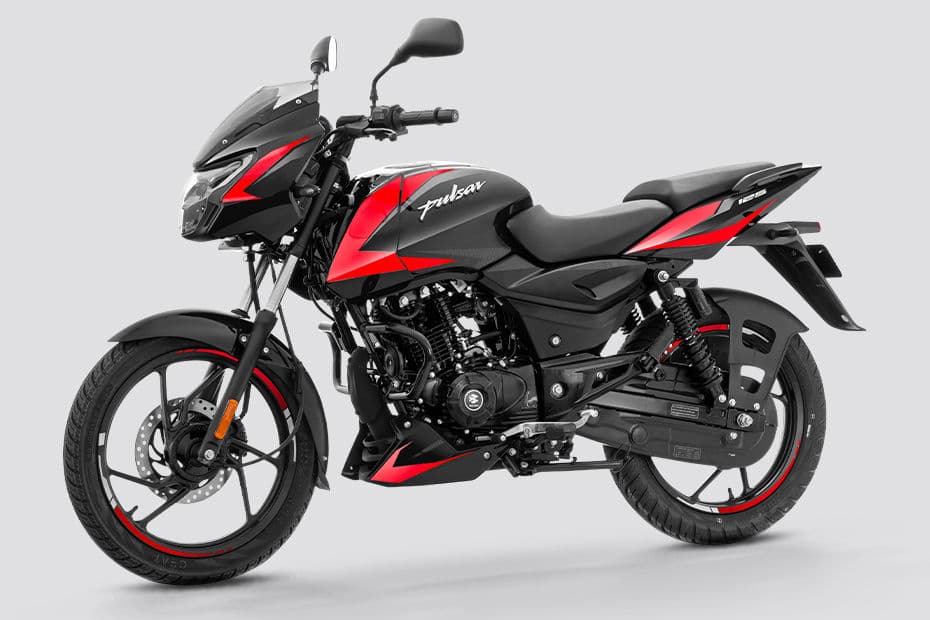
One Colour Combination, Kept Simple
Our showroom checks confirm the Pulsar 125 is offered in a glossy black paint scheme finished with red graphics and accents — a combination that plays well with the black alloys and red rim tapes and reinforces the sporty intent of the design. Bajaj has kept the palette focused rather than offering a wide spread of colourways, which suits a bike whose visual appeal rests on a specific, aggressive look rather than variety.
A Semi-Digital Cluster That's Missing One Useful Readout
The instrument console is a classic Pulsar setup: an analogue tachometer sitting alongside a digital display that handles speed, fuel level and trip information. It's legible, it's consistent with what Bajaj has used across the Pulsar range for years, and it doesn't feel like a downgrade dressed up as simplicity. The one genuine omission is a gear position indicator — a feature increasingly common even on rival 125s — which would have been a small but welcome addition for riders new to a 5-speed gearbox.
Switchgear on the clip-on handlebars is standard Pulsar fare: familiar, reasonably well-built, and not something that draws complaints in showroom feedback. The clip-ons themselves do double duty — they contribute to the sporty stance while keeping the reach to the bars comfortable rather than committed, which matters given this bike's real job is daily city commuting, not weekend blasts.
The 124.4cc Engine Is The Best Reason To Buy This Bike
Under the tank is a 124.45cc, BS6-compliant, air-cooled, SOHC 4-valve DTS-i engine with fuel injection, paired to a 5-speed constant-mesh gearbox and chain final drive. Depending on which spec sheet you check, output is quoted at either 8.82 kW (12 PS) at 8500 rpm with 11 Nm of torque at 7000 rpm, or a slightly lower 8.68 kW (11.8 PS) at 8500 rpm with 10.8 Nm at 6500 rpm — the kind of small variance you see between different homologation figures for the same engine family. Either way, this is not a motorcycle chasing big numbers; it's tuned for smoothness and usability.
And on that front, it delivers convincingly. This is a genuinely refined small-capacity engine — vibrations through the handlebar and footpegs stay well controlled even as speeds climb into the 80–90 km/h range, which is unusual for a 125cc commuter and is consistently one of the most praised aspects of this motorcycle across owner and press feedback alike. Gear shifts are smooth and positive, with a distinct mechanical click that confirms engagement rather than leaving the rider guessing. Low-speed tractability in traffic is another strong point — the engine pulls cleanly from low RPM without lugging or demanding constant clutch slipping, which is exactly the trait that matters most on Kathmandu's stop-start traffic corridors.
Light, Manageable, And Composed At Real-World Speeds
At a kerb weight in the 144–146 kg range and with dimensions that keep it compact — around 2 metres long and roughly 810 mm wide depending on variant — the Pulsar 125 is an easy motorcycle to thread through gaps in traffic. It doesn't feel like it's fighting the rider at low speed, and that agility carries through to higher speeds too, where it stays composed and doesn't develop the nervousness some lightweight commuters show once you're past 70–80 km/h.
Suspension duties are handled by a telescopic front fork and a rear monoshock — a setup that, on paper and in showroom handling checks, should give a reasonably controlled ride over the kind of broken urban tarmac that dominates Nepali city riding, without the harshness that a basic twin-shock setup can bring.
An Upright Riding Position That Doesn't Punish Daily Commuters
Seat height figures vary slightly by source — one spec sheet puts it at 795 mm, another closer to 790 mm — but either way it's low enough that most average-height Nepali riders will get both feet flat on the ground without difficulty, which matters enormously for confidence in traffic and at standstill. The riding triangle is upright rather than committed, with a natural reach to the clip-on bars that doesn't force the rider to hunch forward. For a bike built primarily around a sporty look, that's a genuinely comfortable, fatigue-free seating position for the kind of hour-long daily commute most buyers will actually put it through.
The split seat itself carries decent cushioning and support, and while it's styled more for looks than for touring comfort, it holds up well enough for city use and short highway stretches.
Brakes That Do The Job Without Real Bite
The Pulsar 125 pairs a 240 mm front disc with a 130 mm rear drum, and ABS availability isn't clearly specified across the variants we've checked, so buyers should confirm this directly at the dealership before assuming it's fitted. In practice, the braking setup is adequate rather than sharp — stopping power is there and inspires reasonable confidence, but the front lever doesn't have the aggressive initial bite that riders familiar with the Pulsar 150 or Pulsar 220 would recognise. The rear drum, too, feels like the one clearly dated component on an otherwise contemporary spec sheet, and a rear disc option would be a welcome addition in a future update.
Genuinely Practical For The Commute It's Built For
Where the Pulsar 125 earns its keep is in daily practicality. The combination of easy low-speed manners, a comfortable upright seating position, and an accessible seat height makes it an easy bike to live with for riders doing the same city loop five or six days a week — school run, office commute, errands — rather than long-distance riding.
Running Costs Nobody Has Officially Confirmed — But Expect Efficiency
Bajaj has not officially disclosed a claimed mileage figure for the Pulsar 125, and we'd caution against trusting numbers floating around that aren't from the manufacturer. Based on the engine's character and typical 125cc commuter behaviour, city-riding efficiency in the mid-40s kmpl range is a realistic expectation, though buyers should treat this as an estimate rather than a promised figure until Bajaj publishes one. Fuel tank capacity is another area where figures diverge by source — 12 litres, 11.5 litres, and 15 litres have all appeared against this model — so it's worth asking your dealer to confirm the tank size on the specific variant you're buying.
Three Variants Between Rs 2.72 Lakh And Rs 3.05 Lakh — Here's The One To Pick
The Pulsar 125 comes in three ex-showroom configurations: the Pulsar 125 Disc at Rs 2,72,900, the NS125 ABS FI BS6 at Rs 2,79,900, and the top Standard variant at Rs 3,04,900. For most buyers, the NS125 ABS FI BS6 is the sensible middle ground — it adds ABS-related safety equipment over the base Disc variant for a modest Rs 7,000 premium, which is money well spent on a motorcycle whose braking setup is otherwise unremarkable. The top Standard trim at Rs 3.05 lakh is worth the extra outlay mainly for buyers who want the fullest specification and are less price-sensitive; it doesn't fundamentally change the riding experience underneath.
The Honda Shine 125 Plays It Safer On Running Costs
The Honda Shine 125 is the obvious cross-shop for buyers who prioritise low running costs and Honda's reputation for reliability over sporty styling. It's a plainer-looking motorcycle than the Pulsar 125, without the split-seat aggression or the Pulsar 150-inspired stance, but it has long been positioned as the sensible, low-fuss choice in this segment. Buyers who want a 125 purely as an economical daily tool, with styling as an afterthought, will likely find the Shine 125 the more conservative but dependable pick.
The TVS Raider 125 Undercuts It On Features
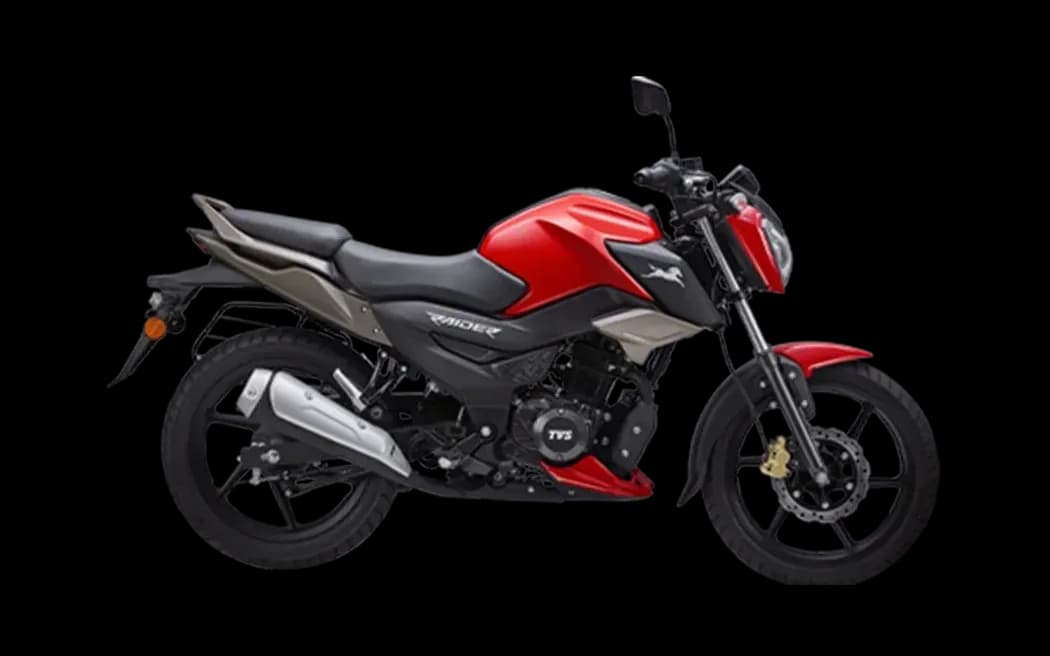
The TVS Raider 125 is the more direct styling and feature rival, aimed at the same young, image-conscious buyer the Pulsar 125 courts. It typically comes with a fuller digital instrument cluster and sharper, more angular styling than the Pulsar's more classic sporty silhouette. Where the Pulsar 125 leans on its Pulsar 150 family resemblance, the Raider 125 leans on tech-forward presentation — buyers who want a gear indicator and a more modern console out of the box may find the Raider the better-equipped alternative.
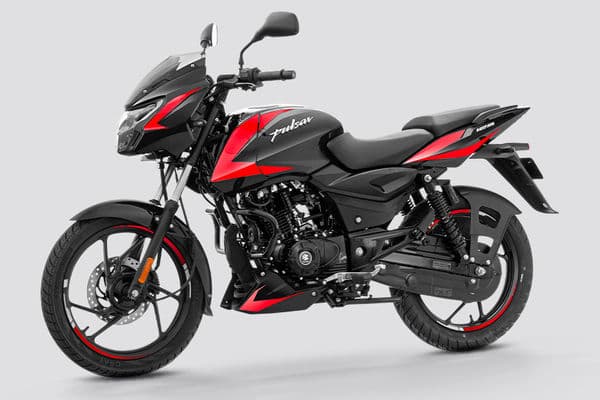
Who Should Actually Buy This Motorcycle
The Bajaj Pulsar 125 makes the most sense for riders who want the visual presence and sporty identity of the Pulsar 150 without committing to its price or running costs. It's a well-refined, comfortable, easy-to-live-with city commuter with a genuinely likeable engine and a riding position that won't punish anyone on a daily grind through Kathmandu traffic. The braking setup and the missing gear indicator are real, fair criticisms rather than dealbreakers, and buyers should weigh the NS125 ABS FI BS6 variant seriously as the value pick of the range. For anyone whose priority list starts with "looks like a bigger Pulsar, costs and runs like a 125," this remains one of the more convincing answers in Nepal's showrooms today.
Writes on vehicle pricing, taxation and the Nepali auto market from ongoing tracking of distributor price lists. Editorial policy.