Where The Ntorq Sits In Kathmandu's Scooter Traffic
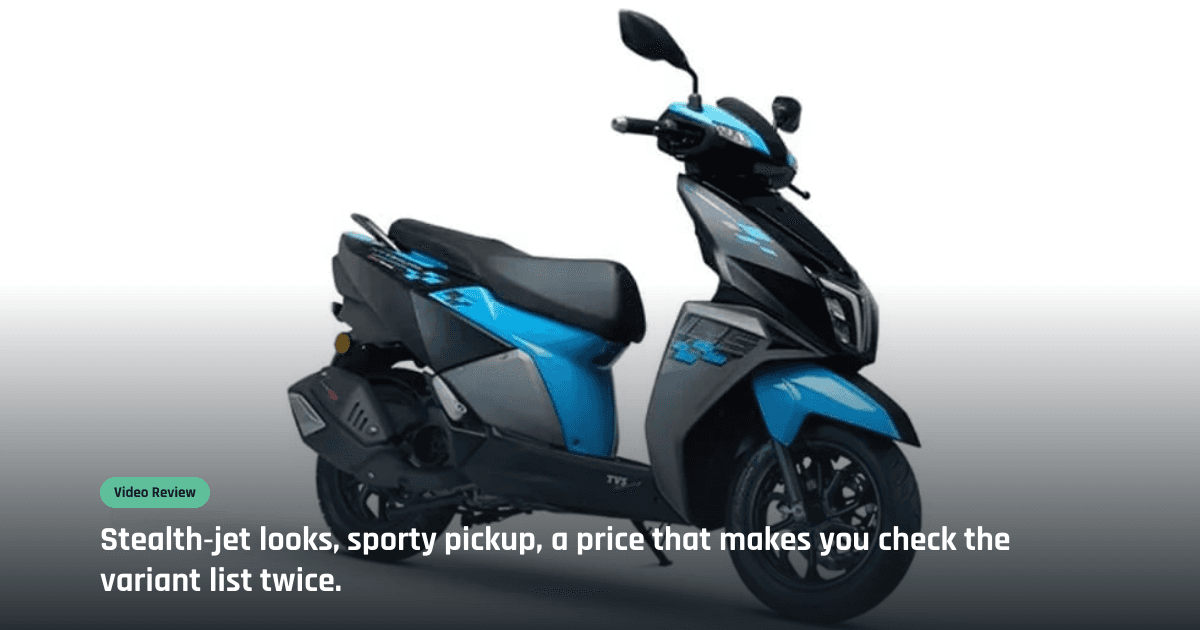
Walk through any showroom floor run by Jagdamba Motors and the Ntorq 125 is instantly the scooter that looks like it wants to be somewhere else — preferably a race track. Since its 2018 launch in Nepal, TVS has positioned it as the sporty, tech-forward option in a 125cc scooter segment that's otherwise dominated by sensible, forgettable commuters. With nine variants spanning Rs 2.34 lakh to Rs 3.35 lakh ex-showroom, TVS has built an unusually wide ladder here — from the basic NTorq Drum at the bottom to the fully loaded Ntorq XP at the top — which means the Ntorq isn't one scooter so much as a family of them wearing the same aggressive face.
That spread matters for Nepali buyers because it lets the Ntorq compete on two fronts at once: as an affordable-ish everyday scooter at the Drum and Disc end, and as a genuine feature flex at the RTFI and XP end. Few rivals in this price band stretch across that much ground.
Stealth-Jet Styling That Actually Looks Different On The Road
TVS didn't play it safe with the way this scooter looks, and that's the single biggest reason it keeps selling in Nepal. The design draws visibly from stealth aircraft — sharp creases, an angular front apron, and a stance that reads sporty even standing still. The headlamp uses a halogen bulb with a multi-focal reflector, which isn't cutting-edge tech on paper but does throw a well-shaped beam and gives the front end a purposeful look rather than a generic round-eyed commuter face.
The details are where it wins people over, though. A T-shaped LED daytime running light sits low on the front apron, and TVS mirrors that shape at the back with a T-shaped LED tail lamp and brake light — it's a small design signature but a genuinely distinctive one, and it means the Ntorq is identifiable from a good distance in traffic, day or night. The floorboard carries a textured finish rather than plain rubber matting, which is a small practical touch that also fits the sporty theme. Up top, the two-tone, two-tier seat design continues that same sporty language, visually separating rider and pillion sections rather than running one flat bench.
Build quality at showroom level feels consistent with what a TVS product should be at this price — panel gaps are tight, the plastics on the apron and floorboard don't feel like an afterthought, and the overall fit matches the sporty pretension of the design rather than undercutting it.
Matte Grey And Red, And The Graphics That Go With It
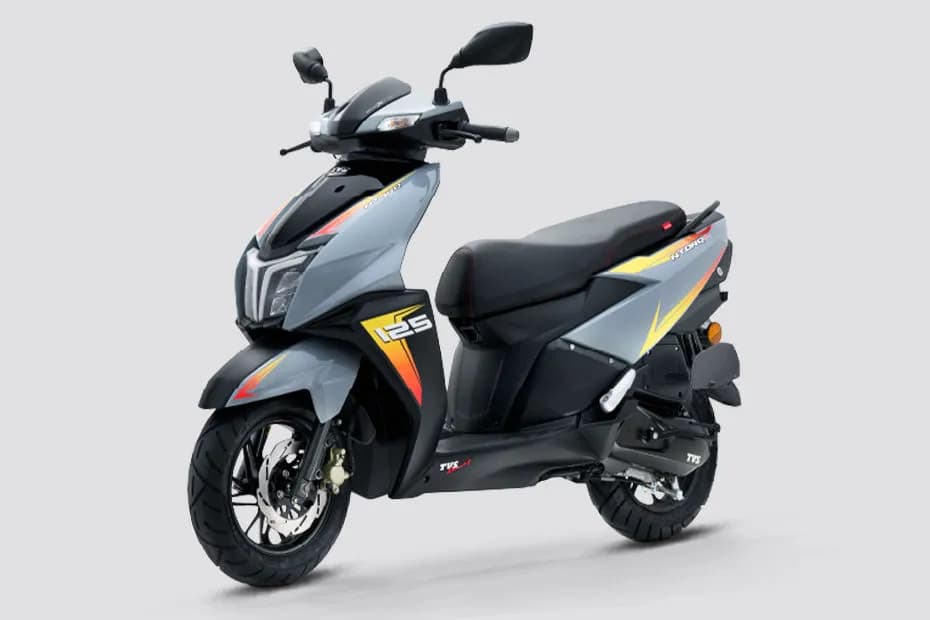
The colour scheme most closely associated with the sportier end of this range is a matte grey and red combination finished with sporty graphics — a scheme that leans into the race-inspired identity rather than away from it. Buyers looking at the Race Edition and Race XP FI trims in particular should expect this kind of aggressive, motorsport-flavoured colour treatment rather than the softer, single-tone finishes typical of a standard commuter scooter.
A Digital Console With More Tech Than This Segment Usually Offers
This is genuinely where the Ntorq separates itself from most 125cc scooters sold in Nepal. The fully digital instrument console comes with Bluetooth connectivity through TVS's SmartXonnect system, and it isn't just a speed and fuel readout dressed up digitally — it supports navigation assist, caller ID, phone battery display, a top-speed recorder, a lap timer, and last-parked-location assist. There's also a trip meter, ride statistics and service reminders built into the same ecosystem. For a segment where most rivals still offer a basic analogue cluster with maybe a fuel gauge, this is a real point of difference, and it's the single feature buyers and reviewers across markets keep singling out.
Elsewhere, the practical touches back this up. An engine kill switch sits on the handlebar — simple, but genuinely useful and still missing on some rival scooters in this price band. Under the seat there's a USB charger paired with an integrated light, handy for topping up a phone or finding something in the storage well after dark. And around the back, TVS has fitted an external fuel filler cap, so refuelling doesn't require flipping the seat open every time — a small convenience that riders notice daily far more than they notice a spec sheet number.
It's worth being upfront that Bluetooth and the fully digital console are not confirmed features across every trim — older BS4-spec versions in Nepal don't carry the same documented feature set, so buyers should confirm exactly which console and connectivity package comes with the specific variant they're looking at before assuming the top-spec tech carries down the range.
The 124.8cc Engine's Real Strength Is Getting Off The Line
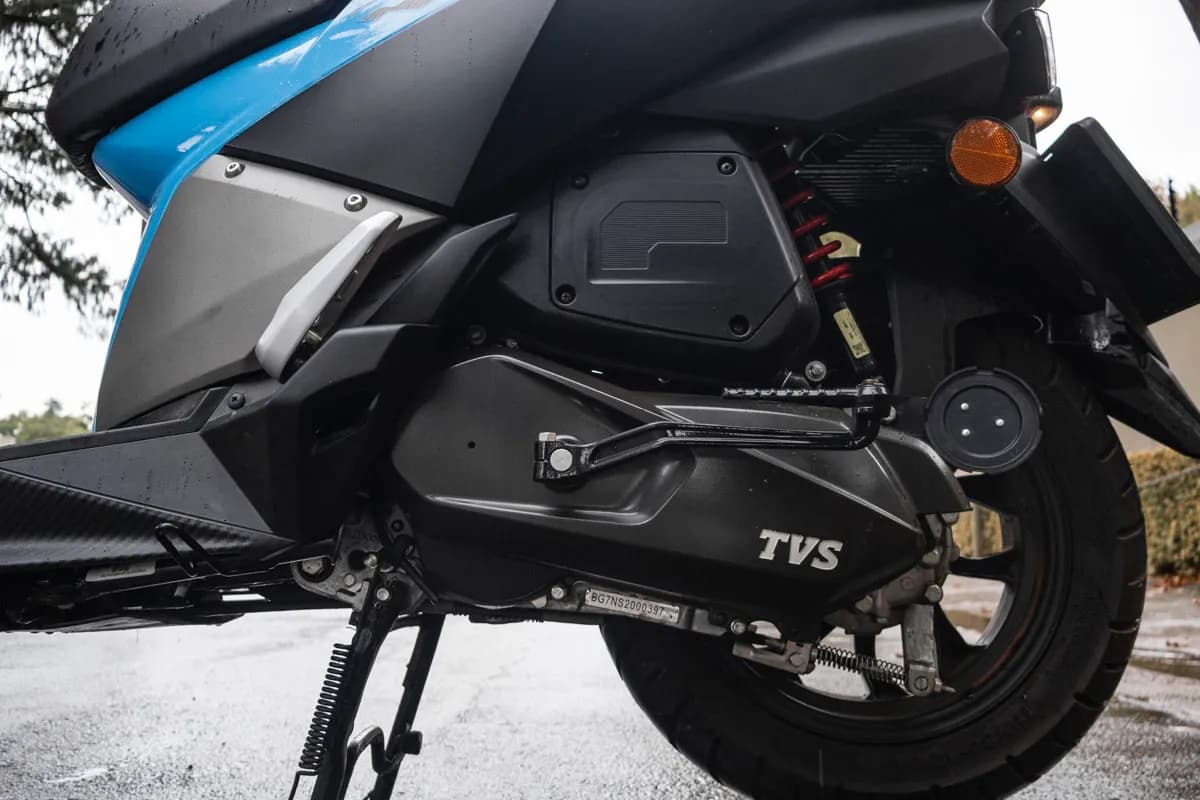
Power comes from a 124.8cc single-cylinder, 3-valve, 4-stroke engine, offered in both carburetor form on the BS4 variant and as a fuel-injected unit on the FI, RTFI and XP trims. Output is rated at 10.2 PS at 7000 rpm and 10.8 Nm of torque at 5500 rpm, sent through TVS's CVT-based automatic scooter drivetrain, with both kick and electric start available depending on variant.
What stands out in practice — and what the wider motoring conversation around this scooter consistently agrees on — is how strong the initial pickup feels. This isn't an engine that builds speed lazily; it gets off the line with real urgency, which is exactly what gives the Ntorq its "sporty" reputation rather than just its sporty looks. That trait suits Kathmandu and Pokhara traffic well, where quick gaps open and close in city riding and a scooter that hesitates off the line loses out. Where our verified data doesn't extend is top speed and outright highway cruising behaviour for the Nepal-spec bike, so we won't put a number on that — buyers wanting reassurance on sustained highway performance should ask their dealer to demonstrate it directly.
Suspension Tuned For Sport, Not Softness
TVS has kept the running gear conventional but well-matched to the scooter's sporty brief. A ground clearance of 155mm is more than adequate for Nepali road conditions, including the broken patches and speed bumps that punish low-slung scooters elsewhere. Kerb weight sits at 111 kg, which gives the Ntorq a planted, stable feel at speed compared to lighter, twitchier 110cc scooters, though it does mean the scooter asks a bit more physical effort at low speed and while manoeuvring in tight parking.
A Sporty Seat That Trades Comfort For Looks On Longer Trips
The two-tone, two-tier seat looks the part and does a reasonable job of holding rider and pillion in place during spirited riding, but comfort on longer stretches is the one area where the Ntorq draws consistent criticism. Cushioning isn't generous, and riders covering longer daily distances or regular highway stints report the seat becoming a genuine discomfort rather than a minor gripe. For short city hops and daily commuting this is a non-issue; for buyers planning frequent long-distance use, it's worth sitting on the actual seat at the showroom before committing.
Braking Varies Sharply By Variant — Check Before You Buy
Safety equipment on the Ntorq is where the variant naming actually tells you something important: the NTorq Drum, as its name suggests, does without a front disc brake, while Disc, Disc FI, Race Edition, Race XP FI, RTFI and XP variants add a front disc setup along with tubeless tyres. Beyond that, our verified information doesn't confirm ABS or CBS as standard fitment on any Nepal-spec Ntorq trim — buyers who consider ABS a non-negotiable should ask Jagdamba Motors directly which trims, if any, carry it before finalising a purchase, rather than assuming it based on other markets' Ntorq specifications.
Underseat Space And A Rear Filler Cap That Actually Get Used Daily
Practicality is a genuine strength here, and it's built around two features that sound minor on a spec sheet but matter every single day of ownership. The external rear fuel filler cap means you're not lifting the seat and displacing whatever's stored underneath just to put in petrol — a small thing until you're doing it several times a week. And the underseat storage itself is generous enough to swallow a full-face helmet along with incidental luggage, aided by that same USB-and-light setup mentioned earlier.
What Running One Actually Costs You Month To Month
TVS Nepal claims mileage of around 50 kmpl for the Ntorq, with a 5.8-litre fuel tank — enough for a reasonable weekly range for most city commuters without needing frequent top-ups. Beyond fuel, buyers should factor in TVS's service network costs and spare parts pricing through Jagdamba Motors before committing, particularly on the fuel-injected variants where servicing tends to be marginally costlier than on the simpler carburetted Drum trim.
Picking Your Variant: Where The Extra Money Actually Buys Something
With nine variants on offer, the Ntorq range in Nepal isn't a simple good-better-best ladder — it's a genuine choice between different feature sets. The NTorq Drum at Rs 2.33 lakh is the accessible entry point but skips the front disc brake entirely. Step up to the NTorq Disc at Rs 2.69 lakh and you add front disc braking without yet paying for fuel injection or the full connected console. The NTorq FI BS6 at Rs 3.05 lakh and Ntorq Disc Fi at Rs 2.93 lakh bring fuel injection into play, while the RTFI BS6 at Rs 3.15 lakh, Race XP FI BS6 at Rs 3.25 lakh, and range-topping Ntorq XP at Rs 3.34 lakh layer on the full SmartXonnect connected console, sportier cosmetic treatment, and — in the Race Edition and Race XP FI's case — the matte grey and red graphics package.
For most buyers genuinely weighing this scooter for daily use, the middle of the range — a Disc FI or RTFI variant — makes the most practical sense: fuel injection, front disc braking and the connected console without stretching all the way to Ntorq XP money.
The Honda Dio Undercuts It On Simplicity And Price
The Honda Dio remains the Ntorq's most obvious rival in Nepal, and it takes the opposite approach entirely — simpler styling, a lighter overall feel, and pricing that typically sits below the Ntorq's mid-range variants. Riders who find the Ntorq's connected console and sporty positioning unnecessary, and who prioritise light, easy low-speed handling over outright pickup and tech, will find the Dio a more relaxed, beginner-friendly alternative, even if it can't match the Ntorq's feature list or its distinct road presence.
The Yamaha Ray ZR 125 Matches It On Sportiness, Not On Tech
The Yamaha Ray ZR 125 is the closer competitor on attitude — it's also styled aggressively and aimed at younger, performance-conscious buyers. Where the Ntorq pulls ahead is the depth of its connected instrument cluster and the sheer range of variant choice; the Ray ZR 125 counters with Yamaha's typically refined engine feel and a reputation for a slightly comfortable ride, though it doesn't match the Ntorq's underseat storage or its externally accessible fuel filler.
Our Verdict: A Scooter For Riders Who Want Their Commute To Feel Sporty
The Ntorq 125 succeeds at exactly what it sets out to do — it doesn't try to be the most comfortable or the lightest scooter in its class, and it doesn't pretend to be. What it offers instead is genuine road presence, a digital console with more tech than almost anything else in this price bracket in Nepal, strong off-the-line performance, and enough variant choice to fit different budgets between Rs 2.34 lakh and Rs 3.35 lakh.
The trade-offs are real and consistent: the seat isn't built for long hauls, the kerb weight makes it less ideal for a nervous first-time rider, and safety equipment varies enough across the range that buyers need to check carefully what each specific variant includes before signing. For a confident daily commuter who wants their scooter to look and feel like more than an appliance, and who's prepared to pick the right variant rather than the cheapest one, the Ntorq remains one of the more interesting 125cc choices on sale in Nepal today.
Writes on vehicle pricing, taxation and the Nepali auto market from ongoing tracking of distributor price lists. Editorial policy.