U.S. startups are pushing sodium-ion batteries toward larger-scale production. They use sodium from common salt instead of lithium and other scarce materials.
Why it matters
The technology is aimed first at stationary storage such as power grids and data centers. Batteries can charge when supply is high and discharge when demand rises.
It may offer lower cost, better safety and longer life in some uses. Some installations also need less cooling.
Key players
Peak Energy plans production at a new Sacramento, California plant in early 2027, with capacity of about 4 GWh a year. The company says it has already lined up more than $1.1 billion in customer deals.
General Motors has also taken a strategic stake in Peak Energy. Inlyte Energy is building a sodium-based battery using iron, steel, aluminum oxide and food-grade table salt.
Limits for EVs
Sodium-ion cells store less energy per kilogram than lithium-ion batteries. Lithium remains the better fit for vehicles where weight and driving range matter most.
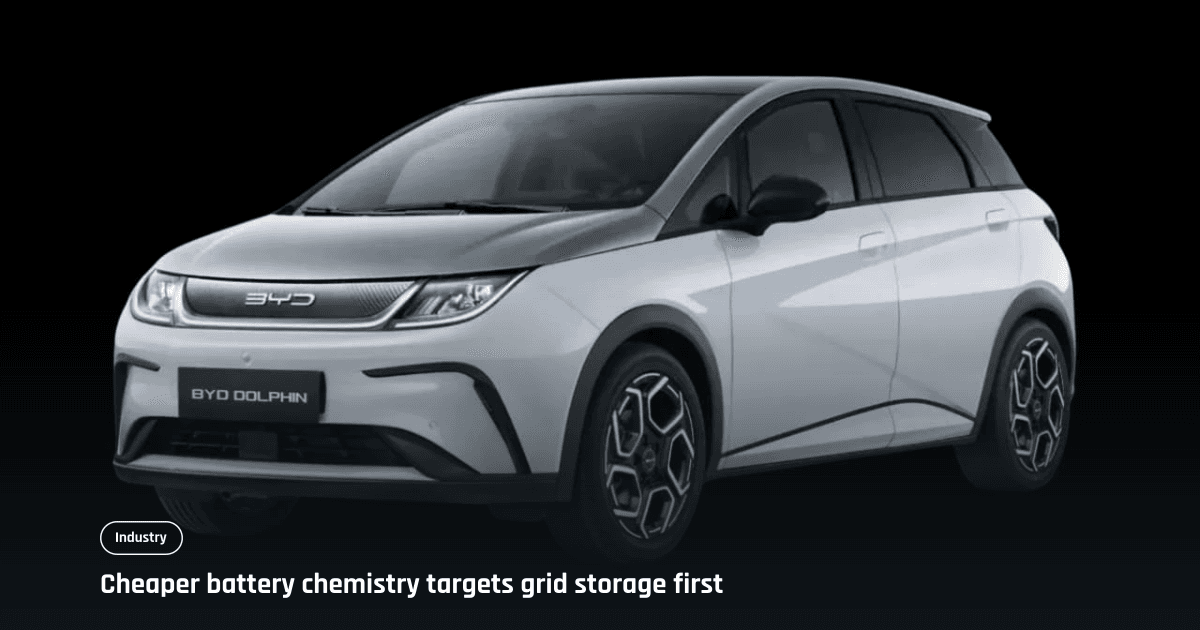
China still makes most sodium-ion batteries. BYD and CATL have also announced large-scale plans.
Writes on vehicle pricing, taxation and the Nepali auto market from ongoing tracking of distributor price lists. Editorial policy.