Start with the numbers
Compare at a glance
Top available variants, with prices in Nepalese rupees. Expand details to choose another variant.
| At a glance | River Indie | Ather Energy Rizta |
|---|---|---|
| Ex-showroom price | Rs 3.7 lakh | Rs 4.2 lakh |
| Fuel | Electric | Electric |
| Selected variant | Indie | 161 km Range - Premium Seat |
Ex-showroom prices exclude registration, road tax and insurance. Specifications can vary by trim. See individual source-check dates ↓
River Indie vs Ather Energy Rizta is the question most Nepali EV scooter shoppers end up asking once they have shortlisted both. The short answer: the Indie rides higher, goes farther on paper and carries more, while the Rizta is cheaper to get into, backed by a far bigger service network, and feels more polished for a family that wants brand comfort over outright capability.
Where each sits in the Nepali market
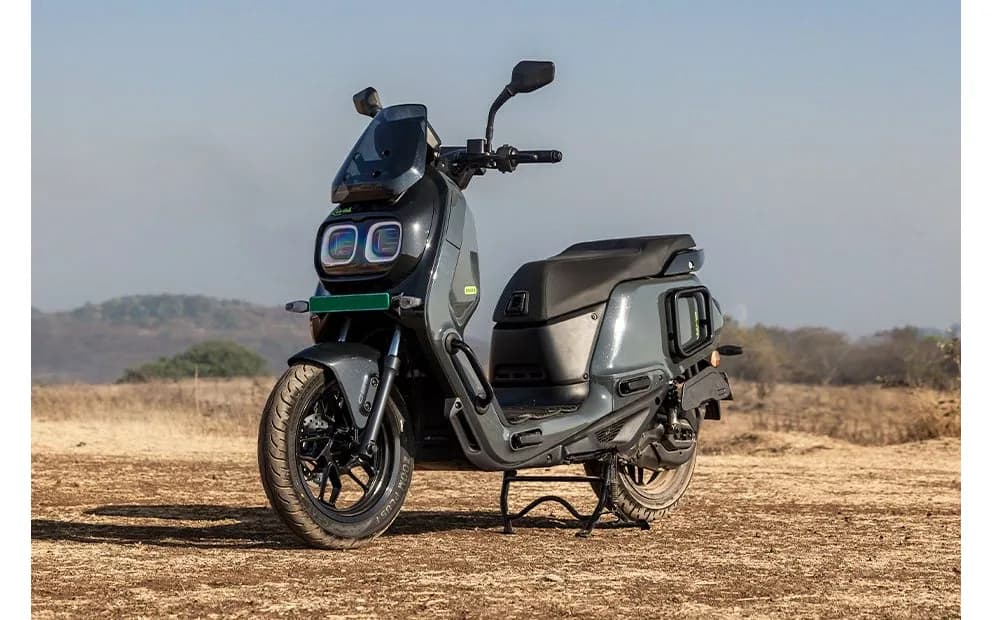
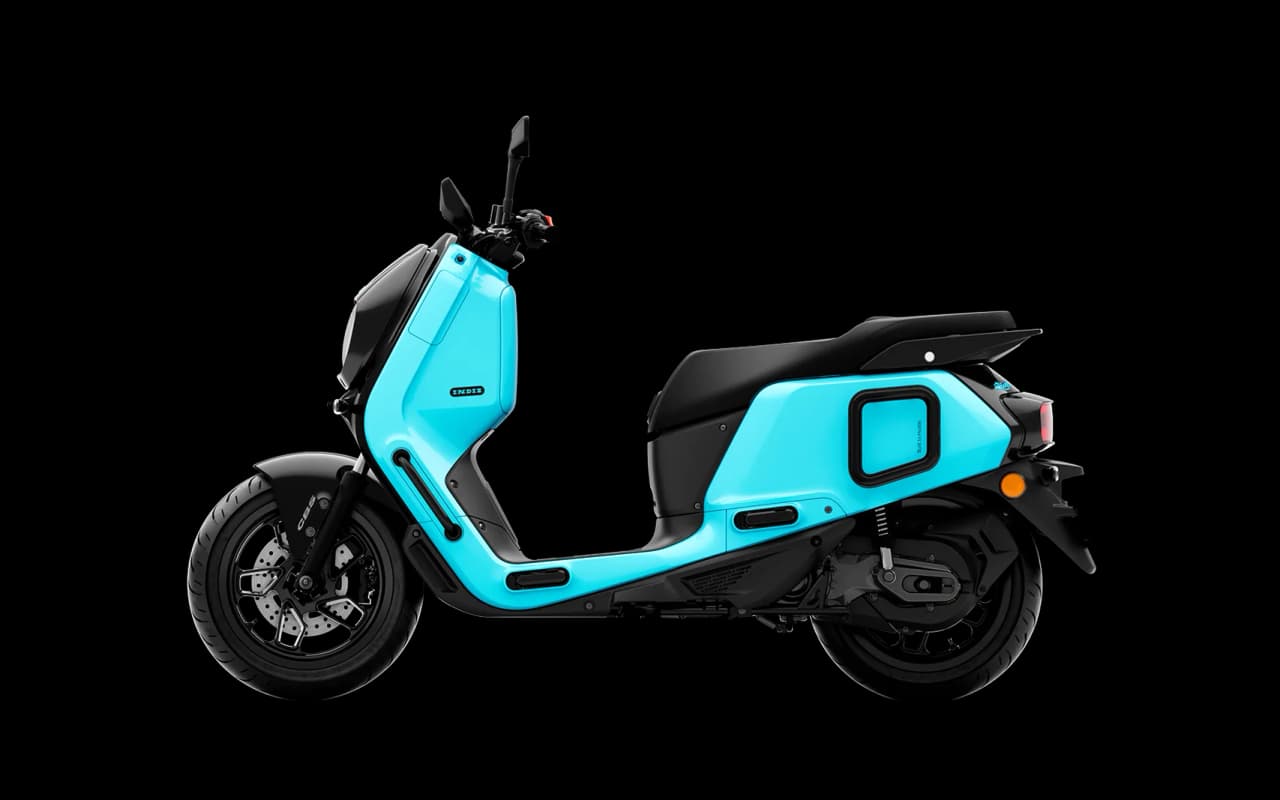
River Indie is a single-variant scooter priced at Rs 3.7 lakh, sold and serviced through Vishal Group from a single outlet in Naxal, Kathmandu. It positions itself as a utility-first scooter built for Nepali road conditions, with the biggest talking point being its storage and ground clearance rather than tech or badge value.
Ather Energy Rizta spans three variants from Rs 3.2 lakh to Rs 4.2 lakh, brought in by Vaidya Energy. Ather has been in Nepal long enough to build out a genuine retail footprint, with 16 showrooms and 11 service centres spread across cities including Kathmandu, Bhaktapur, Bharatpur, Biratnagar, Birgunj, Birtamode, Butwal and Dharan. River, by comparison, runs 2 showrooms and 2 service centres, both in Kathmandu. For a buyer outside the Valley, that gap in reach is the first thing to weigh before anything else.
Specifications and performance
Comparing the top trim of each: River Indie (Rs 3.7 lakh) against the Ather Energy Rizta 161 km Range - Premium Seat (Rs 4.2 lakh).
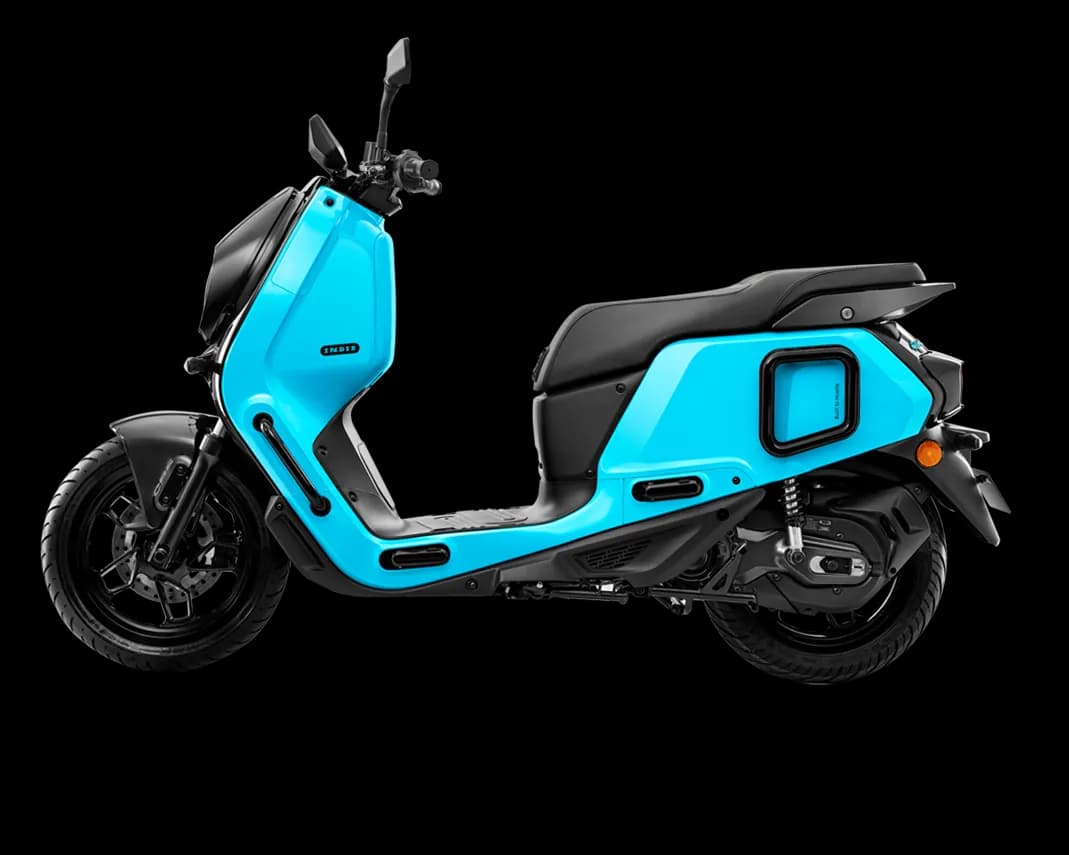
The River Indie uses a mid-drive permanent magnet synchronous motor making 6.7 kW peak power, which works out to 9.1 PS, with 26 Nm of torque. It has three riding modes — Eco, Ride and Rush — topping out at 50 km/h, 80 km/h and 90 km/h respectively. It claims 0-40 km/h in 3.7 seconds and can handle an 18-degree gradient, which matters on Kathmandu's steeper residential lanes.
The Rizta 161 km Range - Premium Seat runs a 4.3 kW PMSM motor (5.8 PS) with 22 Nm torque, driving through a belt rather than a chain, capped at 80 km/h. Acceleration from 0-40 km/h is rated at 4.7 seconds, a full second slower than the Indie. On raw numbers the Indie is the stronger performer: more power, more torque, quicker off the line, and a genuine highway-adjacent top speed where the Rizta tops out lower.
On range, both are quoted on the IDC cycle, so they are directly comparable. The Indie claims 160 km IDC against the Rizta top-variant's 161 km IDC — effectively a dead heat on paper, with the Rizta's 3.7 kWh battery doing that job using a smaller pack than the Indie's 4 kWh. Step down to the Rizta's 123 km range variants and the gap opens up in River's favour, since those run a smaller 2.9 kWh battery for a lower claimed figure.
Ground clearance tells its own story: 177 mm on the Indie versus 150 mm on the Rizta. On Kathmandu's potholes and monsoon-chewed side roads, that 27 mm gap is the difference between scraping the belly pan and clearing it cleanly.
Looks and design
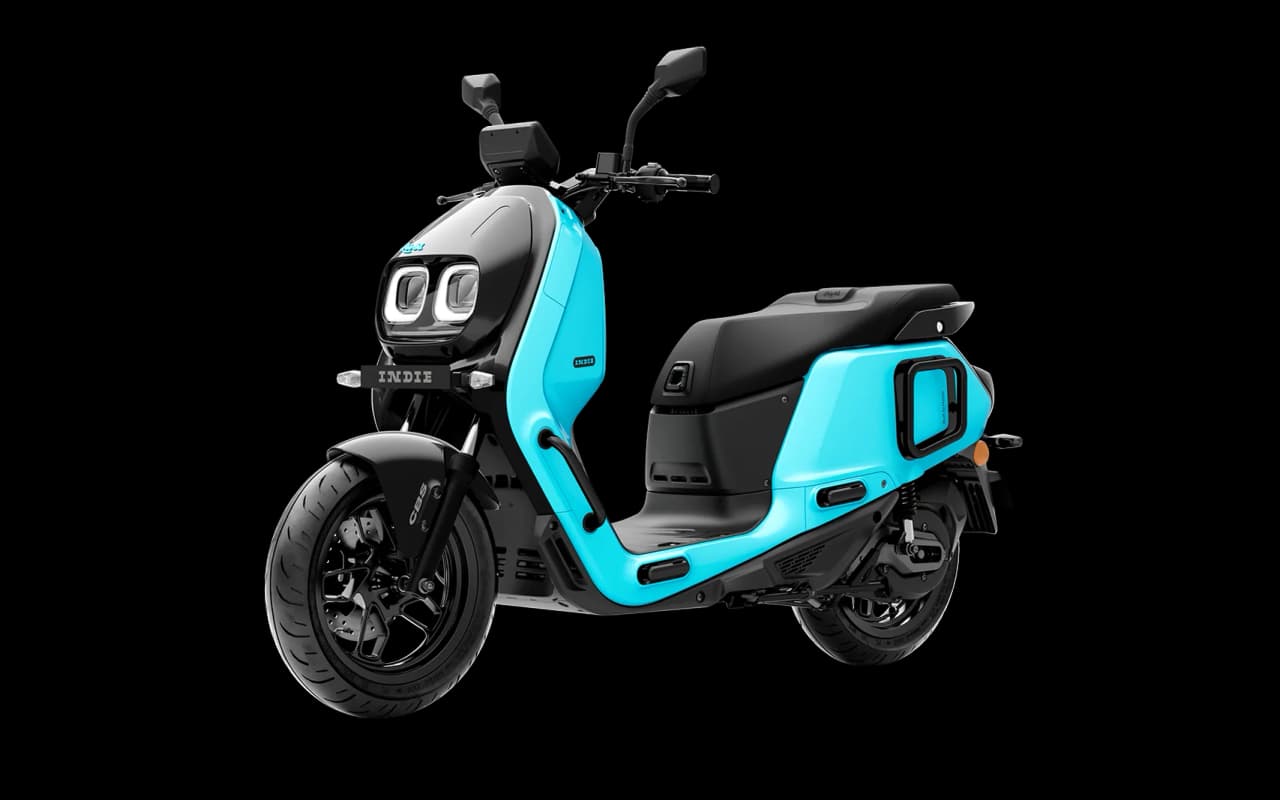
River Indie uses a steel tubular dual-cradle frame with an aluminium alloy dual-sided swingarm, 14-inch alloy wheels front and rear, and LED twin-beam headlights with a frosted-tube LED tail light. It comes in five colours — Monsoon Blue, Summer Red, Spring Yellow, Winter White and Storm Grey — aimed at a youthful, slightly rugged look.
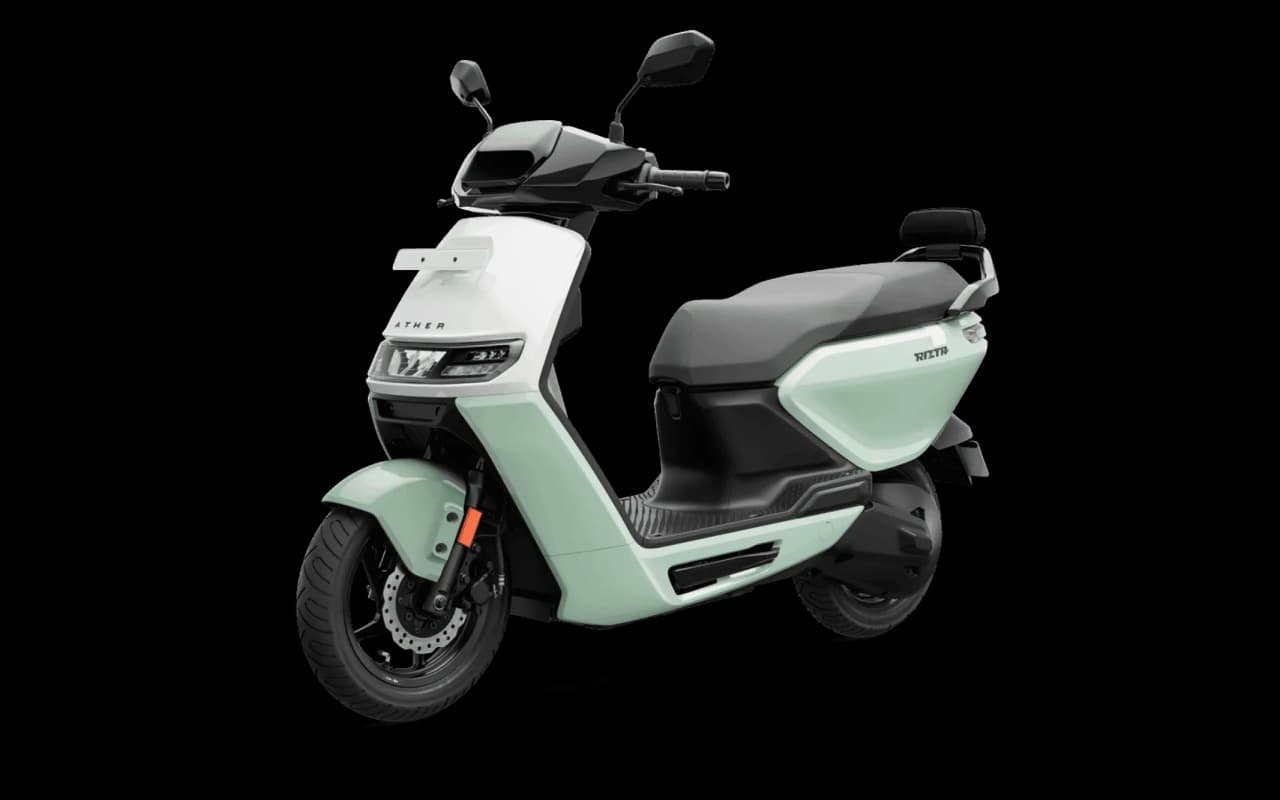
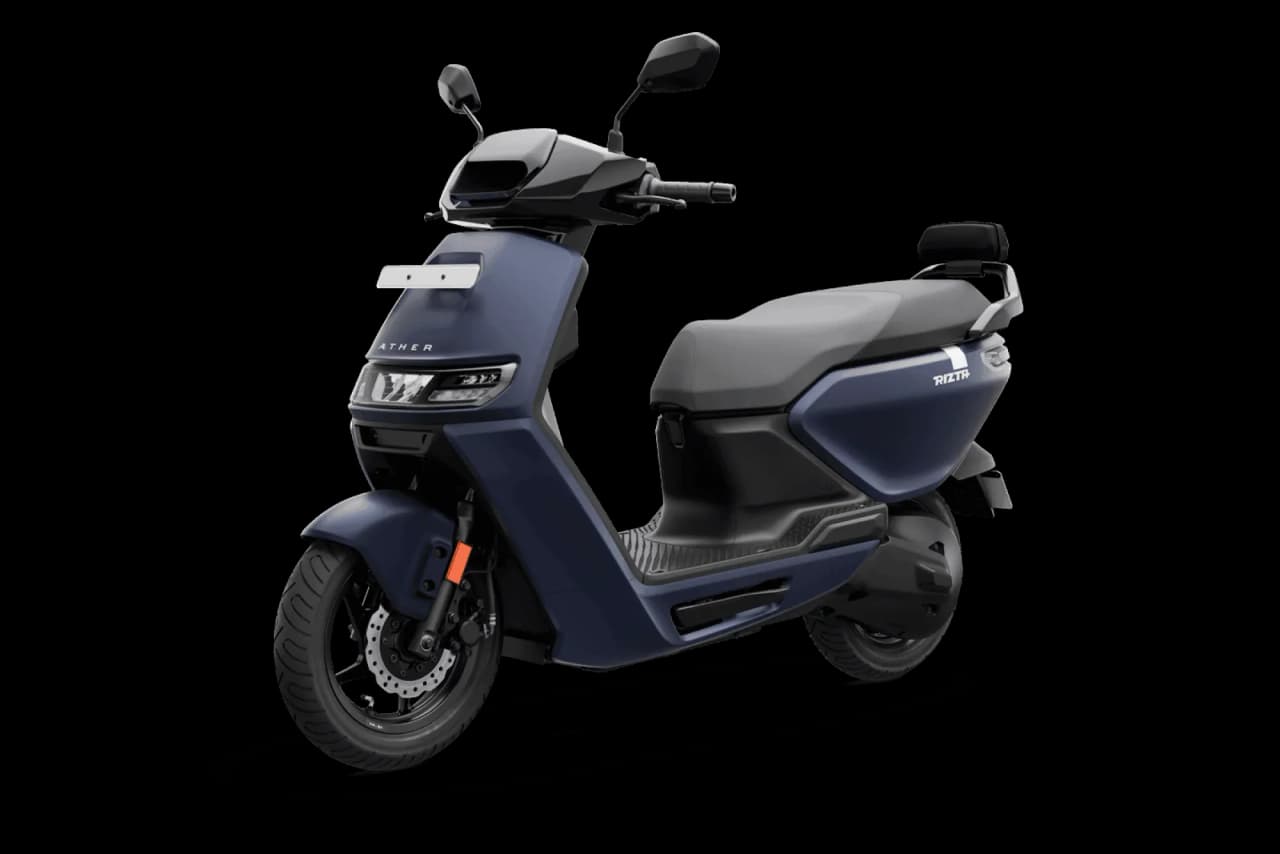
Ather Energy Rizta goes with a rounder, more conventional scooter silhouette, offered in mono-tone, dual-tone (Duo) and a Super Matte finish. It reads as the more mainstream family scooter design next to the Indie's more purpose-built stance.
Features and equipment
The Indie's strongest card is storage: a 43-litre underseat compartment plus a 12-litre glovebox, for 55 litres total, with accessory mounts, a pannier stay and a bag hanger built in. It also gets two USB Type-C ports (one on the handlebar, one in the glovebox), a 6-inch colour display, forward-and-reverse parking assist, and a boot light.
The Rizta counters with 56 litres of storage split as 34 litres in the main boot and 22 litres in a front frunk, plus a charging socket inside the boot. Where the Rizta pulls ahead is connected tech: a touchscreen dashboard with Google Maps turn-by-turn navigation, voice assistant control, WhatsApp notifications on the dash, Alexa skills and a cricket-score widget. It also has SkidControl (traction control) and a Theftsafe suite with remote immobilisation, tow and theft alerts — safety tech the Indie's data sheet does not list.
Warranty and after-sales
River Indie carries a 3-year or 30,000 km standard warranty, extendable through a Plus Two plan (5 years/50,000 km) and a Plus Five plan (8 years/80,000 km) covering the battery, motor, motor controller, vehicle controller unit, telematics and DC-DC converter. The Plus Five plan's last three years narrow to battery and motor only.
Ather Energy Rizta offers an 8-year battery warranty headline claim, with a standard vehicle and battery warranty of 3 years or 30,000 km, extendable to 5 years or 60,000 km under AtherStack Pro. Both brands are serious about long-term battery cover; the Indie's paid extension plans go further on paper (8 years/80,000 km total) if a buyer is willing to pay for them upfront.
Ride, handling and comfort
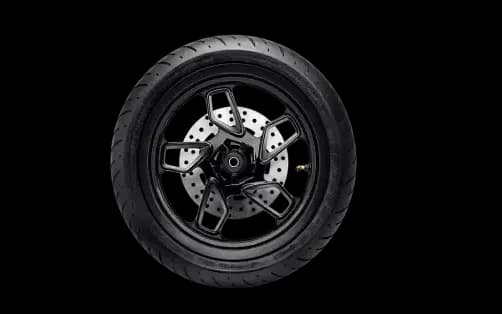
Showroom observation and the pattern of owner feedback both point to a similar theme on each side: comfort over sportiness. The Indie's twin rear shocks and dual-cradle frame are reported to handle undulations well even two-up, and its forward footpegs let taller riders stretch out. The seat height of 787 mm, though, has drawn complaints from shorter riders, and some owners mention noisy rear brakes and rattly suspension.
The Rizta's long seat and wide pillion backrest draw consistent praise for family use, and its monoshock rear and spacious floorboard are reported to absorb poor road surfaces well. Its seat height of 780 mm sits marginally lower than the Indie's, a small but real plus for shorter riders.
Practicality and running costs
On paper economics, the Indie's 4 kWh battery delivering 160 km IDC works out to 25 Wh/km; the Rizta top variant's 3.7 kWh for 161 km IDC works out to about 23 Wh/km — close enough that neither has a meaningful efficiency edge on the same cycle. Real-world range on both is reported by owners to fall short of these IDC figures, which is normal for any scooter tested in stop-start city riding rather than a lab cycle.
Where the Indie clearly wins practicality is parking a helmet, groceries and a bag all at once: 55 litres beats the Rizta's 56 litres only marginally on paper, but the Indie's single big underseat tub is simpler to use than the Rizta's split boot-plus-frunk arrangement, depending on what a rider is carrying.
Rivals and alternatives
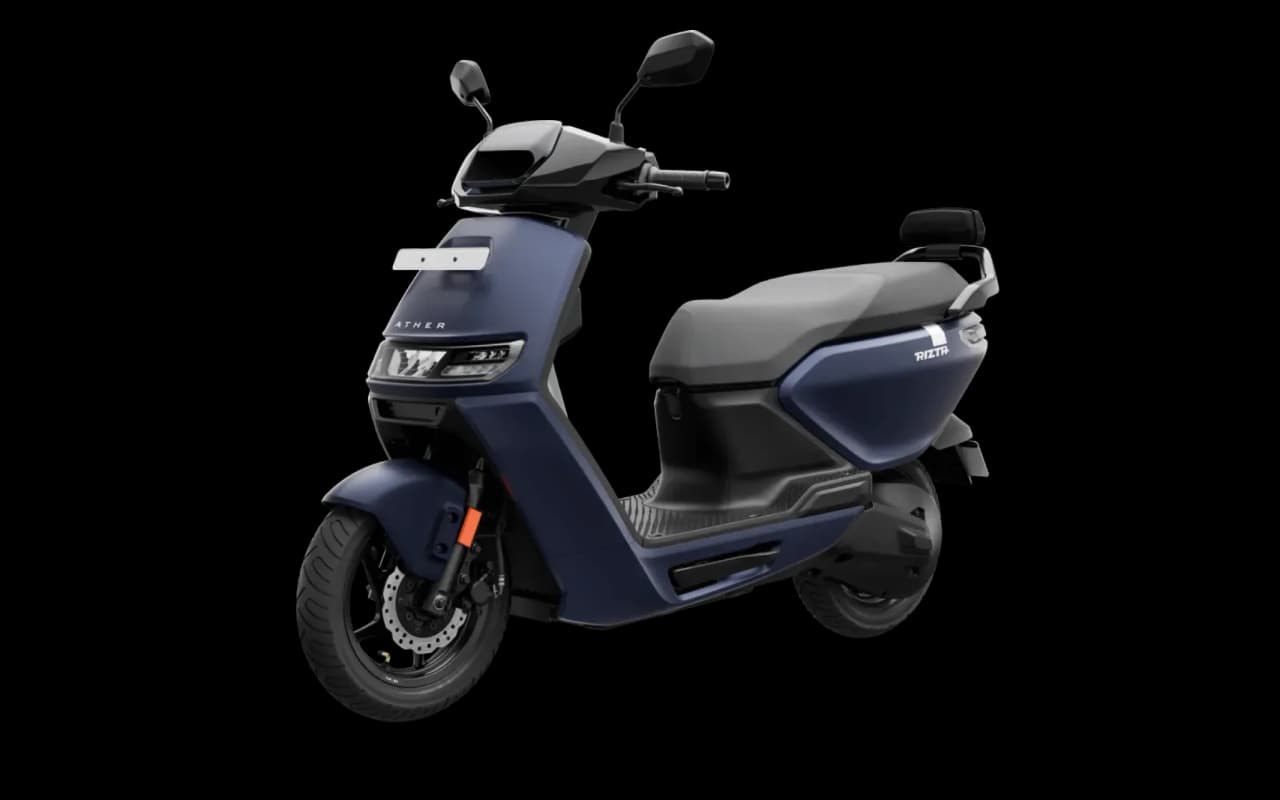
Within River's own line, the Indie currently stands alone as a single variant, so there is no step-up or step-down trim to consider. Ather gives buyers more room to choose: the 123 km Range - Standard Seat at Rs 3.2 lakh for a no-frills entry, the 123 km Range - Premium Seat at Rs 3.8 lakh adding the colour touchscreen and better finish, and the 161 km Range - Premium Seat at Rs 4.2 lakh topping the range with the bigger 3.7 kWh battery and TFT dash.
Variant-level differences on the Rizta
The jump from Standard Seat to Premium Seat at the 123 km range level is mostly about the dashboard — LCD versus the fuller touchscreen — and seat finish, with kerb weight rising slightly from 119 kg to 125 kg. The jump from the 123 km Premium Seat to the 161 km Premium Seat is purely battery size, 2.9 kWh to 3.7 kWh, for an extra 38 km of claimed IDC range at a premium of roughly Rs 40,000. Neither of the lower two Rizta variants gets a rear disc brake; all three use a rear drum, where the Indie runs discs front and rear across its one and only trim.
Which wins for which buyer
A buyer who rides daily on broken roads, climbs steep residential lanes, or needs to carry a full day's shopping plus a spare helmet will find the Indie's extra ground clearance, extra power and bigger single storage tub genuinely useful. A buyer based outside Kathmandu, or anyone nervous about being an early adopter with only two outlets to lean on, is better served by the Rizta's far wider 16 showrooms and 11 service centres footprint, and by the option to start at Rs 3.2 lakh rather than committing to the Indie's fixed Rs 3.7 lakh.
Verdict
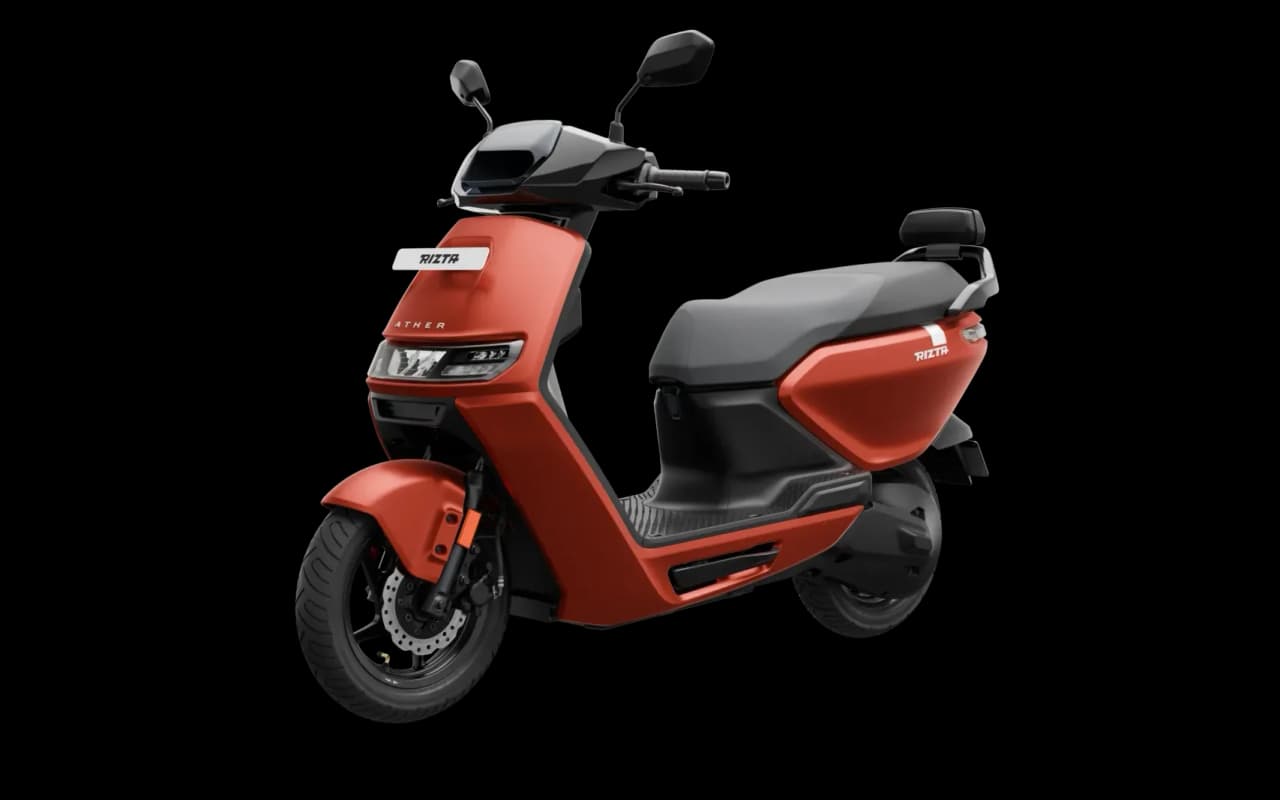
River Indie vs Ather Energy Rizta comes down to what a buyer values more: capability or coverage. The Indie wins on range parity with more power, more torque and a usable 27 mm extra ground clearance, plus a genuinely huge storage tub. The Rizta wins on starting price, variant choice, connected features and a service network that already spans most major Nepali cities, against River's Kathmandu-only presence. Buyers who ride hard terrain and want the most capable machine should lean Indie; those who want lower risk, more places to get it fixed, and a lower entry price should lean Rizta.
For current variant-wise figures, see River Indie price in Nepal and Ather Energy Rizta price in Nepal — both pages are updated whenever a distributor changes a price.
FAQ
How much does River Indie maintenance cost? Maintenance cost figures are not part of the scooter's published specification sheet, though River does sell extended coverage plans: the Plus Two plan is priced at ₹5,899 and the Plus Five plan at ₹9,912, both covering key electronic components.
What is the warranty period for a River Indie? The standard warranty is 3 years or 30,000 km. Buyers can extend this with the Plus Two plan (5 years/50,000 km) or the Plus Five plan (8 years/80,000 km), the latter narrowing to battery and motor cover in its final three years.
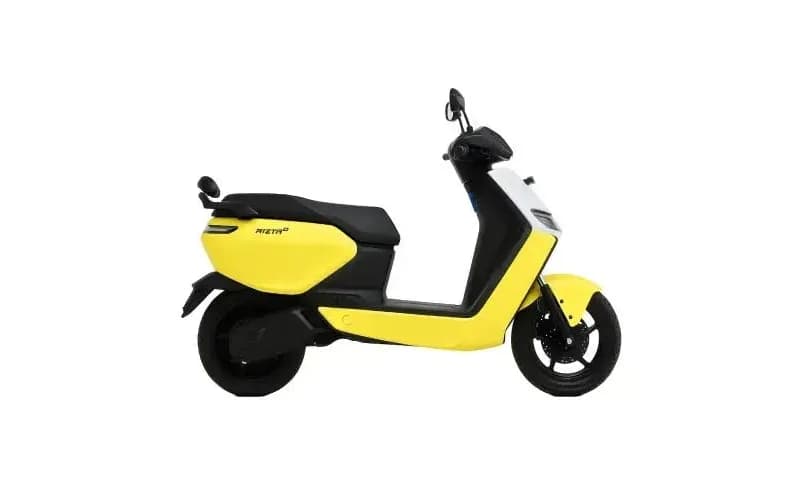
What are the negative reviews of the River Indie? Common complaints include a limited and still-unproven service network in Nepal, real-world range falling short of the claimed 160 km IDC figure, a heavy frame that is awkward to park in tight spots, noisy rear brakes, rattling suspension, and a seat height that feels tall for shorter riders.
Is River Indie worth buying? It suits urban commuters who want strong storage, high ground clearance and hill-climbing power, and who are comfortable being an early adopter with service currently centred on Kathmandu. Buyers prioritising a wider dealer network or a lower entry price may find the Rizta a safer bet.
Compare River Indie vs Ather Energy Rizta variant by variant
Explore full specifications, variants & ownership context
Compare the exact variants
Specifications, features & ownership context
Choose a variant for each vehicle. The facts below follow that exact trim; the article explains the trade-offs.
Latest catalog and directory records supplement the original analysis. Figures may have changed since publication; individual specification and price-check dates appear below.
River Indie
Rs 3.7 lakh ex-showroom · source-check date not recorded
Ather Energy Rizta
Rs 4.2 lakh ex-showroom · source checked 6 Nov 2026
Battery & charging
| Specification / feature | River Indie | Ather Energy Rizta |
|---|---|---|
| Battery | 4 kWhVerified specification · 4 Nov 2026 | 3.7 kWhResearched · confirm · 22 Sept 2026 |
| Claimed range | 160 km (IDC)Verified specification · 4 Nov 2026 | 161 km (IDC)Verified specification · 4 Nov 2026 |
Brakes, tyres & suspension
| Specification / feature | River Indie | Ather Energy Rizta |
|---|---|---|
| ABS | CBSVerified specification · 4 Nov 2026 | CBSResearched · confirm · 22 Sept 2026 |
Dimensions & weight
| Specification / feature | River Indie | Ather Energy Rizta |
|---|---|---|
| Ground clearance | 177 mmResearched · confirm · 6 Nov 2026 | 150 mmResearched · confirm · 22 Sept 2026 |
Claimed range uses the stated test cycle. Different cycles are not a like-for-like range comparison; actual range depends on roads, load, speed and weather.
River Indie
Showroom & service support
Distributor: Vishal Group
River showrooms in Kathmandu (2 showrooms nationwide) · River service centers in Kathmandu (2 service locations nationwide)
Listed cities include Kathmandu.
Brand-wide directory coverage. Confirm that your nearest workshop supports this exact model, powertrain and warranty work; ask about parts availability and booking time.
Market buzz & buyer priorities
Compiled discussion, including buyer reactions and ownership reports; this is not a verified owner survey or a reliability score. Research dated 15 Oct 2026.
What people like
- no issues reported by long-term users
- Nepali buyers view the River Indie as a practical electric scooter because of its large storage, high ground clearance and utility-focused design.
- Some Nepali EV shoppers prefer the River Indie for its practicality and carrying capacity compared with more performance-focused scooters.
More feedback
- The 4 kWh battery, claimed 160 km IDC range, 90 km/h top speed and 177 mm ground clearance make it suitable for daily Kathmandu use and moderate hill roads.
Concerns to investigate
- Nepali buyers remain cautious about after-sales coverage, spare-parts availability and long-term service costs because the model is newly sold in Nepal.
- Independent Nepal-specific real-world range, battery-life and resale data is still limited.
What buyers ask for
- Real-world range on Kathmandu traffic, hills and stop-start roads
- Ground clearance and suspension comfort on potholes and monsoon-damaged roads
- Service-centre coverage outside Kathmandu and spare-parts availability
More feedback
- Battery warranty, replacement cost and long-term reliability
- Resale value of a new electric-scooter brand in Nepal
Nepal ownership context
- Vishal Enterprises handles Nepal sales and after-sales support, with the first outlet and service centre in Kathmandu; buyers outside the Valley should confirm nearby service and spare-parts support before booking.
- The 177 mm ground clearance and 18-degree gradeability suit potholes, broken roads and Kathmandu-area slopes, although a test ride on the buyer's regular route remains important.
- Home charging is cheaper than petrol running, but the final ownership value depends on charging access, battery warranty terms, service charges and future resale demand in Nepal.
More feedback
- The price places the River Indie in a premium position among Nepal electric scooters, so buyers compare its practicality against the Ather 450X, TVS iQube and other available EVs.
Ather Energy Rizta
Showroom & service support
Distributor: Vaidya Energy Pvt. Ltd.
Ather Energy showrooms in Kathmandu (16 showrooms nationwide) · Ather Energy service centers in Kathmandu (11 service locations nationwide)
Listed cities include Bhaktapur, Bharatpur, Biratnagar, Birgunj, Birtamode, Butwal and 8 more.
Brand-wide directory coverage. Confirm that your nearest workshop supports this exact model, powertrain and warranty work; ask about parts availability and booking time.
Market buzz & buyer priorities
Compiled discussion, including buyer reactions and ownership reports; this is not a verified owner survey or a reliability score. Research dated 2 Nov 2026.
What people like
- Largest seat in the segment provides excellent comfort for family use
- Huge 34-liter under-seat storage space plus optional 22-liter frunk
- Skid Control technology improves safety on slippery Nepali roads
More feedback
- Ather Stack software offers smooth navigation and ride statistics
Concerns to investigate
- Connected features are disabled or unavailable, misleading at the time of purchase.
- Range is not good, only averages around 60 km.
- Power is insufficient in normal mode, struggles with overtaking.
More feedback
- Should have launched with a larger battery variant.
- Starting price is significantly higher than popular 125cc petrol scooters
- Boxy and conservative design lacks the sporty appeal of previous electric models
- Fast charging network is still primarily concentrated within the Kathmandu Valley
What buyers ask for
- Under-seat storage capacity for helmets and groceries
- Pillion seat length and comfort for daily commutes
- Real-world range versus advertised IDC range
More feedback
- Availability of spare parts and service centers outside Kathmandu
Nepal ownership context
- Vaidya Energy serves as the official distributor providing sales and service support
- The 165mm ground clearance is adequate for paved city roads but requires caution on unpaved sections
- Nepal's high import duties on EVs influence the premium pricing compared to the Indian market
Use these facts alongside the article’s full analysis. Check the final quotation, warranty terms and exact equipment before booking.
Evidence & next steps
Check the details before you buy
Use this guide to build a shortlist. Ask for a written quotation for your chosen variant, including registration, taxes, insurance, finance charges and any charger installation. Confirm the nearest authorised workshop supports that model.
Price sources and dates
These are the recorded distributor-source checks for the selected overview trims. They are separate from the article update and catalog read dates; they do not mean every trim was rechecked today. Confirm the final price with the distributor.
Overview photos come from the corresponding model records; additional article photos carry their own credits. Running costs depend on usage, energy prices, maintenance, insurance and resale value.