Start with the numbers
The model, at a glance
Available variants, with prices in Nepalese rupees.
| Vehicle | Ex-showroom price | Fuel | Selected variant |
|---|---|---|---|
| 01Niu FQi 300 | Rs 3.85 lakh | Electric | FQi 300 |
Ex-showroom prices exclude registration, road tax and insurance. Specifications can vary by trim. See individual source-check dates ↓
Where the Niu FQi 300 sits in the Nepali market
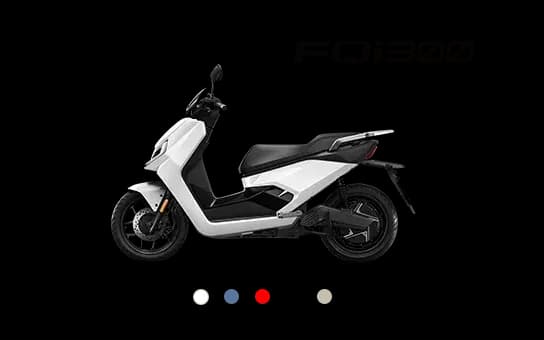
Niu’s FQi 300 enters Nepal as a premium urban electric scooter, distributed by Eco Infinity Pvt. Ltd. under the NIU Nepal banner at an introductory ex-showroom price of Rs 3.85 lakh.
With that price tag, it clearly targets buyers who are willing to pay extra for range, performance and tech rather than chasing the cheapest way into electric mobility. The claimed 150 km per charge range, dual batteries and connected features put it in the upper tier of e-scooters available in the country, aimed at daily commuters in Kathmandu and Pokhara who want to replace their petrol scooter entirely rather than just add a short-range city runabout.
The network matters here. NIU now has 9 showrooms and 19 service centers across Nepal, which gives the FQi 300 more support infrastructure than many newer EV brands. For a first-time EV buyer nervous about parts, software and service, that footprint is a genuine advantage.
There is just one variant on sale: the FQi 300 at Rs 3.85 lakh. There is no stripped-down, lower-cost trim, which means NIU is betting that the feature set and range will justify the premium positioning in a market that still watches upfront price very closely.
Looks, design and build
The FQi 300 is styled as an urban adventure electric scooter rather than a retro or commuter-basic design. The bodywork has a sporty, slightly rugged stance with bold surfaces and a pronounced front end that houses signature LED matrix headlamps. The LED taillight and indicators continue the modern theme, giving it a distinctive night-time presence.
Buyers get five color options: Black, Blue, Red, Beige/Tan and White. That palette covers both youthful bright tones and more understated shades, which helps the scooter appeal across age groups.
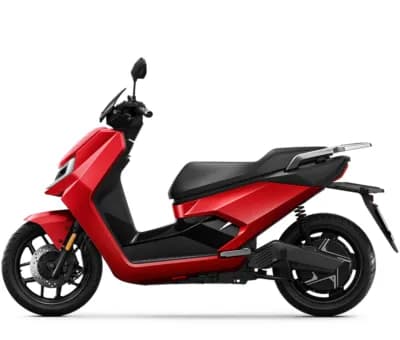
Alloy wheels are visible in showroom and promotional images, confirming a more premium hardware approach than simple steel rims, although the exact wheel size is not printed in the available material. The scooter runs on a rear hub-mounted electric motor, which keeps the design clean by integrating the drivetrain into the rear wheel and avoiding an exposed chain or belt.
Build quality from showroom observation appears solid, with tight panel gaps and a robust frame being highlighted. The scooter looks substantial rather than flimsy, which is important at this price point. That said, NIU has not officially disclosed the wheelbase, ground clearance, kerb weight or seat height as of mid-2026—an odd omission for a brand positioning itself as premium and global. Riders who are shorter or heavier, or those regularly tackling rough village roads, do not have the hard numbers they would normally use to judge fit and clearance.
Features and equipment
Where the FQi 300 clearly leans into its premium identity is in features and tech.
- A fully digital dashboard displays speed, battery level and trip data.
- Smart app connectivity integrates the scooter with the NIU Smart App, enabling GPS-based tracking, cloud connectivity and diagnostic information.
- The app provides anti-theft alerts and GPS tracking, turning the scooter into a connected device you can monitor remotely.
- Keyless operation and other smart features are mentioned, which should make daily use more convenient.
- Parking assist and reverse function are listed, particularly useful in tight parking spaces or when moving the scooter uphill or out of congested corners.
Practical convenience features are well thought-out:
- A front storage compartment holds a phone, keys and small essentials.
- USB charging ports are integrated into this front compartment, allowing riders to top up devices while riding.
- Under the seat, there is a lockable XL storage space that can fit a helmet plus some extra items. For scooter buyers, under-seat volume is often as important as motor power, and the FQi 300 scores well here.
There are gaps though. Display size, resolution and exact connectivity specs (such as Bluetooth version, app feature list for Nepal, and over-the-air update capability) are not clearly detailed in the available official material. For tech-focused buyers who compare dashboards and integrations across brands, that lack of specificity is a drawback.
Motor, battery and performance
On paper, the FQi 300 is strongly specified for performance by e-scooter standards.
The scooter uses a dual 72V 28Ah lithium-ion battery setup, giving a total capacity of around 4.04 kWh. The batteries are non-removable, integrated into the scooter’s frame rather than designed to be carried into a home or office. This suits users with reliable access to a plug at home or in a garage more than apartment dwellers who rely on detachable packs.
NIU claims a range of 150 km per charge, and the dataset clarifies this as around 150 km with a single rider and approximately 140 km with a pillion. For real-world urban use, even allowing for some deviation from ideal conditions, this positions the FQi 300 as a genuine full-week commuter for many users, reducing how often owners need to plug in.
Charging time from 0–80% is listed at around 4–5 hours with a 10A charger, which aligns with overnight or workday charging patterns. There is no explicit mention of faster charging solutions or DC fast-charge compatibility, and public fast-charging infrastructure tailored to this model remains limited from publicly available data.
The motor is rated at 4.2 kW PMSM (permanent magnet synchronous motor) with peak power around 6.5 PS and peak torque of 190 Nm at the wheel. Those are serious numbers for a scooter, promising brisk acceleration and strong low-end pull. The quoted incline capability up to 25% suggests it should cope well with Kathmandu’s steeper lanes and hilly approaches without dropping to a crawl.
A rear hub-mounted drive keeps maintenance relatively simple, with fewer moving parts than chain-driven setups. Regenerative braking is equipped, recovering some energy during deceleration and helping stretch the effective range.
From a performance perspective, this places the FQi 300 among the more powerful electric scooters available in Nepal, appealing to riders who want EV convenience without feeling underpowered compared with their old 125–150 cc petrol scooter.
Ride, handling and comfort
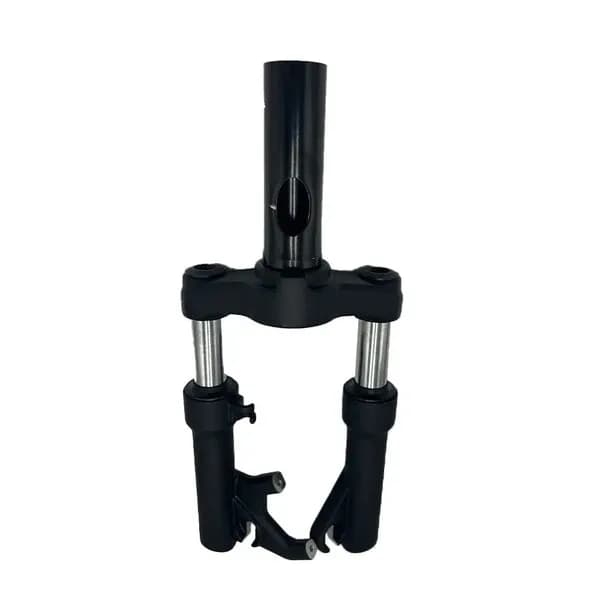
NIU emphasizes a smooth suspension system tuned for urban comfort. The scooter is described as capable of absorbing bumps and rough terrain, with an advanced suspension setup designed for city roads that can include broken patches, speed breakers and occasional gravel.
The seating is a single long continuous seat, accommodating both rider and pillion comfortably. The design supports a natural, upright ergonomic riding posture, aimed at reducing fatigue on longer commutes.
Without official disclosure of wheelbase, ground clearance and kerb weight, it is harder to predict the exact ride character in numbers—whether it is more agile and flickable or more stable and planted at speed. However, the hub motor and battery layout, combined with the visual proportions, suggest a low center of gravity, which generally helps stability.
For pillion use, the rated range with a second rider (around 140 km) indicates that performance does not collapse dramatically when there is extra weight. That matches the scooter’s intended role as a primary family or shared commuter, not just a single-person city toy.
Practicality and running costs
The FQi 300’s practicality story rests on range, storage and connectivity.
- The 150 km claimed range gives owners flexibility to skip charging for a few days, even with mixed urban and peri-urban use.
- Storage solutions—front pocket plus XL under-seat locker—remain competitive with mid- to high-end petrol scooters.
- Smart app features and GPS-based tracking help owners monitor battery status, trips and security, adding peace of mind.
Running costs for electric scooters are typically much lower than petrol equivalents, thanks to cheaper electricity and fewer consumables (no engine oil, fewer moving parts). The FQi 300 adds value with a two-year warranty on the motor and battery in Nepal, which reduces risk around the most expensive components and signals confidence in the hardware.
However, two factors temper the practicality narrative:
- The non-removable battery means users must have direct access to charging at home, office or secure parking. For many Nepali apartment dwellers, detachable packs are more convenient.
- Public information about fast-charging infrastructure specific to the FQi 300 remains limited. Owners are essentially planning around slow AC charging using the supplied charger.
Still, for buyers with predictable daily routes and home charging, the combination of long range and strong local service network is compelling.
Price, variant and which one to pick
The FQi 300 is sold in Nepal in a single trim:
- Niu FQi 300 — Rs 3.85 lakh (ex-showroom)
The lack of multiple variants simplifies the buying decision but also means no opportunity to save money by dropping some tech or battery capacity. At Rs 3.85 lakh, the FQi 300 is firmly a premium e-scooter, priced above entry-level electric options and competing with mid-range to higher-end petrol scooters.
From an editorial standpoint, the value proposition hinges on how much you weight range and tech versus price:
- If you are specifically looking for long range, strong performance and modern features, and have access to reliable home charging, the single FQi 300 variant is straightforwardly the one to pick.
- If budget is tight and your daily needs are more modest—short city hops, occasional runs—the absence of a more affordable lower-spec version may push you toward other models.
Rivals and competitive positioning in Nepal
In the Nepali market, the FQi 300’s real rivals are other electric scooters with credible range and brand-backed service networks, plus higher-end petrol scooters for buyers who are cross-shopping power and features rather than just fuel type.
Among EVs, its 4.04 kWh dual-battery setup and 150 km claimed range place it in the upper tier for range. Many mainstream e-scooters in Nepal still advertise sub-100 km figures or smaller battery capacities. The FQi 300’s power output and torque are also more aggressive than the typical utilitarian commuter e-scooter.
Where rivals often score better is transparency of specifications. Competing products frequently list detailed dimensions, kerb weight, ground clearance and sometimes more explicit safety equipment like ABS. In comparison, the FQi 300’s lack of official figures for these basics feels out of step with its premium positioning.
On the safety and braking front, combined braking system (CBS) is reported, and front disc brakes are visible, but there is no clear confirmation of advanced driver assistance features such as ABS or traction control for the Nepal-spec model. Buyers who prioritize braking tech may find rivals with explicit ABS claims more reassuring.
Verdict: who the Niu FQi 300 suits
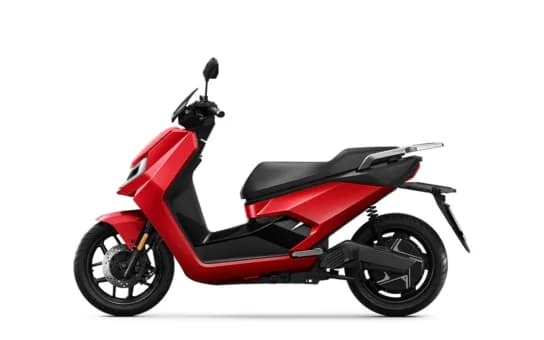
The Niu FQi 300 is not the cheapest route into electric two-wheelers in Nepal, but it is one of the more ambitious ones. It targets:
- Urban and suburban riders who want to completely replace a petrol scooter.
- Commuters who value long range, strong acceleration and modern digital features.
- Owners who have reliable home or workplace charging and prefer a fixed battery setup.
Its strengths are clear: powerful motor, generous range, dual-battery architecture, connected features and solid storage. The two-year motor and battery warranty and NIU’s growing showroom/service network improve the ownership case.
At the same time, the FQi 300 is held back by patchy transparency. Key data points—wheelbase, ground clearance, kerb weight, seat height, detailed battery chemistry, and confirmed advanced safety systems—remain undisclosed. For a buyer spending over Rs 3.8 lakh on a scooter, that feels like unnecessary opacity.
If you are comfortable relying on the observed build quality, claimed range and performance, and you value smart tech, the FQi 300 is a strong candidate in Nepal’s e-scooter market. If you prefer fully documented specs and maximum clarity on safety equipment or want a more budget-oriented entry into EVs, you may find better alignment elsewhere.
Explore full specifications, variants & ownership context
Know the product
Key specifications, features & ownership context
Choose a variant to see its recorded specifications and features. Equipment and prices can change across trims.
Latest catalog and directory records supplement the original analysis. Figures may have changed since publication; individual specification and price-check dates appear below.
Rs 3.85 lakh ex-showroom · source checked 16 Oct 2026
Battery & charging
| Specification / feature | FQi 300 |
|---|---|
| Battery | 4.04 kWhResearched · confirm · 18 Jul 2026 |
| Claimed range | 150 km (WLTP)Researched · confirm · 25 Sept 2026 |
Brakes, tyres & suspension
| Specification / feature | FQi 300 |
|---|---|
| ABS | CBSResearched · confirm · 18 Jul 2026 |
Dimensions & weight
| Specification / feature | FQi 300 |
|---|---|
| Ground clearance | 165 mmResearched · confirm · 22 Sept 2026 |
Claimed range uses the stated test cycle. Different cycles are not a like-for-like range comparison; actual range depends on roads, load, speed and weather.
Showroom & service support
Distributor: Eco Infinity Pvt. Ltd.
20 listed brand showrooms · 19 listed brand service locations
Listed cities include Bhaktapur, Bharatpur, Birtamode, Butwal, Damak, Durbar Marg and 4 more.
Brand-wide directory coverage. Confirm that your nearest workshop supports this exact model, powertrain and warranty work; ask about parts availability and booking time.
Market buzz & buyer priorities
Compiled discussion, including buyer reactions and ownership reports; this is not a verified owner survey or a reliability score. Research dated 17 Oct 2026.
What people like
- useful features like TCS and ABS
- High-performance 4800W motor provides strong acceleration
- Impressive 150 km range suitable for city commuting
More feedback
- Advanced smart app features for tracking and security
Concerns to investigate
- High initial purchase price compared to some petrol alternatives
- Range anxiety remains a concern for long-distance travel outside city limits
What buyers ask for
- Availability of service centers and spare parts
- Ground clearance for rough road conditions
Nepal ownership context
- Service and sales are supported by Eco Infinity Pvt. Ltd in Kathmandu and Pokhara
- Buyers frequently weigh battery longevity and replacement costs against petrol savings
- Performance on steep uphill terrain is a key consideration for Nepali riders
Use these facts alongside the article’s full analysis. Check the final quotation, warranty terms and exact equipment before booking.
Evidence & next steps
Check the details before you buy
Use this guide to build a shortlist. Ask for a written quotation for your chosen variant, including registration, taxes, insurance, finance charges and any charger installation. Confirm the nearest authorised workshop supports that model.
Price sources and dates
These are the recorded distributor-source checks for the selected overview trims. They are separate from the article update and catalog read dates; they do not mean every trim was rechecked today. Confirm the final price with the distributor.
Overview photos come from the corresponding model records; additional article photos carry their own credits. Running costs depend on usage, energy prices, maintenance, insurance and resale value.