Start with the numbers
The model, at a glance
Available variants, with prices in Nepalese rupees.
| Vehicle | Ex-showroom price | Fuel | Selected variant |
|---|---|---|---|
| 01Leapmotor B03X | Rs 46.99 lakh | Electric | ProMax |
Ex-showroom prices exclude registration, road tax and insurance. Specifications can vary by trim. See individual source-check dates ↓
Where This Fits In Nepal's Fast-Filling EV Shelf
Nepal's electric SUV segment has gone from a curiosity to a genuine battleground in the space of two or three years, and the Leapmotor B03X enters it at Rs 46.99 lakh ex-showroom, sold as a single, fully-specified ProMax trim through Shangrila Motors Pvt. Ltd. That single-variant approach is unusual in this market — most rivals offer a base and a loaded trim — but it simplifies the buying decision considerably. You're not choosing between three versions of the same car; you're deciding whether the B03X's particular strengths matter to you more than a rival's.
Those strengths are not, on paper, about outright performance or road presence. This is a compact electric SUV built around a 53 kWh LFP battery, a single 145 kW front motor, and — most tellingly — an interior engineered by someone who clearly cared more about where you put your luggage than how fast you can overtake a bus on the Prithvi Highway. For Nepali buyers cross-shopping the segment, that's worth understanding upfront: the B03X's case is built almost entirely on space and practicality, not drama.
A Face That Smiles But Doesn't Shout
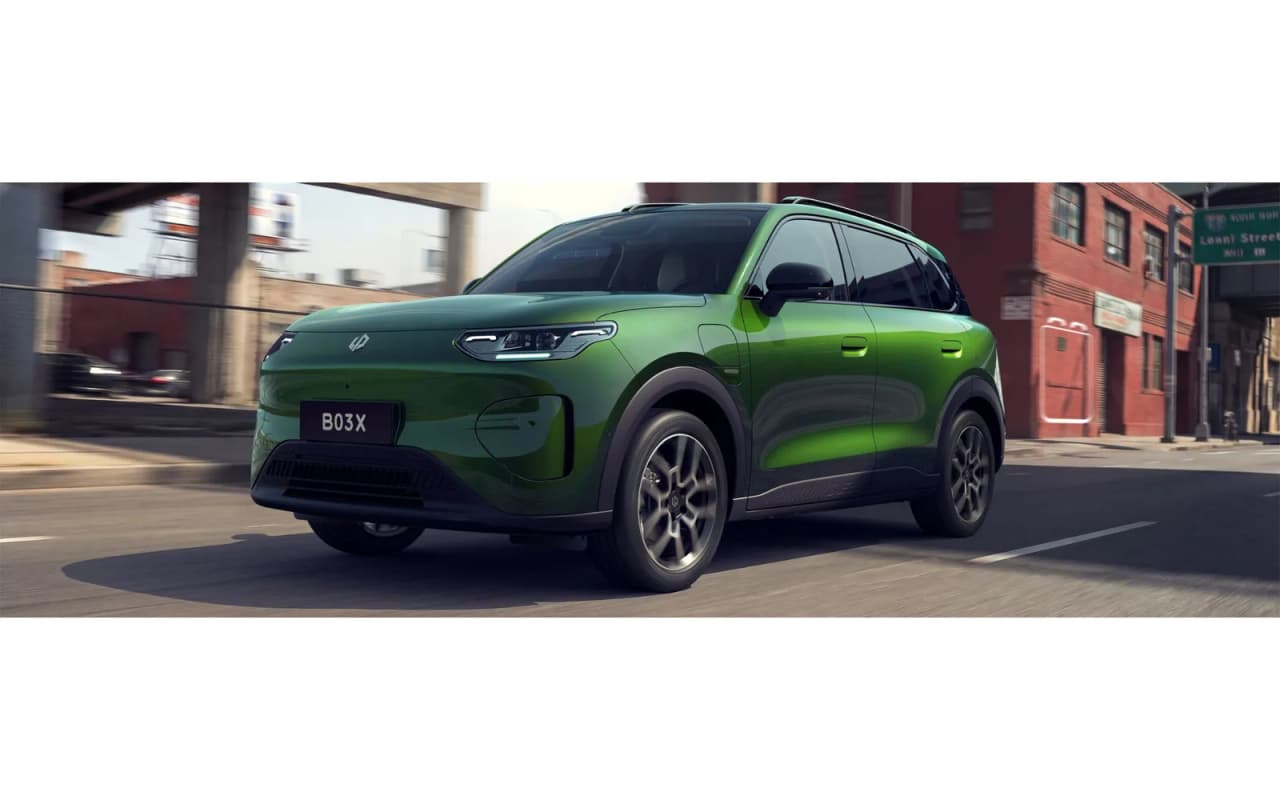
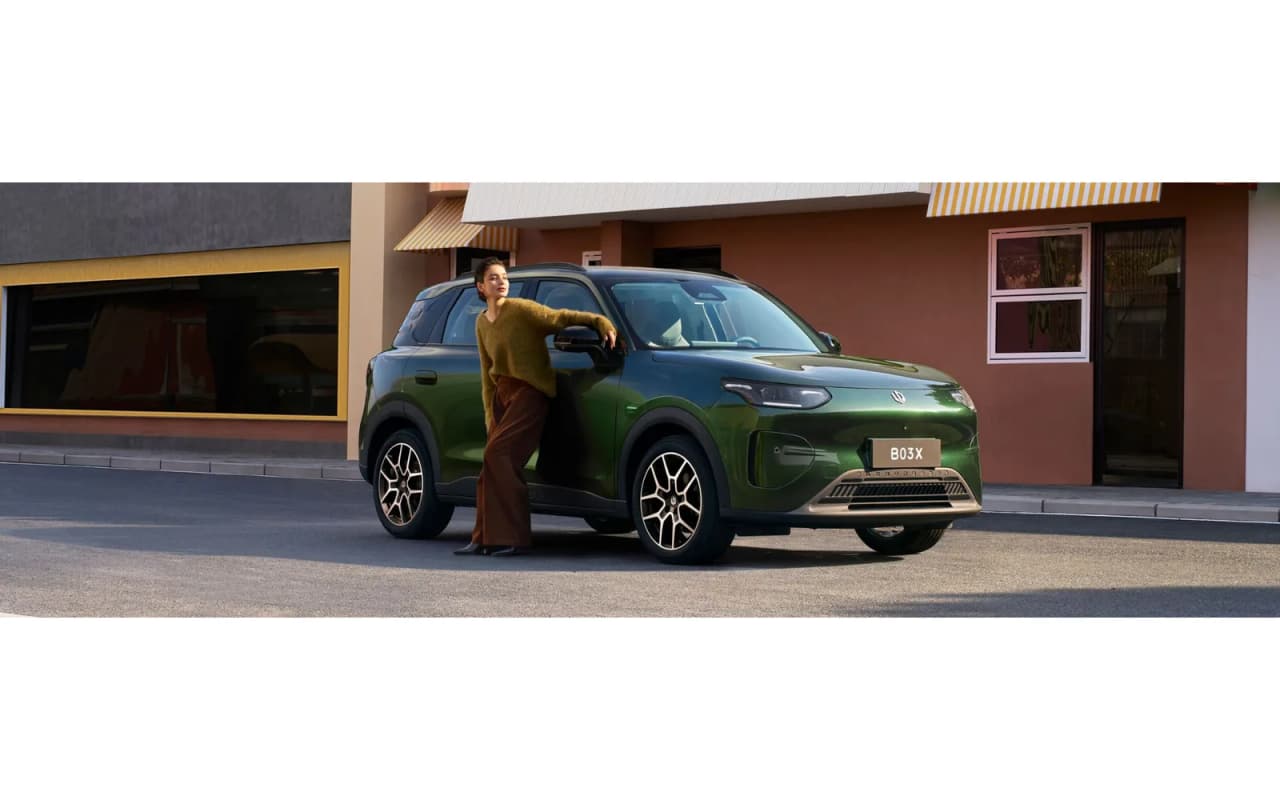
The front end of the B03X is clean and inoffensive, though it's worth noting there's no active shutter grille — a small but real omission on an EV where aerodynamic efficiency at the front bumper genuinely affects real-world range. What it does have is a distinctive LED headlight and taillight signature that traces a playful "smiley face" shape, a design touch that's hard to miss once you've spotted it and one that gives an otherwise conservative face some personality.
The side profile is where opinion splits. A split-colour roof treatment — a contrasting shade running over the top of the cabin — is a styling choice we suspect will divide showroom visitors right down the middle. It's meant to look modern and detached, in the manner of several current SUV design trends, but in person it edges the B03X toward looking like a scaled-up toy car rather than a serious family vehicle. Buyers who want their EV to look serious and substantial should sit in one before committing. A notably large C-pillar reinforces just how much bigger the B03X's body is versus the standard B03 it's derived from, giving it genuine shoulder room in profile even if the roofline treatment undercuts that seriousness. Subtle "Leapmotor" and "LEAP" badging worked into the headlight units and side sills are the kind of detail you only notice on a second look, and flush-fitting door handles tidy up the overall silhouette and shave a fraction off drag.
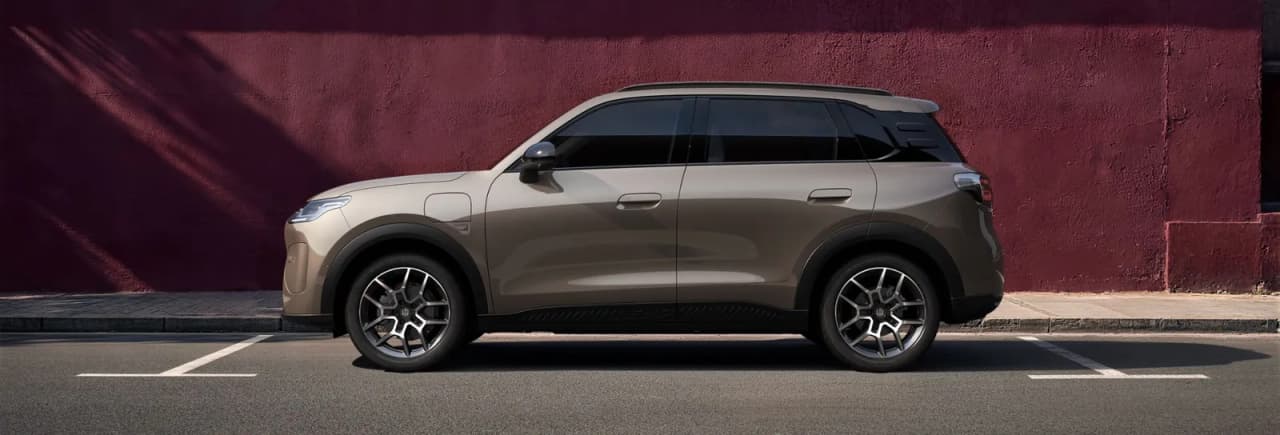
Build quality at showroom level feels consistent with what buyers should expect at this price point — nothing about the panel gaps or paint finish raises immediate concern, though as with any newly launched brand in Nepal, long-term durability is something only time and higher mileage will confirm.
The Grey-Blue Paint And What Little Else We Know
The showroom test car we've assessed comes finished in a glossy grey-blue, a genuinely handsome shade that suits the SUV's rounded surfacing better than a flatter colour would. Nepal AutoMart has not been provided a confirmed full colour palette for the ProMax trim beyond this, so buyers should confirm the exact range of shades available with Shangrila Motors before placing an order — we won't guess at options we haven't verified.
What's Inside The Cabin, Beyond The Obvious
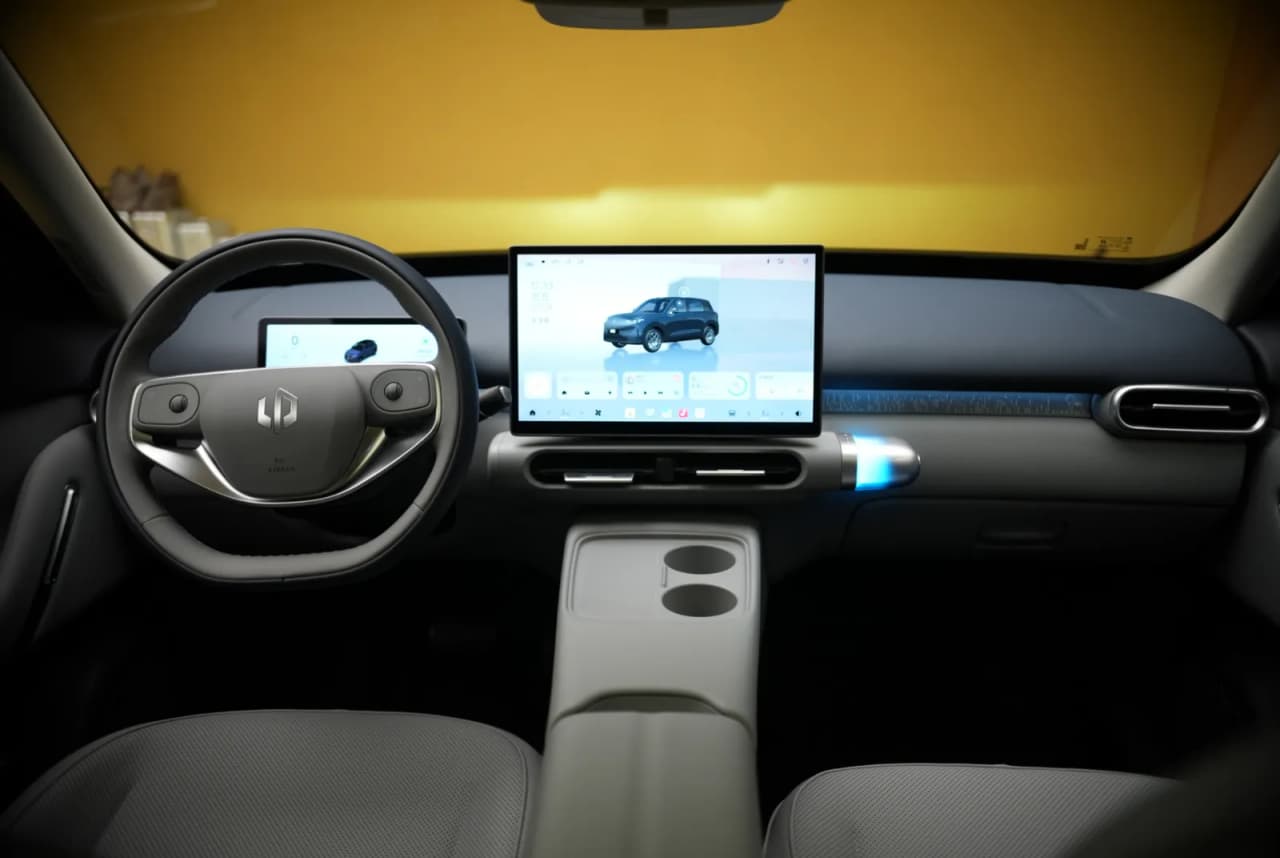
The instrument layout is straightforward and modern: a digital instrument cluster sits behind the steering wheel, paired with a large central infotainment screen that, among its other duties, visualises the car's driver-assistance systems in real time — useful feedback when you're relying on 14 radars, ultrasonic sensors, and cameras positioned around the body to watch your blind spots and assist with parking.
The steering wheel itself is trimmed in eco-leather, heated, multi-function, and adjustable four ways manually, with hands-off detection built in as part of the driver-assist suite. Seats are finished in the same eco-leather material, with a six-way power-adjustable driver's seat facing a four-way manual passenger seat — an asymmetry that makes more sense once you understand the passenger seat's party trick, covered below. Both front seats are heated. A front centre armrest with storage, front reading lights, cup holders, and both static and dynamic ambient lighting round out a cabin that reads more premium than the exterior styling might suggest, with a driver's sun visor and rear trunk light rounding out the smaller, easily overlooked conveniences.
Power Delivery That's Adequate, Not Exciting
The B03X ProMax runs a single PMSM front motor producing 145 kW and 200 Nm, driving the front wheels only through a single-speed transmission. The 0-100 km/h sprint takes 8.6 seconds and top speed is capped at 160 km/h — figures that place it squarely in family-SUV territory rather than anywhere near performance-EV pretensions. That's entirely appropriate for what this car is trying to be, and for the vast majority of Nepali driving — Ring Road commuting, hill stations, highway cruising to Pokhara or Chitwan — that power delivery will feel more than sufficient without ever feeling urgent.
Braking distance from 100-0 km/h is rated at 38.5 metres, a figure that sits within expected norms for a 1,550 kg SUV riding on 215/50 R18 tyres. There's an electronic parking brake fitted as standard, one of the small conveniences that's become table stakes in this segment but is still worth flagging for buyers moving up from older combustion vehicles.
Suspension Tuned For Comfort Over Cornering Ambition
Up front, the B03X uses an independent suspension setup; at the rear, it's a torsion beam rather than a fully independent arrangement. That's a sensible, cost-conscious choice for a front-driven family SUV, and with 190 mm of ground clearance, it should cope reasonably with Nepal's less forgiving urban roads and gravel approach tracks without excessive scraping. We haven't been able to assess how it behaves dynamically on broken tarmac or in hill-road switchbacks, since driving impressions from the car's home-market launch remain embargoed and we have not yet had the opportunity to put kilometres on a Nepali example ourselves — a genuine gap buyers should keep in mind and one we'll revisit once test units are available locally.
Seats That Fold Into A Genuinely Useful Bed
This is where the B03X separates itself from almost everything else at this price in Nepal. The rear seat bases fold upward — not forward, upward — creating a completely flat floor from the front seatbacks to the boot, tall enough to accommodate a flat-screen television standing on end, oversized luggage, or a dog that needs to travel lying flat rather than curled into a footwell. It's a genuinely clever piece of engineering that most rivals simply don't offer.
The front passenger seat goes a step further, folding completely flat to extend the usable loading length to 2,530 mm — enough for genuinely long cargo to run from the dashboard to the tailgate. In principle this also turns the folded seatback into a table or a leg rest for rear passengers stretching out; in practice, the surface it creates isn't perfectly flat or fully sturdy, so treat it as a leg rest rather than somewhere to balance a laptop or a plate of momos. Even with that caveat, the rear cabin's adaptability — a fully flat floor when needed, a proper leg rest when it isn't — is unusual generosity for a compact SUV.
Boot Space That Punches Well Above Its Segment
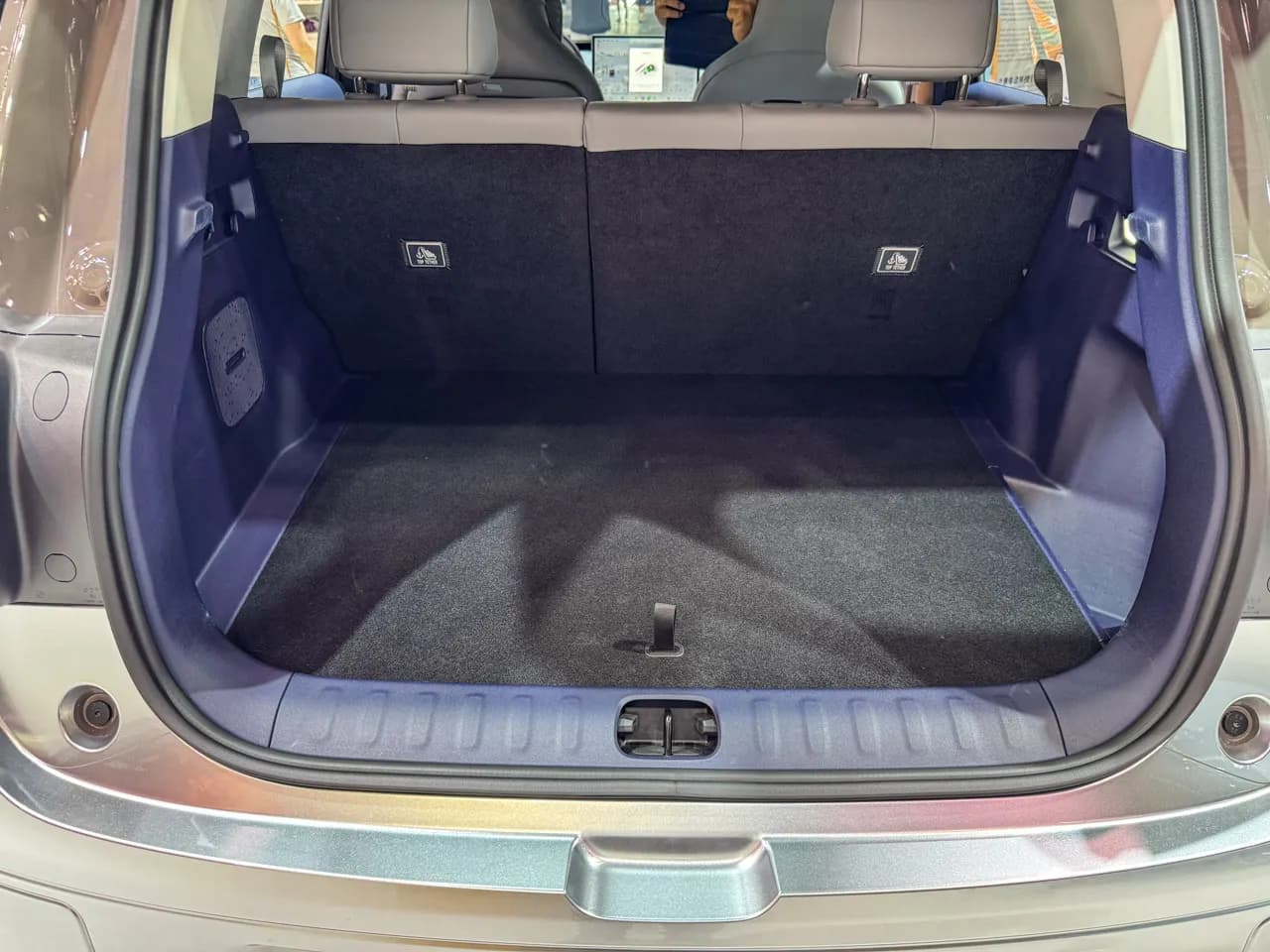
Quoted boot capacity is 510 litres with the rear seats in place, expanding to a substantial 1,605 litres with them folded — figures that would be respectable in a larger SUV, let alone one in the B03X's footprint. Beneath the boot floor sits what's become known as the "Giga Box," a deep plastic storage well that's large enough to genuinely sit inside, adding meaningful extra capacity for items you'd rather keep hidden and secure — charging cables, tools, or valuables on a trip. Combined with the flat-fold rear seats and passenger seat, this is a car that has clearly been engineered from the inside out, with the exterior styling arguably an afterthought by comparison.
What Range And Charging Actually Look Like Day-To-Day
The ProMax variant carries a 53 kWh LFP battery rated for 505 km under CLTC testing and 382 km under the more real-world WLTP cycle — the figure Nepali buyers should anchor their expectations to, given local driving conditions, traffic, and terrain. LFP chemistry brings genuine advantages in longevity and thermal stability, both relevant in Nepal's climate range from Terai heat to hill-station cold.
Charging is a real strength. On AC power, a 30-80% top-up takes 3.1 hours through the 11 kW onboard charger — comfortable overnight or workday charging for anyone with home or office access. On DC fast charging, the same 30-80% window takes just 16 minutes at up to 133 kW, among the quickest charging figures currently available in Nepal's EV market at this price. For anyone doing intercity runs where charging infrastructure allows, that turnaround time meaningfully changes the practicality of longer trips. A 3.3 kW V2L capability also means the B03X can power external equipment or appliances directly from its battery, a genuinely useful feature for camping trips or power-cut backup at home.
One Trim, One Price, One Straightforward Decision
Because Shangrila Motors offers the B03X in Nepal as a single ProMax variant at Rs 46.99 lakh ex-showroom, there's no ladder of trims to climb or agonise over — what you see is what you get, and it comes generously equipped as standard. The car is backed by a 4-year or 100,000 km warranty covering the overall vehicle including the e-powertrain, plus a separate 8-year or 160,000 km warranty specifically on the battery pack — reassurance that matters enormously for EV buyers still wary of long-term battery health in Nepali conditions.
At this price, the B03X positions itself as a value proposition built on interior cleverness and charging speed rather than outright range leadership or badge prestige. Buyers should weigh that trade-off honestly against what else Rs 47 lakh can currently buy in Nepal's EV space.
The BYD Atto 3 Offers Sharper Design, Less Storage Cleverness
The BYD Atto 3 remains one of the most cross-shopped electric SUVs in Nepal at a broadly similar price point, and it counters the B03X with more distinctive cabin design and a stronger brand presence built over several years of local sales. Where the Atto 3 doesn't match the B03X is in outright practicality — there's no equivalent to the Giga Box underfloor storage or the upward-folding rear seat bases, and buyers who prioritise flexible load space over interior flair will find the B03X's engineering more useful in daily life.
The Hyundai Kona Electric Trades Some Space For Established Service Backup
The Hyundai Kona Electric is the other name Nepali buyers in this bracket inevitably consider, largely on the strength of Hyundai's long-established service network and parts availability in the country — a real, practical advantage for anyone nervous about a newer brand's after-sales infrastructure. Against that, the Kona Electric doesn't attempt anything like the B03X's seat-folding versatility or underfloor storage, and its cabin, while well-finished, is a more conventional proposition. Buyers choosing between the two are really choosing between the B03X's packaging cleverness and the Kona's reassurance of a mature dealer network.
Our Verdict: Buy It For The Boot, Not The Badge
The Leapmotor B03X is not the SUV to buy if you want your electric vehicle to turn heads in a Kathmandu parking lot — the styling is safe, the split-roof treatment is a genuine talking point for the wrong reasons, and there's currently no official safety rating to point to as reassurance, despite the generous sensor suite aiming for one. Those are real, valid hesitations, and buyers sensitive to design statement-making should test drive rivals first.
But judged on what it actually sets out to do — carry a family and their belongings efficiently, charge quickly, and adapt its interior to whatever the week throws at it — the B03X is a genuinely clever piece of engineering hiding behind an unassuming face. The combination of a expandable 1,605-litre boot, the Giga Box, and seats that fold flat rather than just down make it one of the most usefully packaged electric SUVs currently sold in Nepal, and the 16-minute DC fast-charge window is a real everyday advantage. It suits buyers who value cargo flexibility and charging speed over outright road presence, and who are comfortable being early adopters of a newer brand backed by a strong battery warranty.
Explore full specifications, variants & ownership context
Know the product
Key specifications, features & ownership context
Choose a variant to see its recorded specifications and features. Equipment and prices can change across trims.
Latest catalog and directory records supplement the original analysis. Figures may have changed since publication; individual specification and price-check dates appear below.
Rs 46.99 lakh ex-showroom · source checked 4 Sept 2026
Battery & charging
| Specification / feature | ProMax |
|---|---|
| Battery | 53 kWhResearched · confirm · 12 Sept 2026 |
| Claimed range | 505 km (CLTC)Researched · confirm · 12 Sept 2026 |
Safety & driver assistance
| Specification / feature | ProMax |
|---|---|
| Airbags | 7 airbagsResearched · confirm · 10 Sept 2026 |
Dimensions & weight
| Specification / feature | ProMax |
|---|---|
| Ground clearance | 190 mmResearched · confirm · 12 Sept 2026 |
Claimed range uses the stated test cycle. Different cycles are not a like-for-like range comparison; actual range depends on roads, load, speed and weather.
Showroom & service support
Distributor: Shangrila Motors Pvt. Ltd.
17 listed brand showrooms · 3 listed brand service locations
Listed cities include Bhairahawa, Bharatpur, Biratnagar, Birgunj, Butwal, Kathmandu and 3 more.
Brand-wide directory coverage. Confirm that your nearest workshop supports this exact model, powertrain and warranty work; ask about parts availability and booking time.
Market buzz & buyer priorities
Compiled discussion, including buyer reactions and ownership reports; this is not a verified owner survey or a reliability score. Research dated 5 Oct 2026.
Concerns to investigate
- high price compared to other countries
- Auto lock feature is a trap.
Use these facts alongside the article’s full analysis. Check the final quotation, warranty terms and exact equipment before booking.
Evidence & next steps
Check the details before you buy
Use this guide to build a shortlist. Ask for a written quotation for your chosen variant, including registration, taxes, insurance, finance charges and any charger installation. Confirm the nearest authorised workshop supports that model.
Price sources and dates
These are the recorded distributor-source checks for the selected overview trims. They are separate from the article update and catalog read dates; they do not mean every trim was rechecked today. Confirm the final price with the distributor.
Overview photos come from the corresponding model records; additional article photos carry their own credits. Running costs depend on usage, energy prices, maintenance, insurance and resale value.