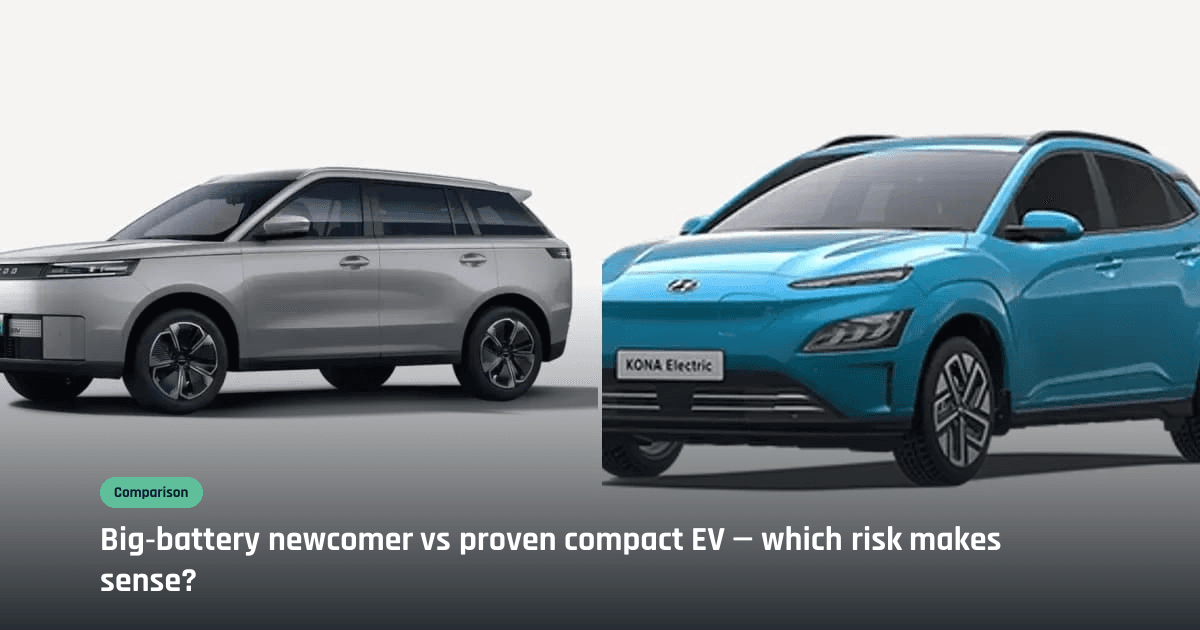
Where Each EV Sits in the Nepali Market
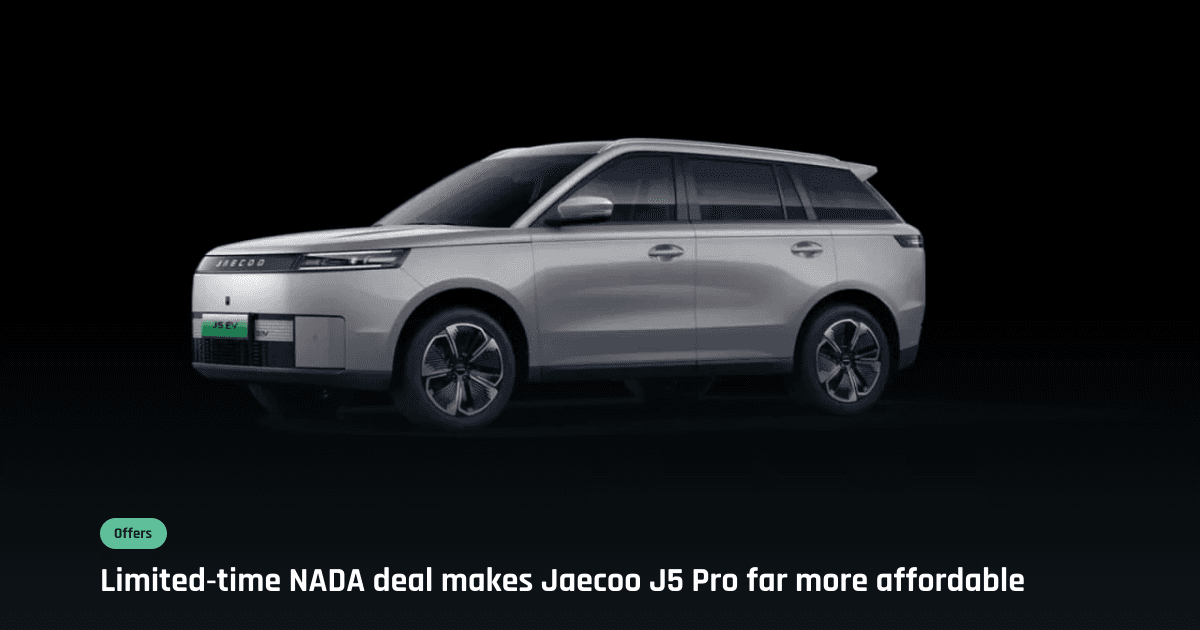
The **Jaecoo J5 is positioned as a premium mid-size electric SUV under Rs 65 lakh**, brought in by SPG Automobiles (Omoda & Jaecoo Nepal). It targets buyers who want size, power and features comparable to larger EVs, but still want to stay below the Rs 65 lakh mark. With an ex-showroom range of roughly Rs 51.59 lakh – Rs 60.99 lakh across three variants (and the FWD variant listed at Rs 56.99 lakh – Rs 60.99 lakh depending on offer), it undercuts many established-brand rivals of similar size and performance.
The **Hyundai Kona sits a segment down in footprint but up in brand maturity. It is a compact crossover EV sold by Laxmi Intercontinental, with ex-showroom prices of Rs 59.96 lakh (GL) and Rs 64.96 lakh (GLS)**. It is not cheap for its size, but it trades on Hyundai’s long-running EV presence, wider network and perceived reliability. For many urban buyers, it is a safe, practical step into EV ownership rather than a bold experiment.
In plain terms: - J5: Bigger, more powerful, more feature-loaded, newer Chinese-brand EV SUV. - Kona: Smaller battery and body, but backed by Hyundai’s 63 showrooms and 35 service centres in Nepal, compared with Jaecoo’s 50 showrooms and 24 service centres.
So the choice begins with a philosophical question: do you prioritise maximum metal and spec for the money, or brand security and a more mature ecosystem?
Design and Road Presence
Jaecoo J5
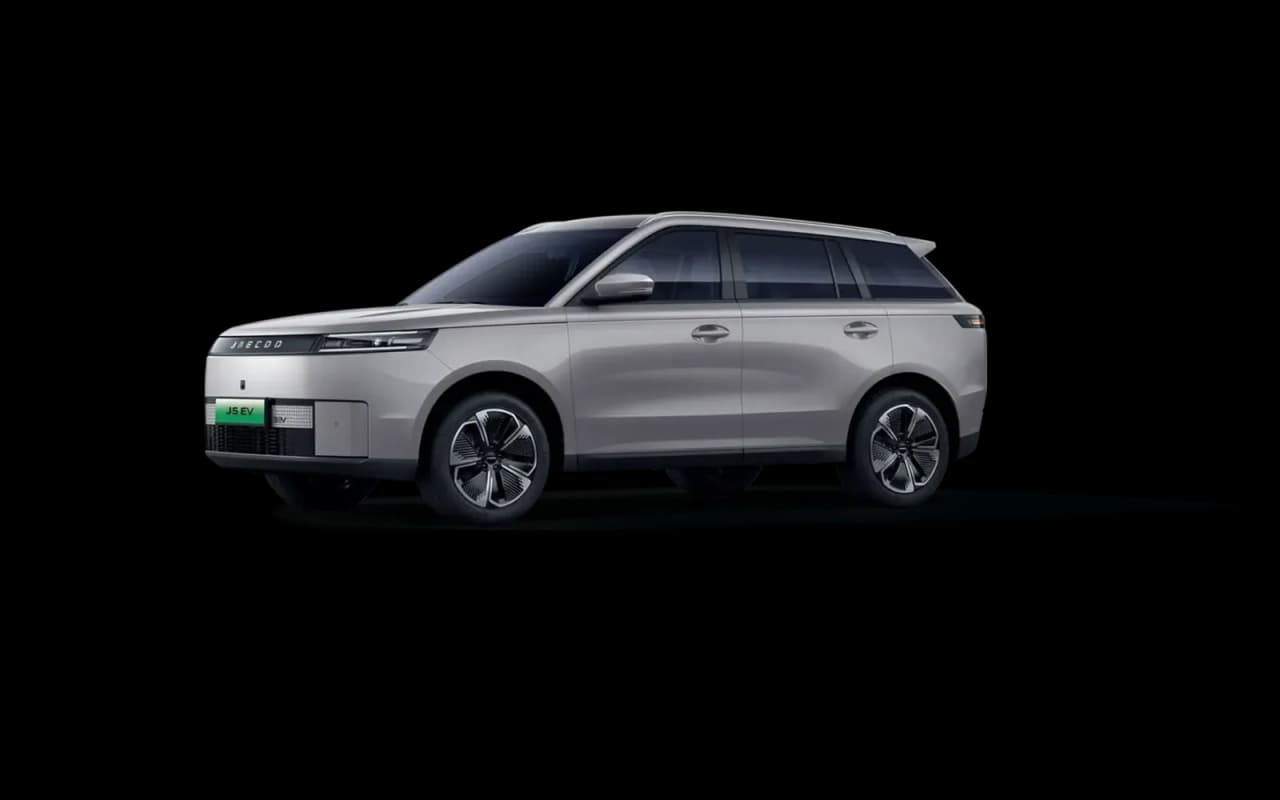
The Jaecoo J5 aims for an upmarket mid-size SUV stance. On paper, it is clearly the larger, more planted-looking vehicle: - Length: 4,380 mm - Width: 1,860 mm - Height: 1,650 mm - Wheelbase: 2,620 mm - Ground clearance: 185 mm
The detailing leans towards a premium, tech-forward aesthetic: - LED headlights with automatic function, follow-me-home, and auto high/low adjustment - LED rear lamps, spoiler, roof rack and ceiling rail - 18-inch alloy wheels - Electrically folding and heated ORVMs - Rain-sensing wipers, electric tailgate
Combined with the panoramic glass roof and multi-colour ambient lighting inside, the J5 presents itself as a more luxurious, near-European-styled EV SUV, particularly eye-catching in showrooms.
Hyundai Kona
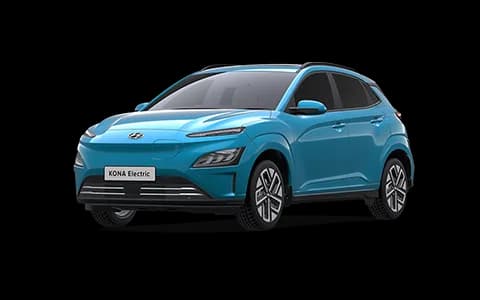
The Hyundai Kona is a compact crossover with a more conservative footprint. Local data does not disclose all dimensions in the Nepal brochures, but globally the Kona sits notably smaller than the J5. What is clearly specified is: - 215/55 R17 wheels - LED lighting package in both GL and GLS
The overall look is more restrained and familiar. It does not have the same “wow” factor as a big screen and panoramic-glass-laden newcomer, but for many buyers this conservative design is reassuring. It looks like a normal urban crossover, not an experimental concept.
Design verdict: If you want size, height and presence, the J5 is the clear winner. If you prefer a more modest, compact crossover that blends into urban traffic, the Kona suits better.
Features and Equipment
Jaecoo J5: Feature-Loaded Mid-Size EV
The J5 leans heavily on equipment density to justify its pricing. Even in the FWD variant, the feature list is lengthy.
Key comfort and interior highlights: - Soft-wrapped instrument panel and injection-moulded dash - Multi-colour ambient lighting (front, second row, trunk) - Panoramic glass roof with electric sunshade - Two-zone air conditioning with PM2.5 filter and second-row vents - Driver seat: 6-way power adjustment with heating - Passenger seat: ventilation (not common at this price) - Faux leather seat fabric, imitation leather steering wheel - 6/4 split-folding rear seats, three rear headrests, rear armrest with cupholder - Multiple practical touches: sunglass holder, coat rack, trunk net, damped glovebox, spare tyre storage box
Infotainment and convenience: - 15.6-inch central control LCD display - 9.2-inch digital instrument cluster - Apple CarPlay and Android Auto compatibility - 8-speaker Pioneer audio system - Offline intelligent voice control - USB and Type-C ports in both first and second rows
Convenience features go beyond the usual: - Power tailgate - One-touch up/down on all four windows - Remote key with keyless entry, remote window opening and long-distance engine start
Hyundai Kona: Focused, But Less Flashy
The Kona offers a more modest but familiar set of equipment.
Comfort and interior: - GL: 6-way power driver seat, leatherette seat trim - GLS: 8-way power driver seat, ventilated front seats noted on brochure
Infotainment and convenience: - 10.25-inch touchscreen infotainment (both GL and GLS) - Wireless phone charging
The Kona’s cabin specification is more restrained. It has key must-haves – power driver’s seat, decent infotainment screen, wireless charging – but does not match the J5’s gigantic screen, multi-colour ambient lighting and panoramic roof theatre.
Features verdict: The J5 clearly wins the feature arms race, especially on screen size, ambient lighting, panoramic roof, and ADAS (covered below). The Kona’s equipment is solid but not exciting, and feels more like a practical tool than a gadget-laden lounge.
Safety and ADAS
Jaecoo J5
The J5’s safety and driver-assist list is unusually long for this price point in Nepal. It offers a comprehensive ADAS suite, including: - Lane Departure Warning, Lane Keeping System, Lane Keeping Assist - Lane Control Assist and Emergency Lane Keeping - Blind Spot Monitoring - Adaptive Cruise Control with Integrated Cruise Assist and Traffic Jam Assist - Forward Collision Warning - Rear Cross Traffic Alert and Rear Cross Traffic Emergency Braking - Automatic Braking System / Anti-collision Automatic Brake - Rear Collision Warning, Door Opening Warning - Electronic parking brake with Auto Hold - ABS, EBD, Brake Assist, Brake Priority, Roll Stability Control - Rear parking sensors - Electrical child safety lock, auto door lock, seatbelt reminder
This is the kind of feature set usually associated with pricier EVs. For buyers interested in semi-autonomous driving aids and maximum active safety, the J5 is clearly ambitious.
Hyundai Kona
The Kona, in the Nepal-spec data set, focuses on core safety: - 6 airbags - Electronic Stability Control (ESC) - Hill-start Assist
Some global Kona variants are known for advanced ADAS, but the local documentation explicitly notes that some advanced systems may be missing and that certain chassis specs remain undocumented. The GLS may still lack the richer ADAS suite that the J5 advertises.
Safety verdict: On paper, the J5’s ADAS coverage is in another league. The Kona leans on passive safety (airbags, ESC) and brand reputation rather than a cutting-edge driver-assist stack. Risk-averse buyers may still trust Hyundai more, but in raw feature count, J5 dominates.
Motor, Battery and Performance
Jaecoo J5
The J5’s spec sheet is impressive for the price: - Battery: 58.9 kWh Lithium iron phosphate (LFP) - Energy density: 165 Wh/kg - Claimed range: 461 km - Motor: 155 kW permanent magnet synchronous motor (single FWD motor) - Torque: 288 Nm - 0–100 km/h: about 7.7 seconds - Charging: - DC fast charge: up to 130 kW, 0–80% in around 28 minutes - AC charging: 6.6 kW
This combination of a large battery and powerful motor is one of the J5’s key drawcards. For a mid-size SUV under Rs 65 lakh, these numbers are very strong.
Hyundai Kona
The Kona is more modest: - Battery: 39.2 kWh (GL and GLS) - Claimed range: 305 km - Motor: 100 kW PMSM, FWD
Hyundai does not highlight performance numbers in the local dataset, but globally this setup yields reasonable city performance without being genuinely quick. Compared with the J5, the Kona has: - Smaller battery - Less power - Shorter range
Performance verdict: The J5 is faster and goes farther on paper. It appeals to those who want strong highway performance and occasional out-of-valley runs without frequent charging. The Kona suits primarily urban and near-urban commuting, where its smaller battery is adequate but not class-leading.
Ride, Handling and Comfort (Based on Segment and Hardware)
We do not have instrumented test data, so this section relies on segment expectations and suspension layouts rather than first-hand track testing.
Jaecoo J5
Key hardware points: - Front suspension: independent - Rear suspension: multi-link - Front brakes: ventilated discs - Rear brakes: discs - 185 mm ground clearance
The combination of a multi-link rear and generous ground clearance typically supports a more composed ride on broken Nepali roads, especially when the vehicle is larger and heavier. The higher stance and approach/departure angles (20° approach, 29.8° departure) make it better suited to rougher rural tracks, steep driveways and speed breakers.
Noise comfort should also benefit from elements like silent glass and panoramic roof with electric sunshade, helping the cabin feel more premium during long drives.
Hyundai Kona
The local data set does not list suspension type or clearance. However, the Kona’s compact-crossover nature and smaller wheels (215/55 R17) suggest a setup optimised for city agility and efficiency, not off-road clearance.
In practice, buyers can expect: - Easier parking and manoeuvring in tight Kathmandu lanes - Lower step-in height, convenient for elderly occupants
The Kona is less likely to shrug off deep ruts and rough tracks as easily as a taller mid-size SUV with 185 mm clearance.
Comfort verdict: For rural or mixed urban–highway use, the J5’s size, ground clearance and multi-link rear layout look more promising. For a pure city commuter who values compactness and easy parking over big-road comfort, the Kona remains appealing.
Practicality and Running Costs
Space and Boot Capacity
- Jaecoo J5:
- Boot space: 480 L
- 5 seats with generous external dimensions
- Hyundai Kona:
- Boot space: 373 L
The J5 offers around 100+ litres more boot space, making it more suitable for families who carry luggage, strollers, or occasional hardware. The larger cabin also translates into better legroom and shoulder room expectations, though exact Kona interior dimensions are not documented locally.
Ground Clearance and Usability
The J5 explicitly lists 185 mm of ground clearance and favourable approach/departure angles. That is a clear advantage for Nepali roads with speed breakers, potholes and rural tracks. The Kona’s ground clearance is not officially documented in the local data set; based on global positioning as a compact crossover, it is adequate for city roads but not exceptional.
Running Costs
Electric running costs in Nepal depend mainly on: - Battery size - Charging pattern (home vs DC fast charging)
Because the J5 uses a 58.9 kWh pack versus the Kona’s 39.2 kWh, a full charge of the J5 will naturally consume more units and cost more per full charge. However, per kilometre, both can be similar, because the larger pack delivers significantly more range.
For urban users who typically drive short daily distances and charge at home overnight, both vehicles offer very low running costs compared with petrol or diesel SUVs. The J5’s larger pack gives more flexibility for occasional longer trips without needing mid-journey charging.
After-Sales and Resale
- Jaecoo J5:
- 50 showrooms, 24 service centres in Nepal
- New brand; long-term reliability and resale remain unproven
- Hyundai Kona:
- 63 showrooms, 35 service centres
- Hyundai has a long-running presence in Nepal, and the Kona itself is a known EV nameplate
For buyers concerned about parts availability, experienced technicians and resale value, the Kona has a clear advantage for now. The J5’s network is growing quickly, but it still carries the risk profile of a relatively new Chinese EV brand.
Price and Variants Side by Side
Official Prices and Offers
- Jaecoo J5 FWD:
- Official price: Rs 60,99,000
- Introductory NAIMA Expo offer: Rs 56,99,000 (approx. Rs 4 lakh discount)
- Overall J5 range: Rs 51.59 lakh – Rs 60.99 lakh across three variants
- Hyundai Kona:
- GL: Rs 59,96,000
- GLS: Rs 64,96,000
- No specific cash discounts confirmed in the gathered data
Comparison Table
| Model / Variant | Battery (kWh) | Power (kW) | Range (km, claimed) | Drivetrain | Boot (L) | Approx Price (NPR) |
|---|---|---|---|---|---|---|
| Jaecoo J5 FWD | 58.9 | 155 | 461 | FWD | 480 | Rs 56.99–60.99 lakh |
| Hyundai Kona GL | 39.2 | 100 | 305 | FWD | 373 | Rs 59.96 lakh |
| Hyundai Kona GLS | 39.2 | 100 | 305 | FWD | 373 | Rs 64.96 lakh |
At face value, the J5 offers more battery, more power and more space for similar or lower money than even the Kona GL, especially if buyers manage to secure the introductory Rs 56.99 lakh offer.
The Kona’s GLS variant stretches to nearly Rs 65 lakh without any increase in battery or motor performance, primarily adding comfort features – which the J5 already offers in abundance.
Which EV Suits Which Kind of Nepali Buyer?
Buy the Jaecoo J5 if you:
- Want maximum performance and range per rupee
- Need a mid-size SUV with more boot space and higher ground clearance for mixed urban–rural usage
- Value rich features, including large screens, ambient lighting, panoramic roof and an extensive ADAS suite
- Are comfortable being an early adopter of a newer Chinese brand with less proven long-term resale
The J5 is especially appealing to buyers cross-shopping **BYD Atto 3** and similar mid-size EV SUVs, but who want to save several lakhs while still getting big battery and power.
Buy the Hyundai Kona if you:
- Prioritise brand trust, service network and resale value over outright specs
- Mainly drive in the city with occasional short highway trips, where 305 km of claimed range is enough
- Prefer a compact footprint that is easier to park and manoeuvre
- Are willing to pay more for the comfort of Hyundai’s established EV ecosystem
The Kona makes sense for risk-averse buyers who see their EV as a long-term appliance rather than a tech-laden statement.
Editorial Verdict
For most value-driven Nepali EV buyers, the Jaecoo J5 is the stronger overall package. It delivers: - Larger 58.9 kWh battery and 461 km claimed range - Much stronger 155 kW motor and faster acceleration - Bigger body, 480 L boot and 185 mm ground clearance - Rich feature set and full ADAS suite - Pricing that undercuts or matches the Kona despite offering more hardware
However, this comes with real caveats: Jaecoo is a newer brand, with unproven long-term reliability and resale, and a still-growing service network. Buyers must be comfortable taking that calculated risk.
The Hyundai Kona remains the safer, more conservative choice. It trades outright performance and space for the security of Hyundai’s long-standing presence, more service centres, and a model that has already been in the market for years. For buyers who value peace of mind more than spec-sheet dominance, especially those living entirely within the urban fabric, the Kona still makes sense.
So the editorial recommendation is: - If you are pragmatic but risk-tolerant, and want the most EV for your money, choose the Jaecoo J5. - If you are risk-averse and put brand and after-sales above everything, the Hyundai Kona is the more reassuring – albeit more expensive and less exciting – option.
Writes on vehicle pricing, taxation and the Nepali auto market from ongoing tracking of distributor price lists. Every price in this piece is read live from the Nepal AutoMart catalog — how we verify prices.