Start with the numbers
The model, at a glance
Available variants, with prices in Nepalese rupees.
| Vehicle | Ex-showroom price | Fuel | Selected variant |
|---|---|---|---|
| 01BYD Sealion 7 | Rs 93 lakh | Electric | Sealion 7 |
Ex-showroom prices exclude registration, road tax and insurance. Specifications can vary by trim. See individual source-check dates ↓
Where This Car Actually Sits In The Nepali EV Story
Nepal's EV market has largely been a contest between value-focused Chinese hatchbacks and a handful of premium imports priced well north of Rs 1 crore. The Sealion 7, brought in by Cimex Inc at just under Rs 93 lakh, tries to plant a flag in the gap between those two worlds. It isn't cheap by Nepali standards, but it undercuts most full-size electric SUVs sold here while offering a cabin and feature list that reads like something from a segment above.
There are two variants on sale, oddly priced almost identically: the Upgraded 170 kW NADA Edition at Rs 92,99,000 and the standard Sealion 7 at Rs 92,99,999 with a 100 kW motor. That's a curious structure. Buyers effectively pay the same money regardless of which one they walk away with, which makes the decision less about budget and entirely about which motor output you want under your right foot.
Wolfgang Egger's Ocean Aesthetics, Grown Into A Crossover
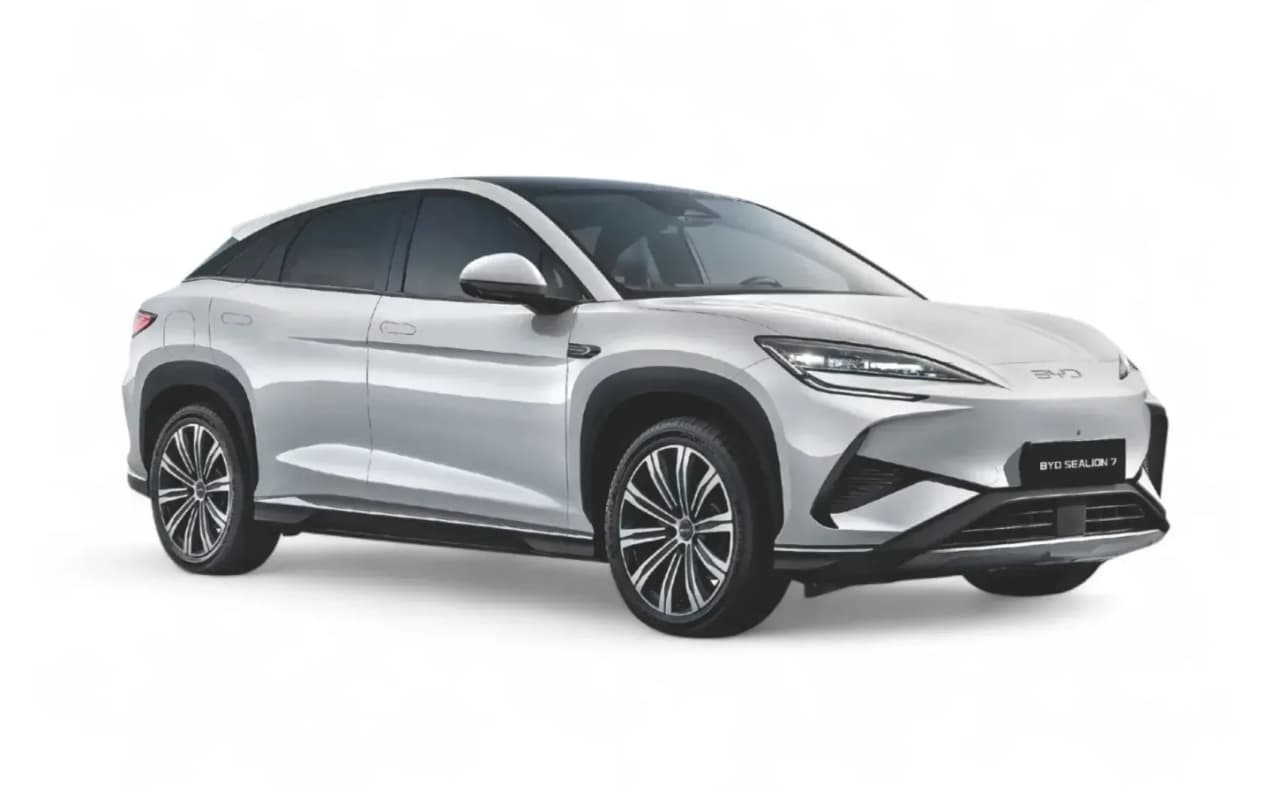
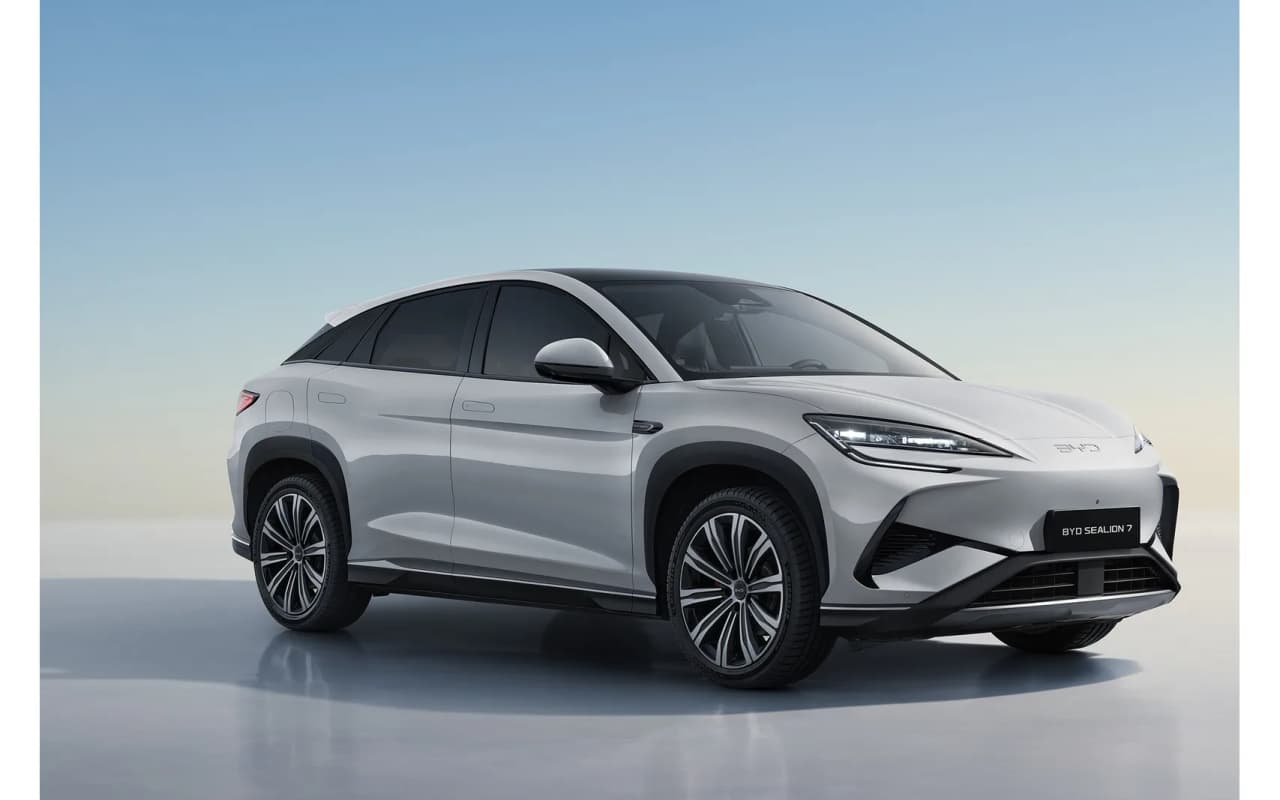
The Sealion 7 carries design work from Wolfgang Egger, and it shows in how deliberately the car avoids looking like a jacked-up hatchback. The U-shaped LED headlights and thin front light strips give it a distinct face, while the fastback roofline and dual character lines down the flanks are clearly aimed at looking faster than the car necessarily is. Flush door handles aren't just a styling flourish either; they're there to cut aerodynamic drag, a detail that matters more on an EV than a petrol car given the direct hit to range.
Practical touches sit alongside the design flourishes. The front air intakes stay permanently open for cooling, a sensible call for a battery-electric crossover that will spend plenty of time in Kathmandu traffic with the air-con working hard. The tailgate carries prominent 'Sealion 7' and '4.5S' badging, a leftover naming convention from the performance variant sold in other markets, and something Nepali buyers should read as brand signage rather than a promise about what our local car will actually do off the line.
Build quality across the panels and shut lines feels considered rather than budget, in keeping with BYD's push to be seen as a proper alternative to Korean and Japanese SUVs rather than a cut-price EV brand.
The Only Colour Nepali Buyers Are Likely To See
BYD showrooms have been showing the Sealion 7 in a matte-finish dark grey-blue metallic shade, a muted, premium-leaning colour that suits the car's fastback lines better than a brighter option would. It's the sort of colour that photographs well under showroom lighting and ages well on Kathmandu's dusty roads without showing every mark. Nepal Automart's advice for buyers curious about a wider palette: confirm current stock colours with Cimex Inc directly, as launch-year availability in Nepal tends to be narrower than what's shown in international brochures.
A Cabin Built Like It's Fighting Above Its Price
This is where the Sealion 7 makes its case. The 15.6-inch rotating touchscreen dominates the dashboard and runs wireless Apple CarPlay and wireless Android Auto, so there's no fumbling for a cable every time you get in. Ahead of the driver sits a 10-inch digital instrument cluster paired with a head-up display, a combination still rare at this price point in Nepal.
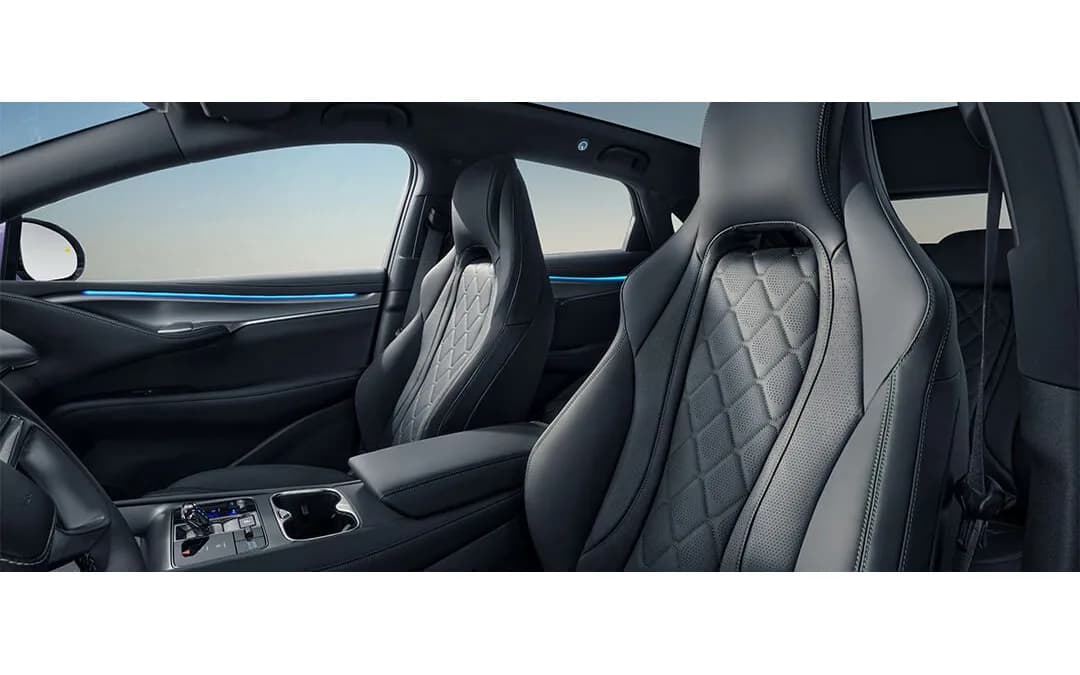
Comfort features go further than most rivals bother with. Front seats are power-adjustable, ventilated, and get a massage function, wrapped in Nappa leather. A 220-volt household power outlet inside the cabin means you can genuinely run a laptop charger or a small appliance on a long drive. Rear passengers get their own USB-A and USB-C pop-out ports, dedicated air vents, and a centre armrest with pop-out cup holders. The 50-watt wireless charging pad with built-in cooling vents solves the age-old problem of phones overheating mid-charge, and it's been consistently flagged as one of the car's better thought-out details.
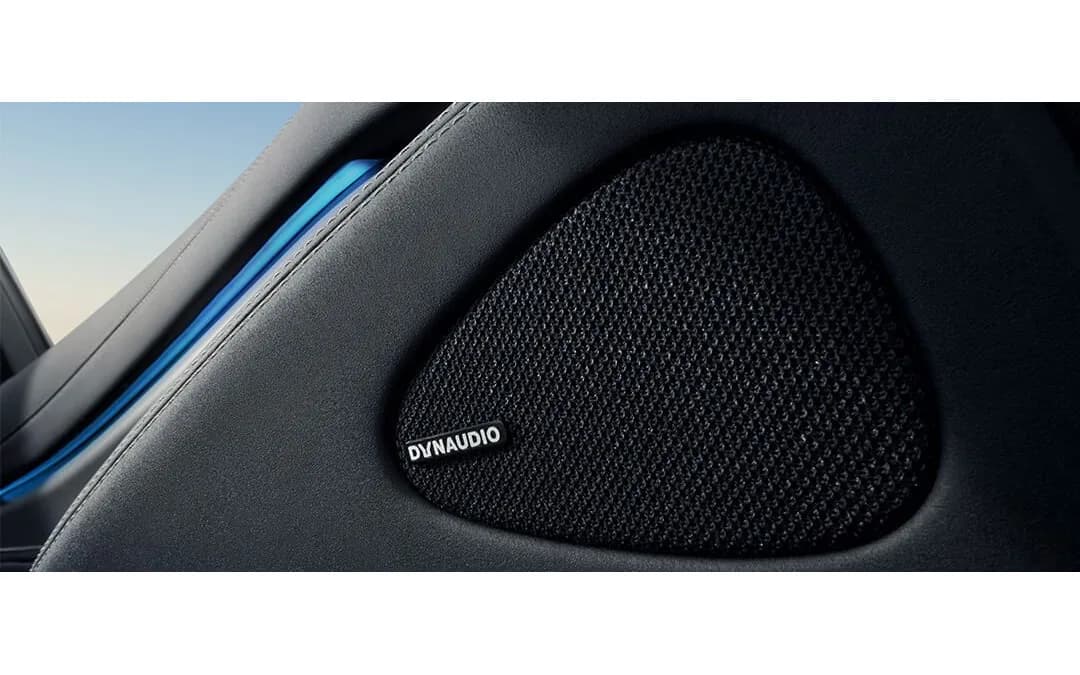
Other equipment worth flagging: NFC keyless entry lets you unlock and start the car with a card rather than fumbling for a key fob, a 12-speaker sound system delivers notably strong bass for factory-fit audio, and ambient lighting offers 128 colour options for those who like to personalise cabin mood. The panoramic glass roof comes with a physical cover rather than just a powered sunshade, which matters more in Nepal's intense summer sun than it might elsewhere.
The Motor Question: 170 kW Or 100 kW

BYD's e-Platform 3.0 Evo architecture, built on Cell-to-Body construction, underpins both variants sold in Nepal. The headline figures for the model are a 380 Nm torque output and a 0-100 km/h time of 11.8 seconds. That number needs context: it's a relaxed figure by EV standards, where instant torque usually means brisk acceleration even from mainstream models. The Sealion 7, as sold here, is tuned for smooth, unhurried progress rather than outright quickness.
The 170 kW NADA Edition and the 100 kW Sealion 7 differ in outright power, and buyers should expect the 170 kW car to feel noticeably stronger off the line and more relaxed at highway overtaking speeds. Given the near-identical pricing between the two, we'd steer most buyers toward the 170 kW variant simply because there's no real financial reason to accept less power.
Underneath, double wishbone front and multi-link rear suspension form the chassis basis, a setup generally associated with better body control and ride comfort than simpler torsion-beam arrangements. Braking duties go to ventilated and drilled discs at the front and ventilated discs at the rear, a combination chosen for consistent stopping performance rather than outright track pace, appropriate for a family crossover rather than a sports SUV.
Ride, Handling And A Car That Doesn't Chase Corners
The Sealion 7 measures 4,830 mm long, 1,925 mm wide and 1,620 mm tall, riding on a 2,930 mm wheelbase. Those are substantial numbers, comfortably in large-SUV territory, and they explain why the cabin feels as roomy as it does. A long wheelbase generally pays off in ride comfort, and the double wishbone/multi-link suspension setup is the sort of arrangement built to soak up broken tarmac rather than reward hard cornering.
This is not a car that asks to be driven hard, and nothing in its specification suggests it wants to be. It's set up as a comfortable, composed cruiser, better suited to the Ring Road and highway runs to Pokhara than a mountain pass with hairpins.
Rear-Seat Space That Rivals Some Three-Row SUVs
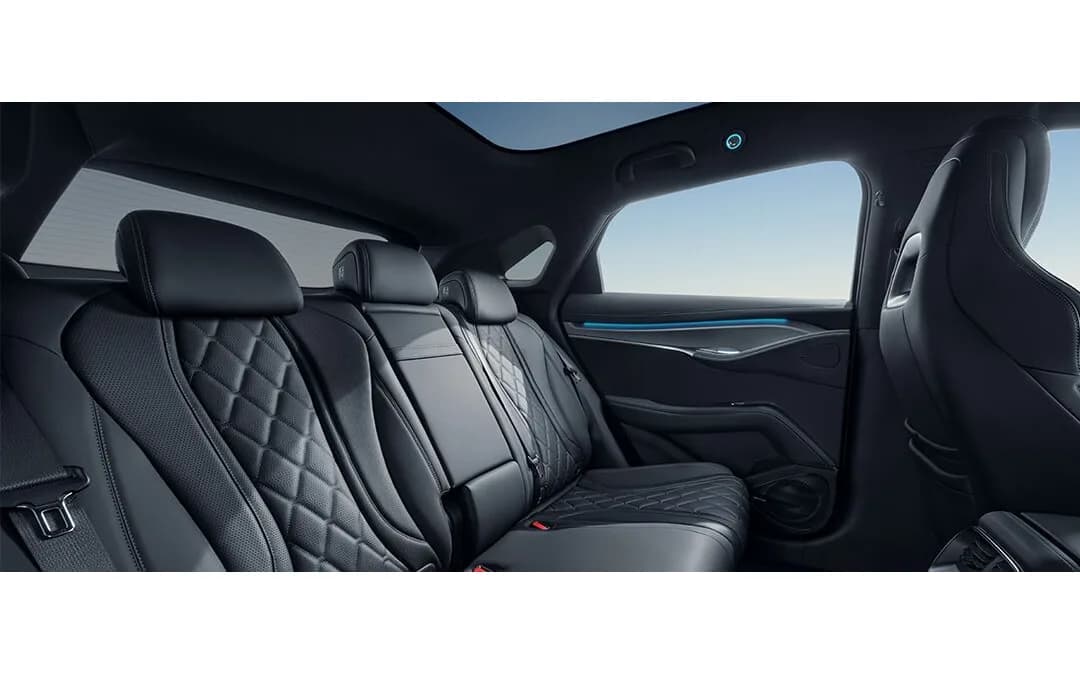
Interior space is arguably the strongest single argument for this car. Rear passengers get genuinely generous legroom, knee room and headroom, helped by that long wheelbase and the fastback roofline not eating into headroom the way some coupe-SUVs do. Rear seats also offer good thigh support, a detail that matters on longer drives and one that's easy to overlook until you're three hours into a trip to Chitwan.
Front seats bring their own ergonomic case: power adjustment, ventilation and a massage function make this a car built for the driver as much as the passengers. Automatic dual-zone air-conditioning rounds off a cabin clearly designed around comfort rather than sportiness.
A Safety Sheet That Reads Like A Class Above
Eleven airbags is a genuinely high number for this price bracket in Nepal, and it's paired with a 360-degree camera system built from 11 individual cameras, 12 ultrasonic sensors and 5 mm-wave radar units. Together these feed BYD's DiPilot 100 system, badged "God's Eye," which delivers Level 2 driver assistance controlled through steering wheel-mounted buttons. Tyre pressure monitoring comes as standard too.
For a market where basic safety kit is still treated as an upsell on plenty of models, the Sealion 7 arriving with this level of sensor coverage and airbag count is worth taking seriously, particularly for buyers cross-shopping against SUVs that charge extra for adaptive cruise or blind-spot monitoring.
Charging And Range For Nepali Roads
The 71.8 kWh battery is rated for up to 440 km on the WLTP cycle, a figure that should be read as a best-case number rather than a guaranteed daily reality once Kathmandu traffic, hill climbs and air-con use are factored in. DC fast charging via CCS2 tops out at 110 kW, enough to take the battery from 20% to 80% in around 40 minutes at a suitable fast charger. AC charging through a Type 2 connector is capped at 7 kW, which is fine for overnight home charging but slow if it's ever your only option during the day.
Nepal's public fast-charging network is still thin outside the main urban corridors, so buyers considering long trips to Pokhara or Chitwan should plan charging stops in advance rather than assume infrastructure will be there when needed.
Where The Rs 93 Lakh Actually Buys Less Than It Seems
At Rs 92.99 lakh to Rs 93 lakh ex-showroom, the Sealion 7 sits in a strange position: too expensive to be an easy first EV purchase, but not so expensive that it competes with the true luxury electric SUVs sold in Nepal. With effectively no price gap between the two variants, the buying decision comes down to trim badge rather than budget. We'd point most buyers toward the 170 kW NADA Edition, since there's no financial penalty for choosing the stronger motor.
The Hyundai Ioniq 5 Offers A Different Kind Of Presence
The Hyundai Ioniq 5 remains the most obvious cross-shop for buyers at this price point in Nepal. It brings a more distinctive retro-futurist design and a strong reputation for build quality, though buyers comparing the two should weigh the Sealion 7's more feature-dense cabin, with items like the massage seats and 220V outlet, against the Ioniq 5's brand pedigree and established service history in the market.
The Kia EV6 Trades Cabin Space For Sportier Intent
The Kia EV6 leans harder into driving dynamics and sharper styling, appealing to buyers who want their EV to feel quick rather than composed. Against the Sealion 7's relaxed 11.8-second 0-100 km/h time, the EV6 generally positions itself as the more performance-oriented choice in this bracket, while the Sealion 7 counters with a larger footprint and a noticeably more spacious rear cabin.
Who This Car Is Actually For
The BYD Sealion 7 is not the car to buy if outright pace matters to you, and it's not pretending otherwise. What it offers instead is one of the most feature-rich, comfortable cabins available anywhere near this price in Nepal, backed by a genuinely strong safety sensor suite and real-world usable range. It suits buyers who want their electric crossover to feel like a lounge on wheels, with rear-seat comfort good enough to make this the car you buy for your family rather than for yourself.
For anyone chasing quick overtakes or backroad thrills, look elsewhere. For buyers who want to arrive relaxed, charge overnight at home, and hand the back seat to someone who'll appreciate the legroom, the Sealion 7 is one of the more convincing electric crossovers to reach Nepal so far.
Explore full specifications, variants & ownership context
Know the product
Key specifications, features & ownership context
Choose a variant to see its recorded specifications and features. Equipment and prices can change across trims.
Latest catalog and directory records supplement the original analysis. Figures may have changed since publication; individual specification and price-check dates appear below.
Rs 93 lakh ex-showroom · source checked 26 Oct 2026
Battery & charging
| Specification / feature | Sealion 7 |
|---|---|
| Battery | 71.8 kWhResearched · confirm · 10 Sept 2026 |
| Claimed range | 440 km (WLTP)Researched · confirm · 10 Sept 2026 |
Safety & driver assistance
| Specification / feature | Sealion 7 |
|---|---|
| Airbags | 11 airbagsResearched · confirm · 11 Sept 2026 |
Dimensions & weight
| Specification / feature | Sealion 7 |
|---|---|
| Ground clearance | 175 mmResearched · confirm · 16 Sept 2026 |
Claimed range uses the stated test cycle. Different cycles are not a like-for-like range comparison; actual range depends on roads, load, speed and weather.
Showroom & service support
Distributor: Cimex Inc. Pvt. Ltd.
72 listed brand showrooms · 43 listed brand service locations
Listed cities include Anamnagar, Banepa, Bhairahawa, Bhaktapur, Bharatpur, Biratnagar and 11 more.
Brand-wide directory coverage. Confirm that your nearest workshop supports this exact model, powertrain and warranty work; ask about parts availability and booking time.
Market buzz & buyer priorities
Compiled discussion, including buyer reactions and ownership reports; this is not a verified owner survey or a reliability score. Research dated 23 Oct 2026.
What people like
- High-end interior quality with Nappa leather and ventilated/massage seats
- Advanced DiSus-C adaptive suspension provides a smooth, comfortable ride on uneven roads
- Strong safety profile with 11 airbags and 5-star Euro NCAP rating
More feedback
- Futuristic cabin technology including the rotating 15.6-inch touchscreen
Concerns to investigate
- heavy car struggles with low torque
- inadequate ground clearance for Nepal's roads
- Nepal-spec 100 kW RWD motor feels underpowered for steep hill climbs when fully loaded
More feedback
- ADAS features like lane-keeping and driver monitoring are often described as overly intrusive
What buyers ask for
- power and performance on hilly roads
- suitable ground clearance for local conditions
- Ride comfort and suspension performance on patchy roads
Nepal ownership context
- While the ride is praised for Kathmandu's roads, the limited DC fast-charging infrastructure outside the capital remains a significant barrier for long-distance travel.
- After-sales service is generally considered courteous, though service centers are still adapting to the complexity of this specific model.
- Resale value is a common point of inquiry, though the model is still relatively new in the local market.
Use these facts alongside the article’s full analysis. Check the final quotation, warranty terms and exact equipment before booking.
Evidence & next steps
Check the details before you buy
Use this guide to build a shortlist. Ask for a written quotation for your chosen variant, including registration, taxes, insurance, finance charges and any charger installation. Confirm the nearest authorised workshop supports that model.
Price sources and dates
These are the recorded distributor-source checks for the selected overview trims. They are separate from the article update and catalog read dates; they do not mean every trim was rechecked today. Confirm the final price with the distributor.
Overview photos come from the corresponding model records; additional article photos carry their own credits. Running costs depend on usage, energy prices, maintenance, insurance and resale value.