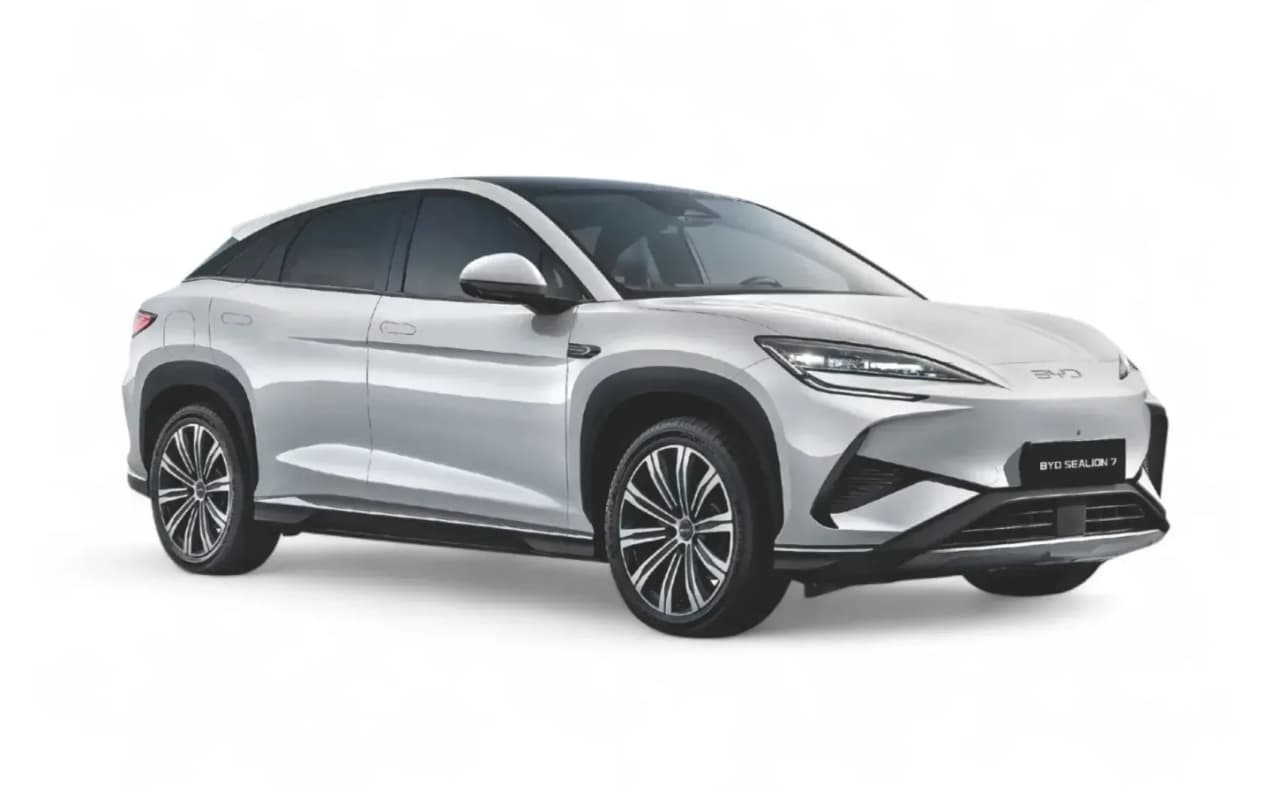
Where The Sealion 7 Sits In Nepal's Growing EV Crossover Shelf
Cimex Inc. Pvt. Ltd. has positioned the BYD Sealion 7 as one of the costlier EVs it distributes in Nepal, landing at Rs 92.99 lakh to Rs 93 lakh ex-showroom depending on variant. That puts it well above BYD's own smaller crossovers and into territory where buyers are cross-shopping mid-size electric SUVs from multiple brands rather than picking on badge alone. It's a serious ask for private buyers, and at this price the car needs to justify itself on space, tech, and range rather than raw performance — which, as we'll get into, is exactly where the local version's story gets interesting.
What's notable straight away is that Nepal gets the Sealion 7 in a form quite different from how it's sold in some other Asian markets. Globally the nameplate carries a reputation as a quick, dual-motor all-wheel-drive machine. The units Cimex has brought in are single-motor cars — a 100 kW variant and an "Upgraded 170 kW NADA Edition" — which changes the character of the car considerably from what enthusiasts may have read about online. We'll flag this distinction throughout, because it matters more to a buyer's expectations than almost anything else about this car.
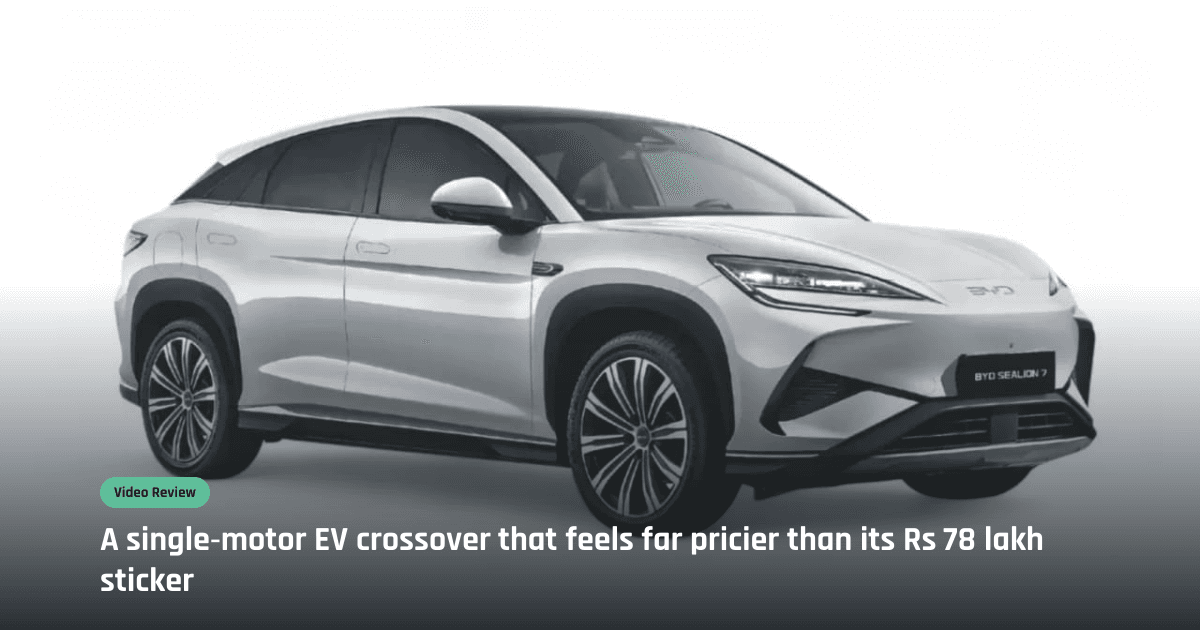
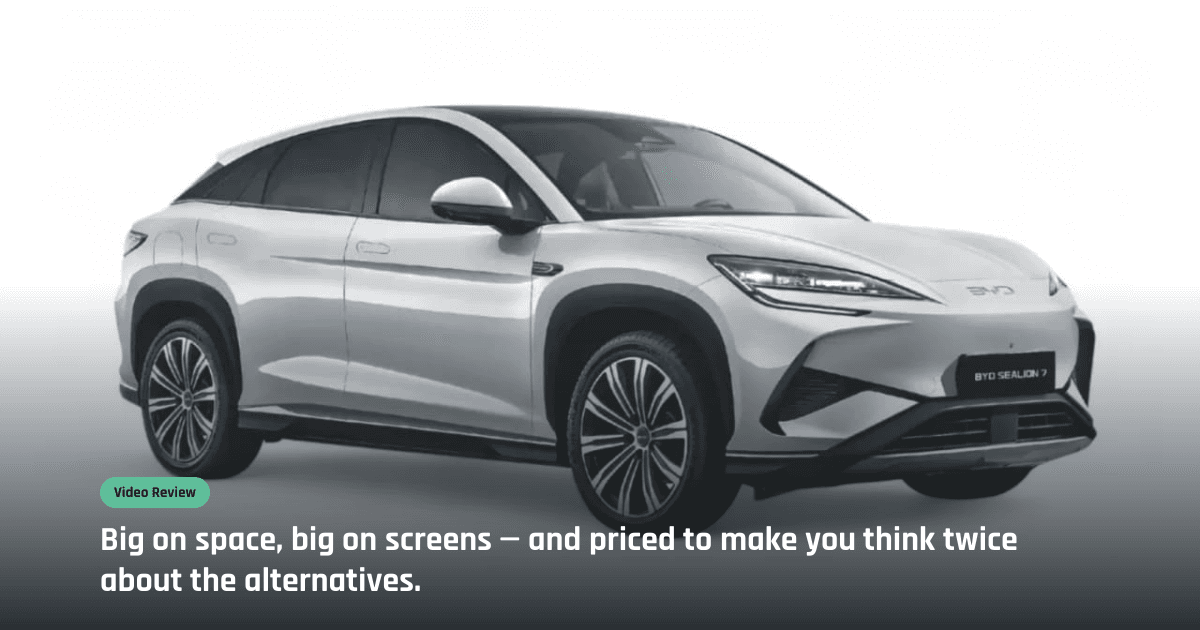
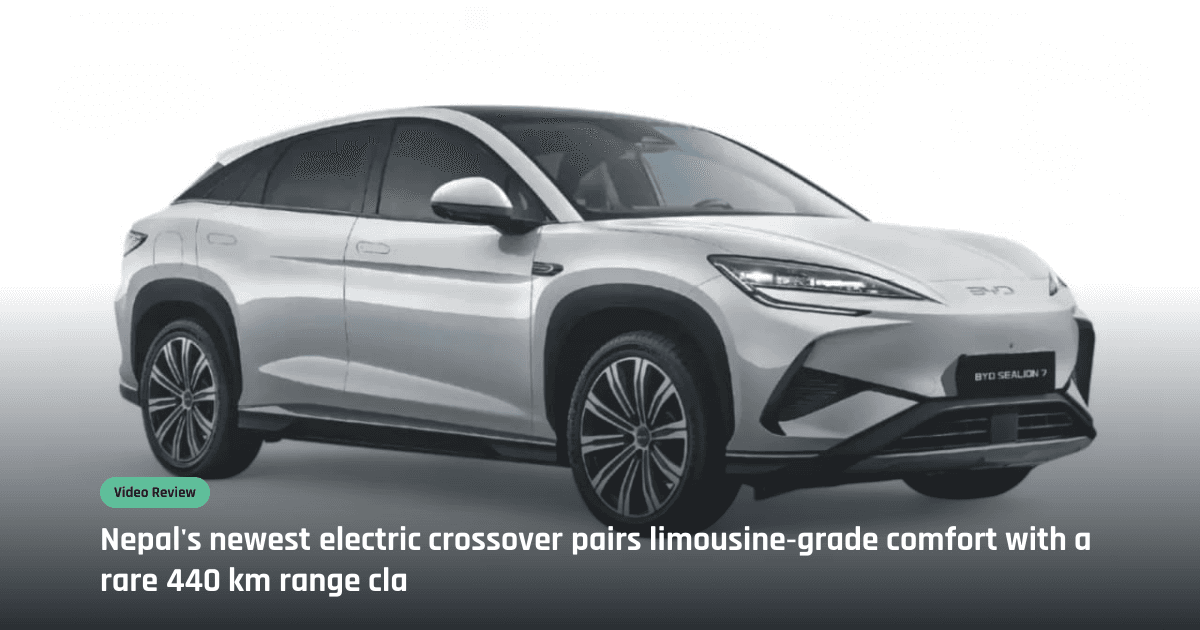
Wolfgang Egger's Ocean Design Language, Grown Into A Crossover
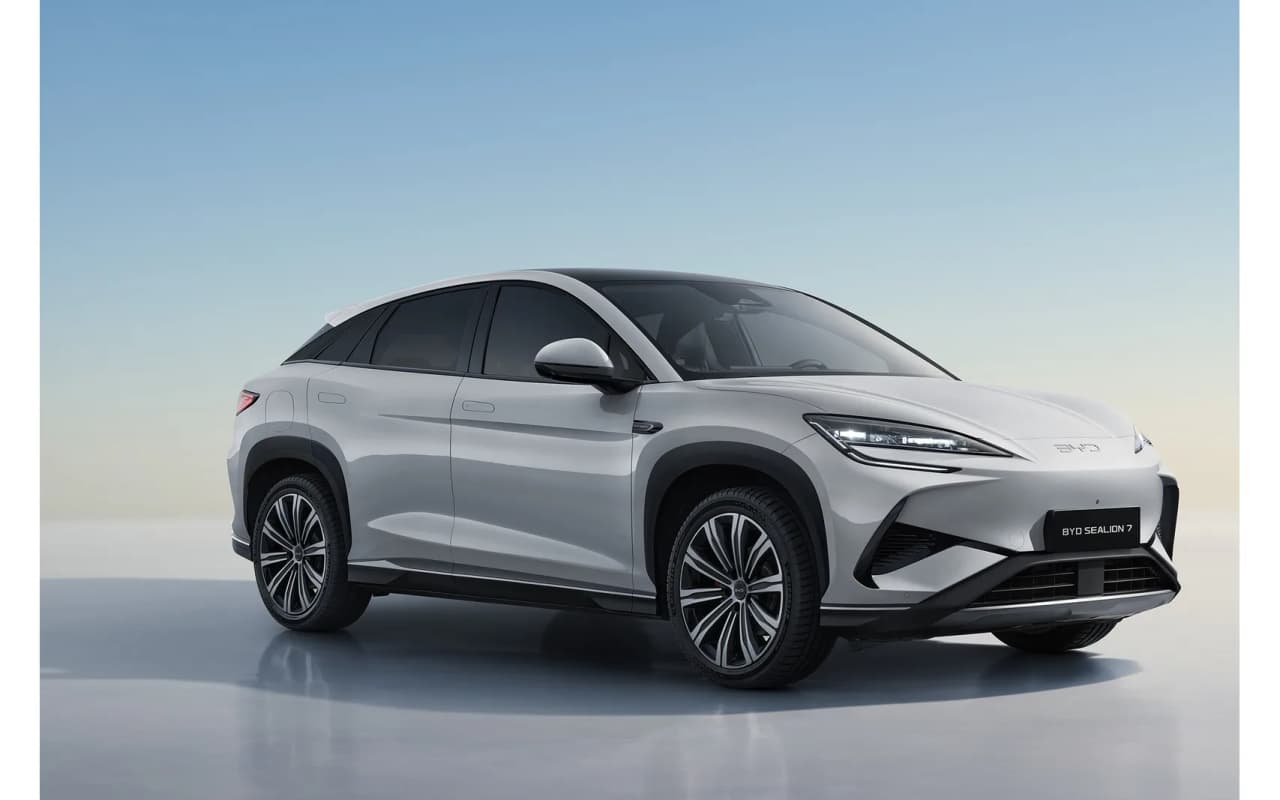
The Sealion 7's exterior is the work of Wolfgang Egger, the designer who previously shaped cars for Alfa Romeo and Audi, and it shows in the way BYD's "Ocean Aesthetics" language has been stretched from saloon proportions into something more muscular. The U-shaped LED headlight signature and the light strips that run across the nose give the front end a distinct identity rather than the generic "EV face" many rivals settle for. The fastback roofline tapers away at the back in a way that's clearly been shaped with drag in mind, and flush door handles — which pop out on approach — reinforce that this is a car designed around efficiency as much as looks.
Standing on 20-inch wheels wrapped in Michelin Pilot Sport tyres, the car has genuine road presence in the metal, and the overall build feels dense and well finished rather than hollow, which matters at this price point. The showroom test unit we've seen is finished in a matte/satin grey-blue, a colour that suits the car's sculpted surfacing far better than a gloss finish would — it plays down the crossover bulk and lets the character lines do the talking instead of reflections. We'd rate this as one of the more distinctive-looking EVs at its price in Nepal right now, rather than a car that blends into the crossover crowd.
The Cabin Tech Is Where The Money Visibly Goes
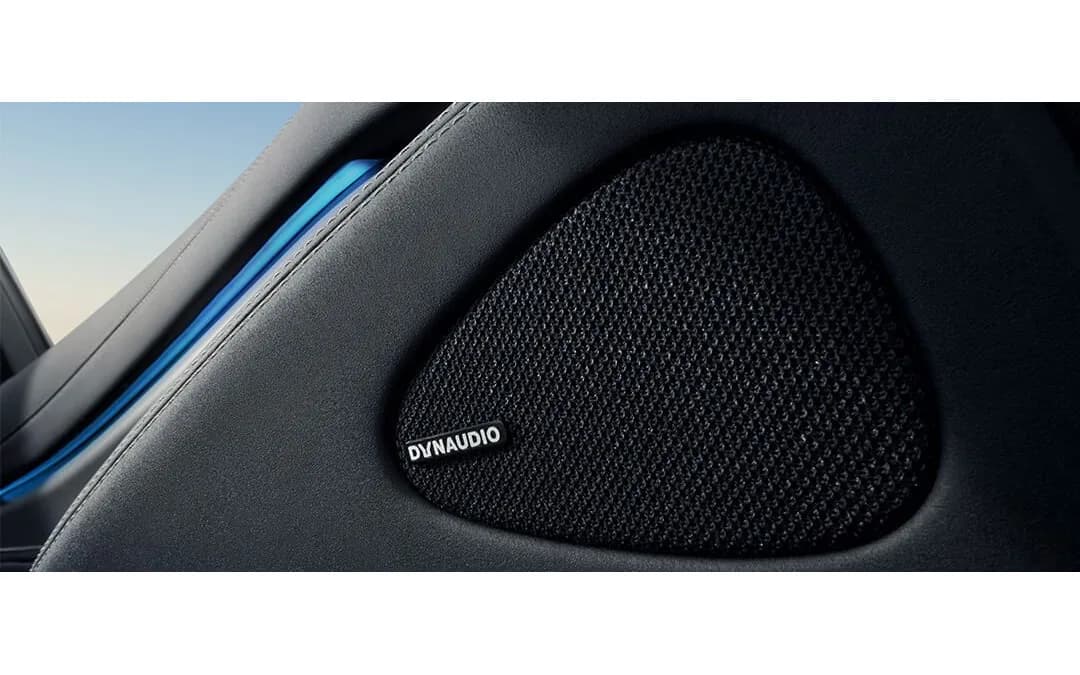
Step inside and the Sealion 7 leans hard into the "tech flagship" pitch. The 15.6-inch rotating touchscreen dominates the dashboard, paired with a 10-inch digital instrument cluster and a head-up display so the driver isn't forced to glance sideways for basic information. Wireless Apple CarPlay and wireless Android Auto are both standard, which by itself removes one of the more common daily annoyances in this segment. A 12-speaker sound system rounds out what is a genuinely premium-feeling cabin for the money.
The details reward closer inspection. There's a 50-watt wireless charging pad with built-in cooling vents — a small thing, but anyone who's had a phone overheat and throttle its charging speed on a hot Kathmandu afternoon will appreciate that BYD engineered around it. NFC keyless entry means you can unlock and start the car with a card rather than fumbling for a key fob. Ambient lighting runs to 128 colours, which is more a mood-setting flourish than a functional feature, but it's the sort of thing that photographs well and buyers notice on a showroom visit. Automatic dual-zone air-conditioning and a 220-volt household power outlet inside the cabin add genuine everyday usefulness — the latter means you can run small appliances or charge equipment directly off the car, a feature road-trippers and campers in particular will find handy.
A Single Motor, Not The Dual-Motor Car You May Have Read About
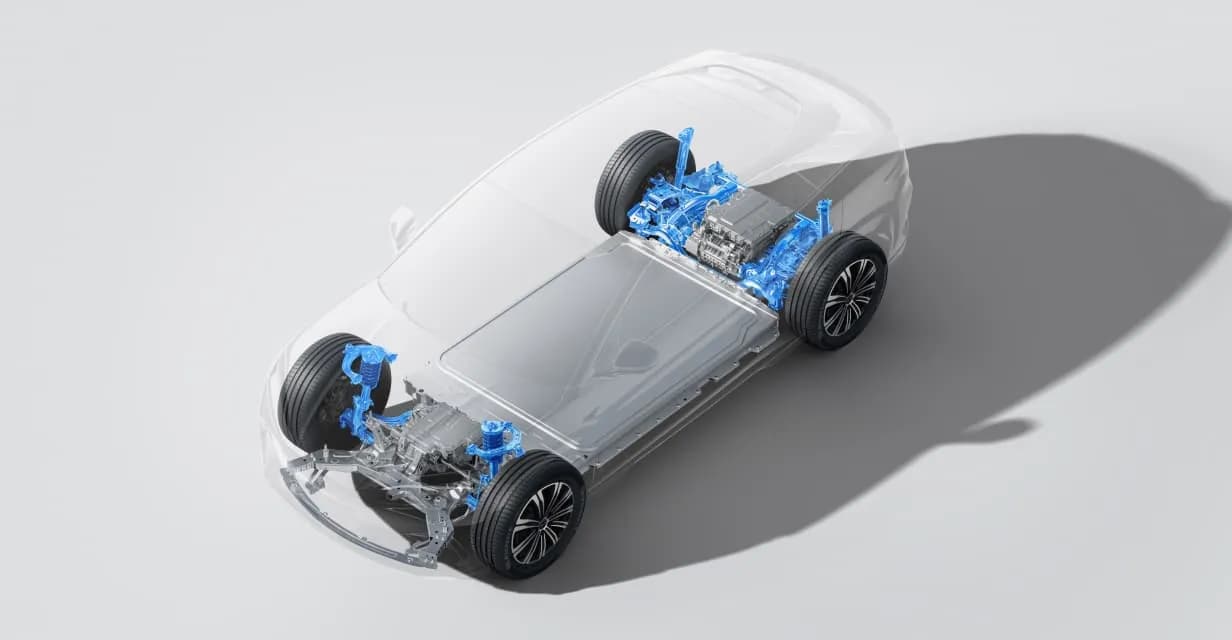
This is the section that matters most for managing expectations. The Sealion 7 as sold in Nepal is a single-motor electric crossover, not the dual-motor all-wheel-drive performance variant that has built much of this nameplate's reputation elsewhere. Our two local variants make 100 kW and 170 kW respectively, with peak torque quoted at 380 Nm for the model. The official 0-100 km/h figure for the local car is 11.8 seconds — brisk enough for daily driving and Kathmandu Valley traffic, but nowhere near what "high-performance EV crossover" implies to anyone who has researched this car by international reputation.
That's not necessarily a flaw — it just means the Sealion 7 in Nepal is best understood as a comfortable, tech-laden electric crossover rather than a quick one. The 71.8 kWh battery is built on BYD's e-Platform 3.0 Evo architecture using Cell-to-Body construction, where the battery pack is integrated into the car's structural floor rather than bolted in as a separate unit. This approach generally pays off in a lower centre of gravity and a stiffer shell, both of which should help refinement and stability, even if outright acceleration isn't the headline here. Buyers who specifically want the dual-motor character associated with this nameplate abroad should walk in aware that it isn't what's on the showroom floor in Nepal.
Suspension Set-Up Built For Comfort, Not Cornering Drama
BYD has fitted a double wishbone front and multi-link rear suspension layout to the Sealion 7 — a setup that tends to favour ride comfort and composure over sharp, sporty handling, which fits the car's positioning as a family-oriented crossover rather than a driver's machine. Combined with the low, battery-integrated floor, the car should sit flat and planted at highway speeds, and the wide 1,925 mm body and long 2,930 mm wheelbase both work in its favour for stability. Braking duties are handled by ventilated and drilled discs up front and ventilated discs at the rear, a setup with enough bite margin for a car of this size and weight.
Rear-Seat Space That Beats Its Own Stablemate
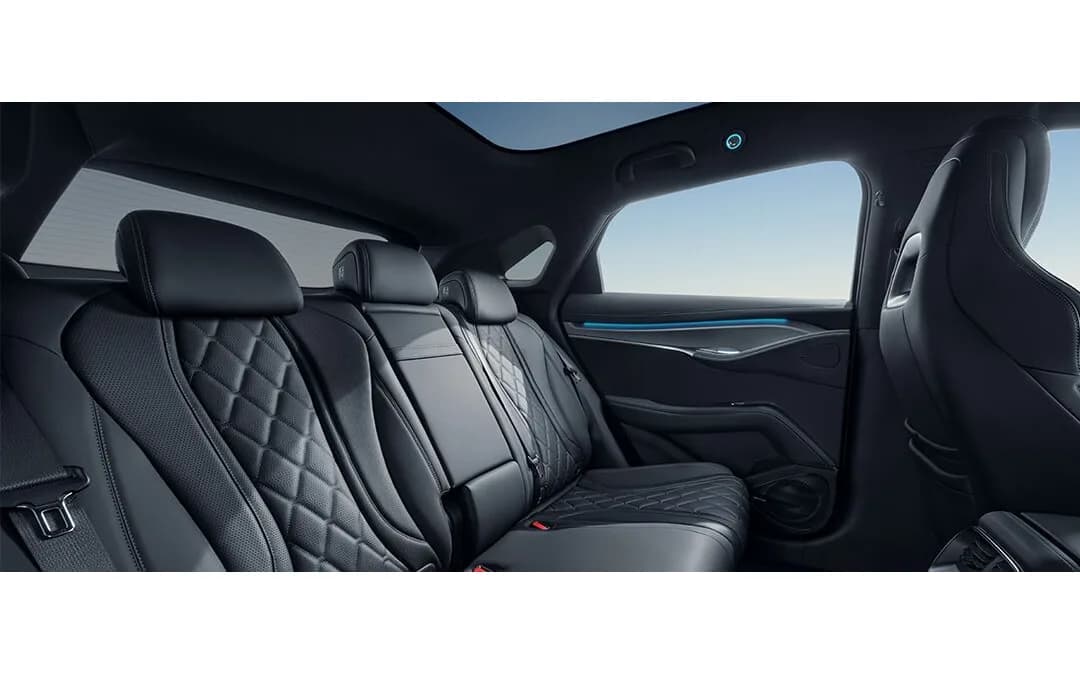
If there's one area where the Sealion 7 clearly earns its price tag, it's rear-seat accommodation. Knee room, legroom and headroom are all generous, and the thigh support and seating angle in the back are noticeably better resolved than in BYD's own Tang — the seat base is longer and the cushion angle more natural, rather than leaving rear passengers perched with their knees up. For a Nepali family that will regularly carry adult passengers in the back, this is a meaningful, tangible advantage over crossovers that treat the rear bench as an afterthought.
Front occupants aren't neglected either. The seats are power-adjustable, ventilated, and trimmed in Nappa leather, with massage function on offer — genuinely unusual generosity at this price bracket in Nepal. Rear passengers get their own pop-out USB-A and USB-C ports, dedicated air vents, and a centre armrest with pop-out cup holders, plus the practical touch of a physical cover over the panoramic glass roof, which matters enormously during Kathmandu's peak summer sun when an uncovered glass roof can turn a cabin into a greenhouse.
Eleven Airbags And A Full Sensor Suite Backing The Safety Case
Safety provision is comprehensive on paper. Eleven airbags, a 360-degree camera system built from 11 cameras, 12 ultrasonic sensors and 5 mm-wave radar units feed into BYD's DiPilot 100 system — badged "God's Eye" — which delivers Level 2 driver assistance including the sort of lane and distance monitoring that's steadily becoming expected at this price point rather than a luxury extra. Tyre pressure monitoring is standard too. The ADAS functions are operated through steering wheel-mounted controls, keeping them within easy reach rather than buried in submenus, which matters when you actually want to toggle a lane-keep function off on a narrow Nepali mountain road.
A 500-Litre Boot That Nearly Triples With The Seats Down
Practicality is handled well. The power tailgate opens onto a 500-litre boot that expands to over 1,700 litres with the rear seats folded flat — enough for genuine family luggage duty or a hardware-store run. There's additional underfloor storage in the boot for charging cables and odds and ends you don't want rattling around loose, and a 58-litre frunk under the bonnet adds a second, separate storage space that petrol and diesel crossovers simply can't offer. Between the frunk, the underfloor cubby and the expandable boot, the Sealion 7 is genuinely well thought through for a family that travels with more than an overnight bag.
Charging And Range Numbers That Matter More Than 0-100 Times
For an EV at this price, the running-cost conversation is really a range and charging conversation. BYD quotes a 71.8 kWh battery delivering up to 440 km on the WLTP cycle — enough for a Kathmandu-to-Pokhara run with margin to spare, assuming charging infrastructure along the route continues to expand. DC fast charging via CCS2 at up to 110 kW takes the battery from 20% to 80% in around 40 minutes, which is a reasonable stop for a meal or errand rather than a dedicated wait. AC charging via a Type 2 connector tops out at 7 kW, suitable for overnight home charging where that infrastructure exists.
Set against a Rs 93 lakh purchase price, the actual per-kilometre running cost of electricity is a fraction of what an equivalent petrol crossover would cost to fuel, and that gap widens further given Nepal's high fuel prices and heavily taxed combustion vehicles. The trade-off, as with any EV in Nepal, is charging network availability outside the main cities — something buyers need to weigh honestly against their actual travel patterns.
Only Two Variants, Both Within Rs 1,000 Of Each Other
The variant sheet here is unusually narrow. Cimex offers the standard Sealion 7 at Rs 92,99,999 with a 100 kW motor, and an "Upgraded 170 kW NADA Edition" at Rs 92,99,000 — essentially the same price for meaningfully more power. Given the negligible price gap, the 170 kW NADA Edition is the sensible pick for nearly every buyer; there's little rational reason to choose the lower-output variant when the more powerful one costs marginally less on our data. The narrowness of the range itself is a fair criticism — buyers hoping for a lower entry price point or a specification ladder to climb won't find one here, unlike some rival line-ups that stretch across three or four trims.
The Hyundai Ioniq 5 Is The Obvious Cross-Shop
Anyone considering the Sealion 7 at this price in Nepal will almost certainly also be looking at the Hyundai Ioniq 5, which occupies similar EV crossover territory with its own distinct design language and fast-charging capability. Where the Sealion 7 pulls ahead is outright cabin space and rear-seat comfort, plus a features list — massage seats, dual wireless charging, a 220V outlet — that reads as more generous on paper. The Ioniq 5's appeal tends to rest on brand trust and dealer network maturity in Nepal, factors that matter enormously for buyers thinking about long-term service and resale.
The BYD Atto 3 Undercuts It Sharply On Price
Within BYD's own Nepal line-up, the BYD Atto 3 is the more accessible electric crossover, sitting well below the Sealion 7's price and serving buyers who want the brand's EV credentials without the bigger outlay. The Atto 3 won't match the Sealion 7 for rear-seat space, battery size, or feature count, but it's the more realistic option for buyers who like what BYD is doing but can't stretch to Rs 93 lakh. For anyone cross-shopping within the same showroom, the gap between the two cars is really a gap in ambition as much as price.
The Verdict: A Space-And-Tech EV, Not A Performance One
The BYD Sealion 7 in Nepal is a car that needs to be judged for what Cimex has actually brought in, not for the dual-motor reputation the nameplate carries internationally. Judged that way, it's a genuinely impressive package: excellent rear-seat comfort, a strong 440 km range, fast DC charging, a comprehensive safety suite, and cabin technology that feels a step ahead of much of the competition at this price. The narrow, near-identical variant spread and the relatively modest 11.8-second 0-100 km/h figure are the honest caveats.
This car suits a Nepali family or professional buyer who wants an EV primarily for comfortable long-distance travel and daily driving with rear passengers in mind, rather than someone chasing outright acceleration. If that's the brief, the 170 kW NADA Edition is the variant to walk into the showroom asking for.
Writes on vehicle pricing, taxation and the Nepali auto market from ongoing tracking of distributor price lists. Editorial policy.