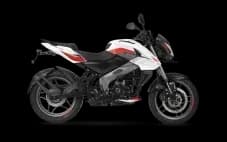
Start with the numbers
The model, at a glance
Available variants, with prices in Nepalese rupees.
| Vehicle | Ex-showroom price | Fuel | Selected variant |
|---|---|---|---|
| 01Bajaj Pulsar N160 | Rs 4.48 lakh | Petrol | Pulsar N160 ABS |
Ex-showroom prices exclude registration, road tax and insurance. Specifications can vary by trim. See individual source-check dates ↓
Where The N160 Sits In Nepal's Crowded 160cc Class
Nepal's 160cc street-naked segment has quietly become one of the most competitive corners of the market, and the Bajaj Pulsar N160 is Bajaj's clearest attempt yet to move the Pulsar name away from its old commuter identity toward something with genuine performance credentials. Priced at Rs 4,35,900 ex-showroom and sold through the authorised distributor HH Bajaj, it sits in that awkward but appealing zone where buyers want a bike that looks and feels like a proper performance machine but still needs to survive daily Kathmandu traffic, monsoon commutes and the occasional long weekend ride. Since its 2022 launch in Nepal, the N160 has built a reputation less as a "budget Pulsar" and more as a genuinely quick, well-equipped machine that happens to be priced sensibly.
Sharper Panels, Fewer Complaints About Fit And Finish
The design language here is unmistakably streetfighter — an aggressive stance built around sharp tank shrouds, a muscular fuel tank, and a front fascia that carries LED daytime running lights alongside a projector headlamp. It's a look that photographs well and reads as far more premium than older Pulsar generations. Build quality has taken a real step forward too. Panel gap issues that used to be a recurring gripe on earlier models have largely been sorted, and the overall fit feels tighter and more deliberate.
That said, the test-spec base variant does wear its cost-cutting somewhere. It gets a single-piece grab rail and a rear tail section finished in simple fiber rather than the sharper, more layered design reserved for the top trim. It's not a dealbreaker, but stand it next to the range-topping version and the difference in perceived quality at the back of the bike is obvious.

Black And Red Is The Colourway That Suits This Bike Best
The dual-tone Black and Red scheme, with red accents picked out on the alloy wheels, is the standout colourway for this generation of the N160. It plays directly into the streetfighter styling — the red rim highlights draw the eye to the wheels and tyres in a way a single-tone paint job wouldn't, and it's the combination we'd point buyers toward if they want the bike to actually look as aggressive as its riding position suggests.
A Cluster And Switchgear That Finally Feel Current
For a bike in this price band, the equipment list is genuinely competitive. The LCD colour instrument cluster supports Bluetooth connectivity, bringing navigation prompts, call alerts and SMS notifications to the dash — features that were unheard of on Pulsars of this size a few years ago. The switchgear has been redesigned from the ground up and feels noticeably more modern in hand, with a tactile quality that matches the bike's more premium ambitions.
A USB Type-C port near the key slot is a small but genuinely useful addition, letting riders top up a phone on the move rather than arriving at their destination with a dead battery after using GPS all the way. Four riding modes — Sports, Road, Rain and Off-road — round out the package, altering how the ABS intervenes and how power is delivered depending on conditions. It's worth noting the throttle itself is a conventional cable unit on this variant rather than ride-by-wire, so the riding modes work through ABS and mapping rather than a fully electronic throttle system.
The 4-Valve Engine Is The Real Reason To Buy This Bike
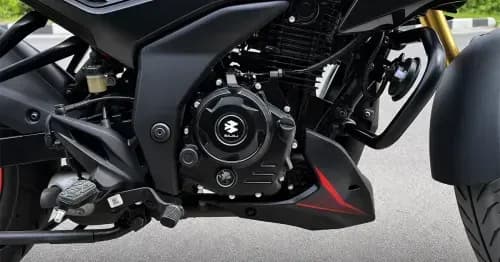
Under the tank sits a 164.8cc single-cylinder, oil-cooled engine with a 4-valve head, producing 18.5 PS and 14.65 Nm of torque. On paper those numbers look competitive for the class; in actual riding character, they translate into an engine that pulls hard and keeps pulling well past where most 160s start to flatten out. It's the standout part of this motorcycle — acceleration is genuinely punchy, capable of crossing 100 km/h in fourth gear and pushing on toward a top speed in the 127-128 km/h range on the instrument cluster.
What's more impressive than the outright numbers is the refinement. There's essentially no vibration transmitted through the handlebar or footpegs even when the engine is worked up toward 11,000 RPM, which is unusual for a single-cylinder engine at this price point and makes the bike feel more expensive than it is. It's also flexible at low speeds — the engine will happily crawl along in second or third gear in slow traffic without stalling or complaining, which matters more than peak power for anyone actually commuting on this bike daily.
Confident On Broken Roads, Composed In The Wet
The chassis is built around 40mm upside-down front forks and a rear monoshock, and this combination absorbs bumps and rough patches far better than the segment average. Stability at speed is another strong point — at a kerb weight of 154 kg, the N160 carries its weight low and centrally enough to feel planted rather than nervous once you're past 80-90 km/h.
Despite that stability, it hasn't lost agility where it matters most: filtering through tight city traffic. The bike is flickable and easy to place, helped by the 100-section front and 130-section rear tyre combination, which grips confidently even on wet and slippery tarmac — a genuinely reassuring trait given how unpredictable monsoon roads in Nepal can be.
A Riding Position Built For Real Commutes, Not Just Photos
The seating setup is one of the more thoughtfully judged aspects of the bike. The handlebar is flatter than on the standard Pulsar N160, nudging the posture toward sportier without tipping into the wrist-heavy stance of a full-on faired bike. At a seat height of 795mm, riders in the roughly 5'4" to 5'6" bracket — a large share of Nepal's riding population — should be able to flat-foot the bike comfortably at a standstill.
The single-piece seat on this variant is a genuine practicality win. It's comfortable for both rider and pillion, and makes the bike more family-friendly than a split-seat design would. Combined with an upright-enough posture, it's a bike that shouldn't leave riders with back pain or wrist fatigue even after an extended ride, which matters given Bajaj is clearly positioning this as something that can double up for weekend touring, not just short city hops.
Braking That Holds Its Line Even On Mud And Wet Grass
Stopping power comes from a 300mm front disc paired with a rear disc, and the single-channel ABS fitted to this variant does its job well. It manages to prevent wheel lockup and skidding even under hard braking on genuinely slippery surfaces like wet grass and mud, and pulls the bike down from 70-80 km/h in a manner that feels sharp and progressive rather than grabby. For a single-channel system, that's a strong showing, though buyers who want the added security of dual-channel ABS and traction control will need to look at the pricier trim.
Ground Clearance That Actually Copes With Nepali Roads
At 165mm, ground clearance is high enough to deal with speed breakers, potholed stretches and waterlogged streets without the underbelly scraping — a real consideration given how much of the network outside Kathmandu's core still isn't smoothly surfaced. Combined with the USB charging port, this is a bike that's clearly been set up with practical daily use in mind rather than being styled purely for showroom appeal.
What Mileage Looks Like Depending On How You Ride It
Running costs will vary sharply with riding style, and it's worth being upfront about that swing. Ride it hard to access that strong top-end power regularly, and fuel economy settles in the 30-35 km/l range. Ride it gently and sensibly, and the same 4-valve engine can return a much healthier 40-45 km/l. Buyers should go in expecting the lower end of that range if the appeal of the bike is exactly the aggressive engine character we've just described — the two aren't easily separated.
Which Variant Actually Makes Sense At Rs 4.36 Lakh
The N160 range in Nepal is built around this single ABS variant at Rs 4,35,900 ex-showroom, giving buyers a Bluetooth LCD cluster, single-channel ABS and the single-piece seat as standard. Internationally the N160 4V line is sold in base and higher trims with differences around dual-channel ABS, traction control, split seats and a TFT display, but for the Nepali market as currently listed through HH Bajaj, this is the configuration on offer. At this price, it undercuts several 160cc-plus rivals while matching or beating them on outright engine character, which is where the value case for this bike is strongest.
Where The Yamaha MT-15 Still Has An Edge
The most natural rival to cross-shop against is the Yamaha MT-15, which occupies a similar streetfighter niche in Nepal and has built its own following among younger riders. On outright power, the Pulsar N160 4V engine produces more than the MT-15, and it's the more muscular-feeling machine of the two in a straight-line pull. The MT-15 counters with its own strengths in outright chassis polish and badge appeal built over several years in this market, but on power delivery and top-end punch, the N160 makes a strong case for itself.
The Older 2-Valve N160 Still Has Its Place In Traffic
Worth flagging for existing Pulsar N160 owners or those cross-shopping within Bajaj's own range: the previous 2-valve version of this bike is actually the better tool for pure low-speed city commuting, where its power delivery is smoother and more predictable at low RPM. The 4-valve version reviewed here trades some of that low-end civility for a much stronger top-end, making it the pick for riders who want performance and are willing to work the gearbox to get it.
The Verdict: Who This Bike Is Really Built For
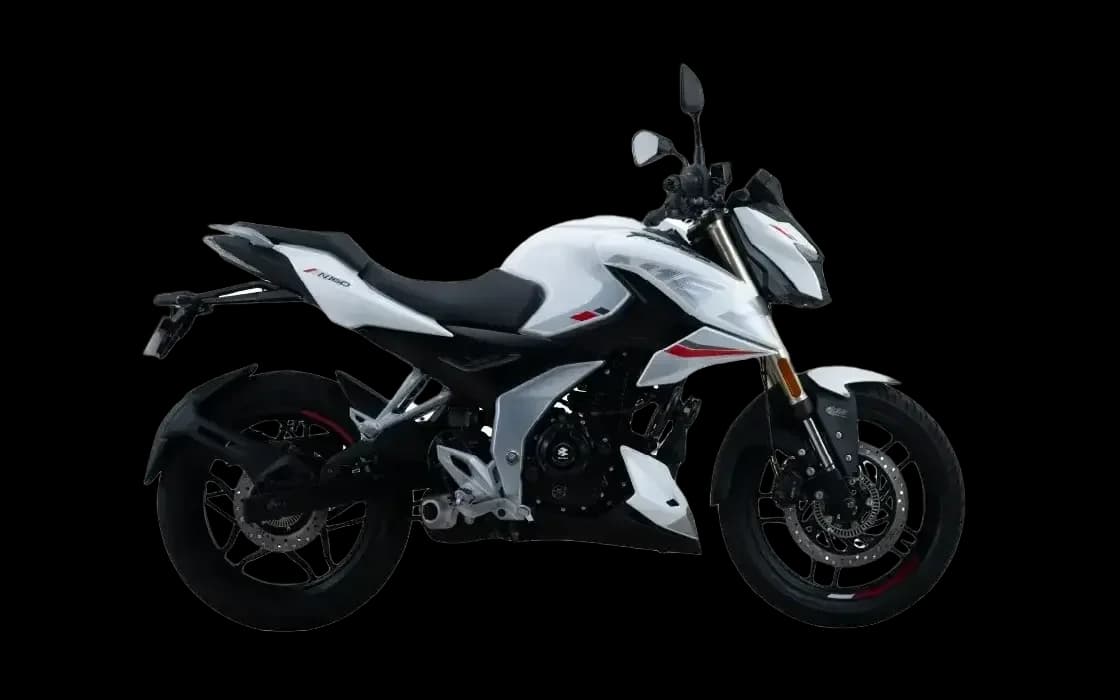
The Bajaj Pulsar N160 earns its keep primarily through an engine that punches above its 160cc class, wrapped in styling and equipment that finally feel current rather than carried over. It's an easy recommendation for college-going riders and younger buyers who want something quick, sharp-looking and reasonably priced without stepping up into a fully faired sportsbike. It also works, somewhat unexpectedly well, as a daily commuter and weekend tourer thanks to its comfortable single-piece seat, upright posture and usable ground clearance.
The trade-offs are real but narrow: single-channel ABS rather than dual-channel, no adjustable levers, and a rear end that looks a notch less special than the range-topping version elsewhere in Bajaj's lineup. None of that undoes the core appeal. For buyers whose priority is engine character and everyday usability over chasing every last safety feature, this is one of the more convincing 160cc motorcycles currently sold in Nepal.
Explore full specifications, variants & ownership context
Know the product
Key specifications, features & ownership context
Choose a variant to see its recorded specifications and features. Equipment and prices can change across trims.
Latest catalog and directory records supplement the original analysis. Figures may have changed since publication; individual specification and price-check dates appear below.
Rs 4.48 lakh ex-showroom · source checked 22 Oct 2026
Engine & performance
| Specification / feature | Pulsar N160 ABS |
|---|---|
| Engine displacement | 164.82 ccVerified specification · 20 Sept 2026 |
| Max power | 16 PSVerified specification · 20 Sept 2026 |
Brakes, tyres & suspension
| Specification / feature | Pulsar N160 ABS |
|---|---|
| ABS | ABSVerified specification · 20 Sept 2026 |
Dimensions & weight
| Specification / feature | Pulsar N160 ABS |
|---|---|
| Ground clearance | 165 mmResearched · confirm · 28 Jul 2026 |
Showroom & service support
Distributor: HH Bajaj
210 listed brand showrooms · 165 listed brand service locations
Listed cities include Aanbu Khaireni, Attariya, Baglung, Banepa, Banepa New, Banganga and 88 more.
Brand-wide directory coverage. Confirm that your nearest workshop supports this exact model, powertrain and warranty work; ask about parts availability and booking time.
Market buzz & buyer priorities
Compiled discussion, including buyer reactions and ownership reports; this is not a verified owner survey or a reliability score. Research dated 25 Sept 2026.
What people like
- good features like slipper clutch and USD forks
- Nepali riders describe the Pulsar N160 as smooth and suitable for daily city use.
- Owners praise its mileage, modern design, braking performance, and value in the 160cc segment.
More feedback
- The motorcycle is considered practical for commuting and capable on hilly routes.
- stylish modern design and features like dual-channel ABS
Concerns to investigate
- The motorcycle is relatively heavy for some riders, and its turning radius is considered somewhat large.
- Long rides can make the rear seat uncomfortable.
- Service quality and spare-part pricing vary by service centre; some owners consider certain parts expensive.
More feedback
- price is considered high by many
- firm ride and pillion comfort lacking on longer trips
What buyers ask for
- Ex-showroom price and total on-road cost in Nepal
- Ride comfort on longer trips, especially rear-seat comfort
- Weight and turning ease in city traffic
Nepal ownership context
- Nepal-specific discussions commonly compare the N160 with the TVS Apache 160 4V, RTR 160 4V, NS160, and Gixxer 150 on mileage, performance, price, and maintenance.
- Owners report that Bajaj service and parts access are practical in Nepal, although service-centre experience and replacement-part prices are not consistent everywhere.
- The motorcycle's road-oriented setup, braking hardware, and suspension are viewed as useful for Kathmandu traffic and Nepal's mixed urban and hilly roads.
More feedback
- service & spare parts easier to find than some rivals like TVS
- resale value uncertain compared to Pulsar 150-/NS-series
Use these facts alongside the article’s full analysis. Check the final quotation, warranty terms and exact equipment before booking.
Evidence & next steps
Check the details before you buy
Use this guide to build a shortlist. Ask for a written quotation for your chosen variant, including registration, taxes, insurance and finance charges. Confirm the nearest authorised workshop supports that model.
Price sources and dates
These are the recorded distributor-source checks for the selected overview trims. They are separate from the article update and catalog read dates; they do not mean every trim was rechecked today. Confirm the final price with the distributor.
Overview photos come from the corresponding model records; additional article photos carry their own credits. Running costs depend on usage, energy prices, maintenance, insurance and resale value.