Where This Scooter Sits In Nepal's Crowded 125cc Shelf
Since its 2016 launch through V.G. Automobiles Pvt. Ltd., the Suzuki Access 125 has settled into a specific slot in the Nepali market: the sensible, slightly grown-up automatic scooter that isn't chasing trends. It isn't the cheapest 125cc scooter on the floor, and it isn't trying to look the sportiest either. At an ex-showroom range of Rs 2.66 lakh to Rs 3.06 lakh across three variants, it competes squarely with the other established names in this space, and it does so on the strength of an engine and a seat rather than a spec sheet full of gimmicks. For buyers who commute daily, carry a pillion often, and want a scooter that won't feel dated in three years, this is exactly the segment they're shopping in.
A Design That Hasn't Needed To Change
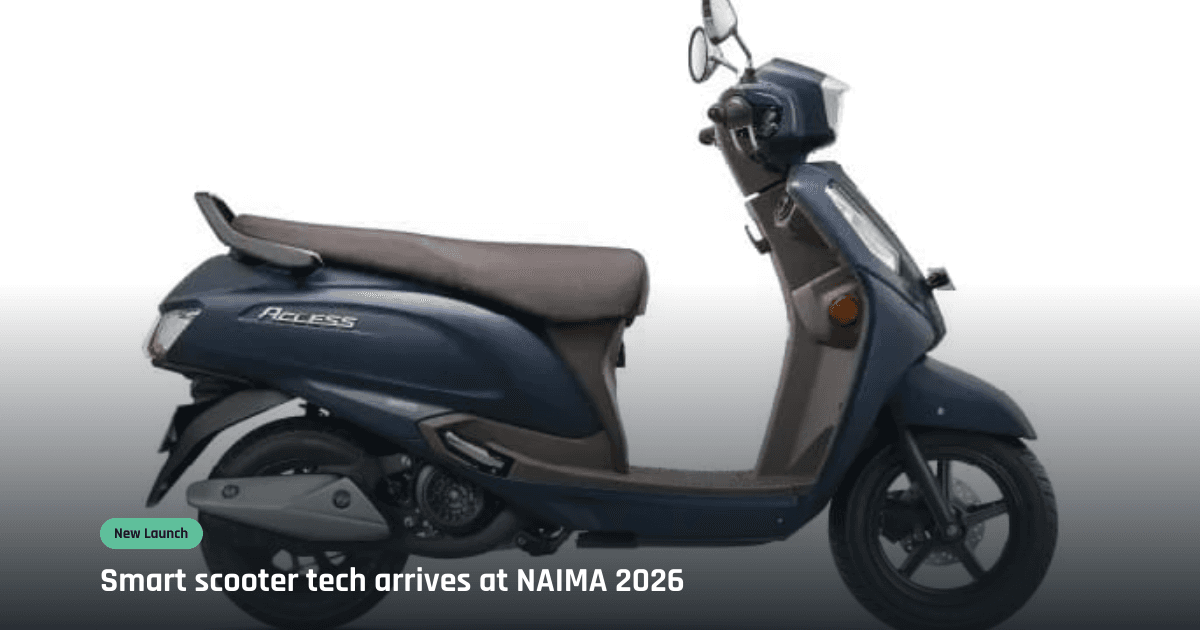
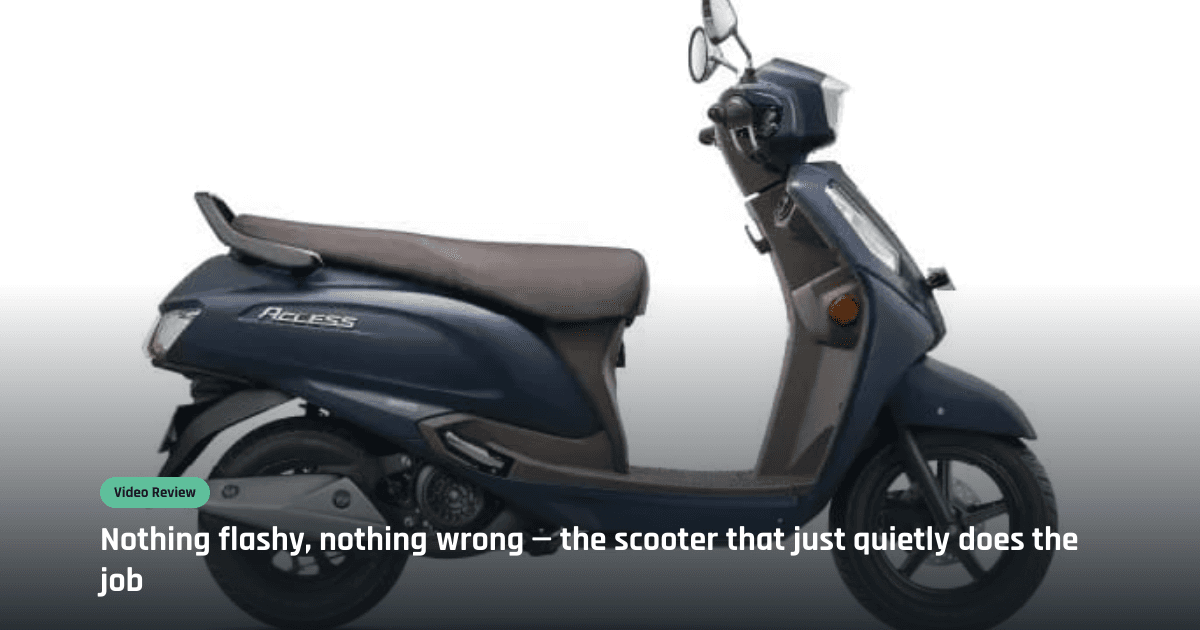
The Access 125's silhouette has stayed close to its original classic-scooter shape, and that's a deliberate choice rather than a lack of updates. The front carries an LED headlight wrapped in a chrome surround, which gives the face a slightly premium look without shouting for attention. Down the side, a 3D chrome 'Access' badge marks out the variant lineage, while the rear gets a neatly integrated tail lamp treatment.
Build quality is where Suzuki has clearly made deliberate choices rather than cost-cutting across the board. The front mudguard and side panels are metal, which genuinely shows in how solid the scooter feels when you push on the panels at a showroom — most rivals in this bracket use fibre right through. Other body sections are fibre, which is standard practice at this price point, but the metal used where it matters most (the parts that take daily knocks) is a sensible trade-off.
The Colours On Offer
Suzuki keeps the palette straightforward rather than chasing a dozen shades. What stands out on the Access 125 is less about a wide range and more about how the finish is applied — a two-tone treatment across the range pairs the body colour with a contrasting seat, which lifts what would otherwise be a fairly conservative design. It's a small detail, but it's the kind of thing that makes the scooter look a notch more considered than its price suggests when you see it parked next to something plainer.
What You Actually Get For Your Money
This is where buyers need to manage expectations a little. Officially, Suzuki has not disclosed a digital instrument cluster or connectivity features for the Access 125 in Nepal — what we can confirm from the brochure is a set of genuinely useful, low-drama conveniences instead. The Suzuki Easy Start System pairs with an integrated engine start/kill switch, which simplifies the everyday business of getting the scooter moving. A mobile charging point is mentioned for the model, useful for anyone using their phone for navigation on a daily commute. An external fuel lid at the rear means you're not popping the seat open every time you need fuel — a small thing that matters a lot when you're at a crowded petrol pump with groceries under the seat.
The One Way Clutch is worth calling out specifically: it's built for smoother, quieter starts, which is the kind of refinement that doesn't show up on a spec sheet but is noticeable the moment you twist the throttle from a standstill.
The Engine Does The Heavy Lifting Here
At the centre of the Access 125 is a 124cc, air-cooled, single-cylinder engine with SOHC and a 2-valve head, putting out 6.2 kW at 6,500 rpm and 10.2 Nm of torque at 5,000 rpm. It runs fuel injection rather than a carburettor, which Suzuki brands as SEP — Suzuki Eco Performance — tuned specifically for a balance of acceleration and fuel economy rather than outright top-end punch.
That balance is the whole story of this engine. It isn't built to feel fast off the line; it's built to feel unbothered by stop-start traffic, school-zone crawls, and the daily grind of a Kathmandu commute. Power delivery through the CVT automatic transmission is smooth and linear, without the jerkiness some automatics show at low speeds. Both kick and electric starter options are retained, which matters more than it sounds in a market where battery health in winter mornings is a genuine, recurring complaint among scooter owners.
Handling That Rewards Cautious Confidence
The Access 125 rides on a wheelbase of 1,260 mm with 160 mm of ground clearance — enough to clear the average pothole or speed bump without the floorboard scraping, which is a real consideration on Nepali roads outside the main arterials. Suspension duties are handled by a telescopic front fork and a swing arm rear setup, tuned specifically for a smoother ride rather than outright sporty handling.
Alloy/cast wheels are standard across the range, and they contribute meaningfully to low-speed stability — something scooter riders notice most when threading through slow-moving traffic or U-turning in a narrow lane. This isn't a scooter that invites you to push hard into corners, and it isn't meant to be. It's tuned for predictability: light steering, a stable stance at city speeds, and no surprises when you're navigating a crowded chowk.
Where The Seat Does More Work Than You'd Expect
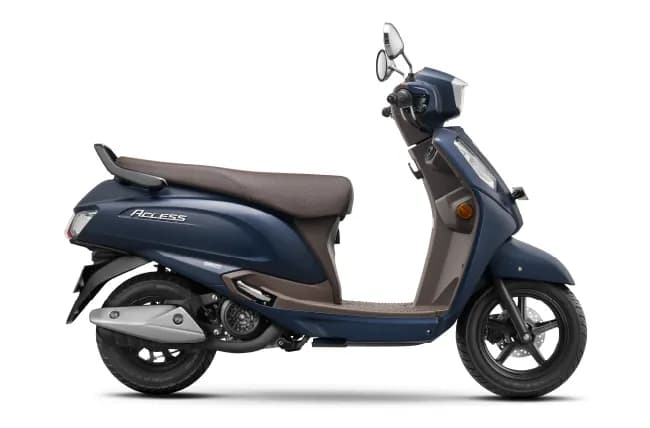
Comfort is arguably the Access 125's strongest single argument. The seat measures 856 mm in length, which is genuinely long for this segment, and it's designed to comfortably accommodate both rider and pillion rather than treating the second seat as an afterthought. Seat height sits at 773 mm, keeping it accessible for most adult riders without requiring a tiptoe dismount at traffic lights.
The floorboard is long, giving proper legroom even for taller riders — a detail that matters on a scooter, where cramped floorboards are a common complaint. Riding posture is upright, which is easier on the back over a longer commute than the slightly hunched stance some sportier-looking scooters force on their riders. At a kerb mass of 106 kg (Standard Edition) or 105 kg (Special Edition), it's also light enough that manoeuvring it at low speed, or wheeling it into a tight parking spot, doesn't feel like a workout.
Braking Choices Buyers Should Understand Before Signing The Paper
Suzuki offers the front brake as either a drum or a disc, depending on variant, while every version of the Access 125 in Nepal runs a drum at the rear. Buyers stepping up specifically for stopping power should be clear-eyed about this: the disc option upgrades front bite, but there's no rear disc anywhere in the lineup here.
LED headlight and LED tail lamp are standard fitments across the range, which is a genuine safety plus in low-visibility conditions — monsoon evenings and foggy winter mornings being the two scenarios where this actually counts on Nepali roads. Alloy wheels add stability at speed and under braking, rounding out a safety package that is solid without being class-leading.
The Small Things That Make It Livable Day To Day
Practicality is where the Access 125 quietly wins arguments. The external fuel filler cap at the rear, holding 5.3 litres, is a genuinely convenient touch for anyone who fuels up on the way to or from work without wanting to unload the seat storage first. That underseat space still exists for a helmet or shopping, and the fuel-lid design means you're not compromising between the two.
The engine's tuning for low fuel consumption alongside its usable acceleration is a deliberate trade-off that shows up in the mileage. Real-world figures in the 50–55 kmpl range have been reported for the scooter, though Suzuki itself has not published an official combined figure — buyers should treat that number as an informed estimate from the field rather than a manufacturer guarantee, and expect city riding with heavier throttle use to bring it down somewhat.
Picking A Variant Without Overpaying
The lineup is straightforward: the base Access 125 at Rs 2,65,900, the Standard Edition at Rs 2,79,900, and the Special Edition at Rs 3,05,900, with the latter two both carrying the 124cc engine and small differences in width (690 mm versus 680 mm) and kerb weight (105 kg versus 106 kg). For most buyers, the Standard Edition represents the sensible middle ground — it captures the meaningful upgrades over the base model without the full premium of the Special Edition's cosmetic distinction. Buyers who want the front disc brake specifically should confirm which trim carries it before committing, since Suzuki offers drum or disc as a brake option rather than tying it strictly to one edition name at every dealership.
The Honda Dio Is The Scooter Most Buyers Cross-Shop Against It
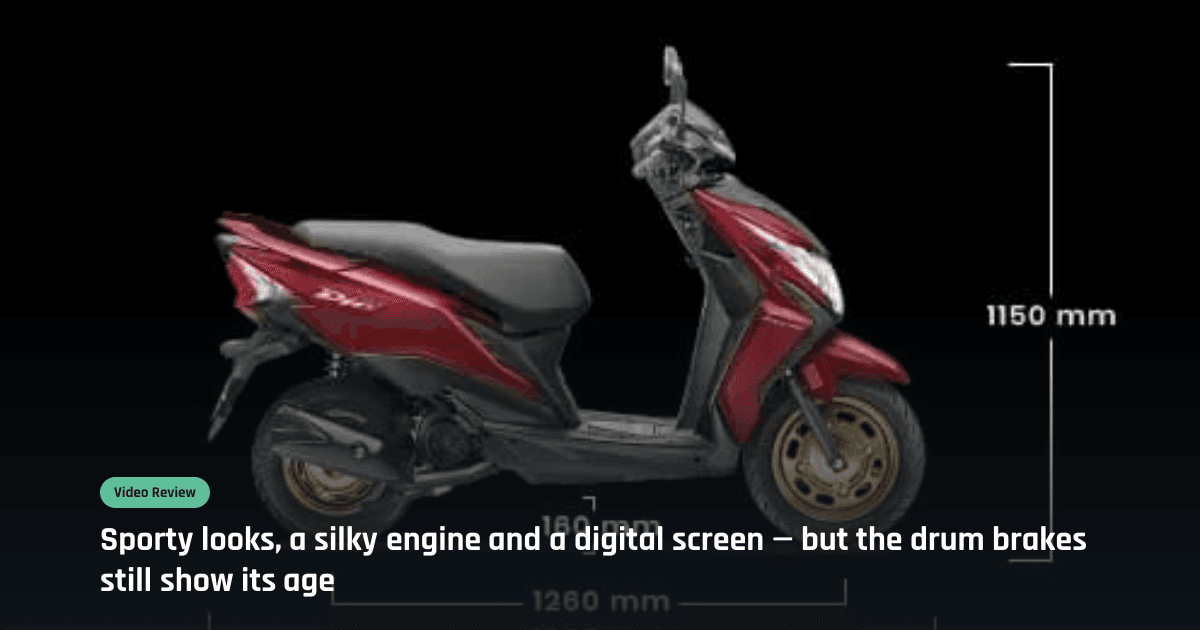
Ask any showroom floor in Kathmandu which scooter gets compared against the Access 125 most often, and the Honda Dio comes up almost immediately. The Dio leans into a sportier, more angular design language and tends to attract a younger buyer chasing looks first. Where the Access 125 pulls ahead is in outright comfort — that longer seat and roomier floorboard aren't matched by the Dio's more compact, sportier stance, which suits shorter commutes better than long, loaded rides with a pillion. If comfort and daily usability are the priority over styling aggression, the Access 125 has the stronger case.
The TVS Jupiter Plays The Same Classic-Styling Card
The TVS Jupiter is the other scooter buyers naturally set alongside the Access 125, largely because both lean into a similar classic, rounded design language rather than sharp, aggressive scooter styling. Round mirrors and a retro-leaning silhouette put them in the same visual family. The choice between them often comes down to dealer network familiarity and after-sales comfort in a given city, since both scooters are pitched at the same practical, comfort-first buyer rather than one chasing outright performance.
Our Verdict: A Scooter Built For The Long Commute, Not The Showroom Floor
The Suzuki Access 125 isn't trying to win on paper specs, and it doesn't need to. Its case is built on a genuinely refined engine, one of the longest and most comfortable seats in its class, sensible ground clearance for Nepali roads, and small practical touches like the external fuel filler that add up over months of daily use. The trade-offs — a rear drum brake across the board, and the absence of any officially confirmed digital display or connectivity feature — are worth knowing before you buy, but they don't undermine what the scooter is actually good at.
This is the right pick for a city commuter who rides daily, often carries a pillion, and values a comfortable, predictable ride over having the newest features on the block. If that's the brief, the Access 125 remains one of the most dependable answers in Nepal's 125cc scooter segment.
Writes on vehicle pricing, taxation and the Nepali auto market from ongoing tracking of distributor price lists. Editorial policy.