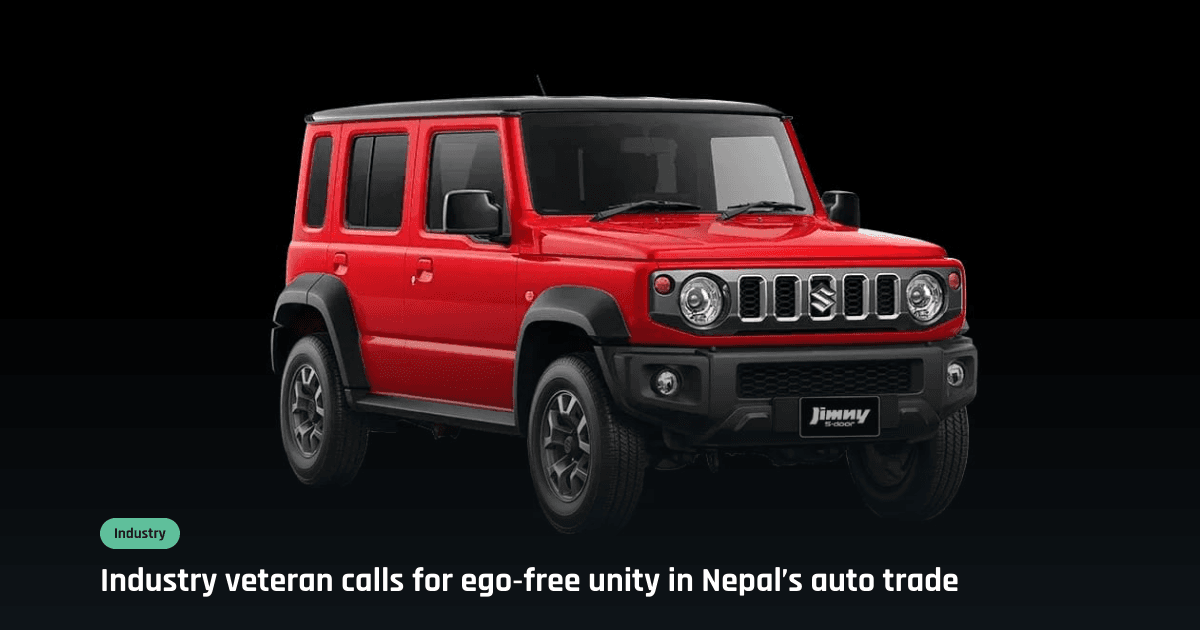
Veteran auto leader Shambhu Prasad Dahal says Nepal’s fast-changing automobile market now demands unity and professionalism from business associations and event organizers.
From luxury purchase to daily necessity
Dahal recalls a time when only a handful of brands like Sipradi, **Maruti Suzuki and Toyota** dominated the market and cars were bought mainly by wealthy buyers. Over the years, especially after the peace process, he says customers began treating vehicles as everyday necessities, helping the market expand and diversify.
He notes that Chinese EV brands now hold strong positions, yet believes there is still space for other international and local players. For him, more consumer choice is a core strength of a free market.
How NADA Auto Show grew bigger
Dahal coordinated the **NADA Auto Show** for five consecutive years, focusing on larger stall sizes, more professional vendors and stricter, uniform rules for all participants. He says this teamwork-oriented approach helped turn the show into a major national event.
As NADA president, he aimed to save Rs 10 million from each auto show, and reports that one edition generated over Rs 11.8 million in savings. Stall prices were raised, but he says they still sold well, supported by strong interest from auto businesses.
NADA and NAIMA: business over ego
With both NADA and NAIMA now active, Dahal argues that having two associations is not a problem if they focus on business interests rather than personal ego. He believes NADA’s wide membership and NAIMA’s different structure can complement each other.
He calls for the two bodies to present common positions to the government and cooperate on shared issues, instead of competing on representation.
Multiple auto shows, one clear winner: the customer
Dahal says intense competition among brands, banks, insurance firms and dealers has created a very different environment from three decades ago, when buyers had only two or three options.
He stresses that the main beneficiary of multiple auto shows and strong rivalry should be the customer, through better offers, more models and improved service.
Support for Made-in-Nepal EVs
Although Dahal says he has stepped away from direct automobile business, he closely follows **Yatri Motorcycles, a Nepali electric brand. He praises the team’s dedication and creativity and urges visitors at auto events to visit Yatri’s stall** and share feedback.
For him, a Made-in-Nepal product that meets international standards is a key symbol of how far the country’s auto industry has come.
Writes on vehicle pricing, taxation and the Nepali auto market from ongoing tracking of distributor price lists. Editorial policy.