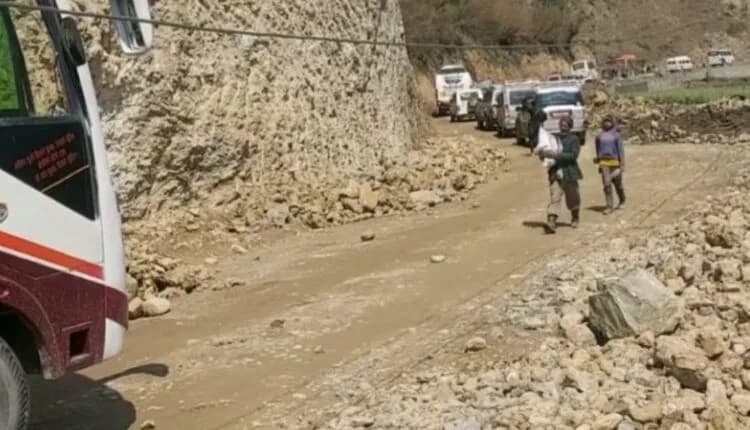
The national road network is slowly pushing into some of Nepal’s toughest terrain, with the Nepali Army taking on a bigger share of road building in areas long seen as too difficult for conventional contractors.
Over 1,400 km of roads in difficult geography
According to the Army, it has so far completed 32 road projects totaling around 1,411 km in remote and complex landscapes. These include stretches of major routes such as Kanti Lokmarg, Karnali Highway, Jajarkot–Dolpa, Besisahar–Chame and Kaligandaki Corridor, among others.
Government policy has been to assign strategic and hard-to-build road sections—steep rocky cliffs, high mountains and isolated valleys—to the Army. Working with limited resources and harsh weather, the Army says it has still been meeting its annual construction targets and directly adding to national road infrastructure.
New access for eastern border areas
In eastern Nepal, the Army recently completed 10.51 km of the Khandbari–Kimathanka road and handed it over to the Department of Roads. This stretch is expected to support local development in the Kimathanka border area and open up future opportunities for cross-border trade and movement.
Key ongoing projects
The Army is currently focused on three main roads:
- Karnali Corridor (Humla–Banke)
- Darchula–Tinkar (Mahakali Corridor) in the far west
- Benighat–Arughat–Larke Bhanjyang in the Manaslu region
On the Darchula–Tinkar road, work is underway on a planned 79 km stretch through extremely challenging Himalayan terrain. The Army has completed 19.8 km in the current fiscal year, hitting its annual target there. Overall physical progress on this project stands at about 25%.
On the Benighat–Arughat–Larke Bhanjyang road, which passes inside the Manaslu Conservation Area, the Army has finished the 18 km Hawadanda–Dobhan section and transferred it to the Roads Department. So far, 40.8 km (around 44% progress) has been completed on this route.
Karnali Corridor close to completion
The Karnali Corridor, a national pride project connecting Hilsa in Humla to Jamunaha in Banke (about 682 km in total), is one of the Army’s most important road assignments. The current work covers 22.05 km in two sections: Lalibagar–Dullikunna and Ghatparichaur–Badrigaun–Bhukkakhola.
The track for Lalibagar–Dullikunna has already been completed and handed over. Work continues on the Ghatparichaur–Badrigaun–Bhukkakhola section, where 19 km were finished this fiscal year, again meeting the yearly target. The overall physical progress of the Karnali Corridor is reported at over 86%.
To tie Humla more firmly into the national road system, the Army recently installed a bailey bridge at Chuwakhola in Kharpunath-5, along the Hilsa–Simkot road section. This is expected to make movement of goods and people more reliable in one of Nepal’s most isolated districts.
What this means for future travel and vehicles
These strategically important roads will over time help connect Himalayan, hilly and Tarai regions, improving access for buses, trucks and private vehicles. As blacktopping and supporting infrastructure (bridges, retaining walls, safety barriers) are gradually added by the concerned agencies, today’s rough tracks can turn into key routes for trade, tourism, local commuting and emergency response.
The Army says its main goal in these projects is to extend the national road network into remote and strategic areas, supporting long-term social and economic development as well as national security. For future vehicle buyers and drivers, this means more districts coming within practical driving reach, new routes opening up, and wider scope for commercial transport and tourism in areas that were previously hard to access.
Writes on vehicle pricing, taxation and the Nepali auto market from ongoing tracking of distributor price lists. Editorial policy.