Where This Fits In Nepal's Growing Adventure-Bike Shelf
Nepal's 250cc adventure segment has been a slow burn, mostly built around the Royal Enfield Himalayan and a scatter of Chinese and Bajaj-badged entrants. The Morbidelli T250X, brought in by KTM International Trading under the Vaidya Group umbrella, arrives in 2026 priced between Rs 5.75 lakh and Rs 6.19 lakh depending on trim. That places it squarely in the middle of the segment, not a budget play, not a flagship one either.
What's notable is that Morbidelli is a new name to most Nepali riders. There's no decades-long brand story here, no existing owner community to lean on. The bike has to earn its place on spec sheet and showroom impression alone. On paper, it does a reasonable job of that: a 249.4cc single-cylinder engine, 22.4 hp, dual-channel ABS, and a genuine 220 mm of ground clearance. Whether that's enough to pull buyers away from the Himalayan's decade of trail-tested credibility is the real question this review has to answer.
A Rally-Styled Silhouette With Real Off-Road Intent
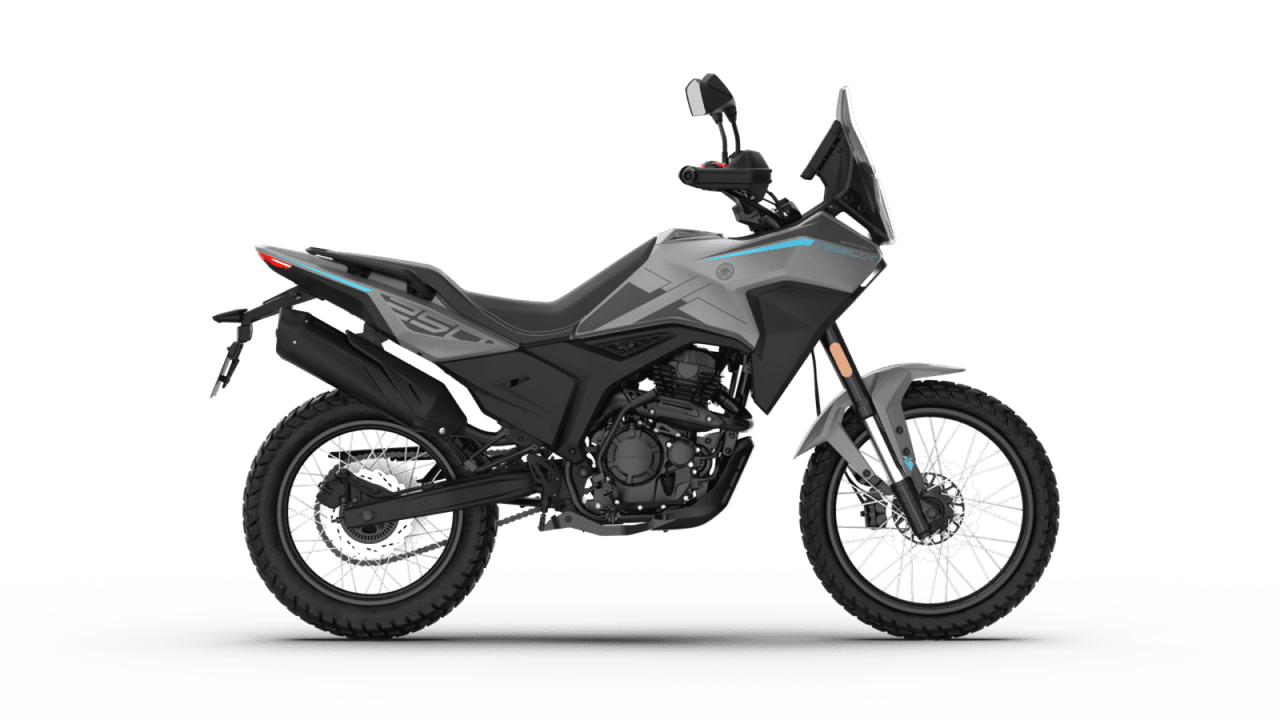
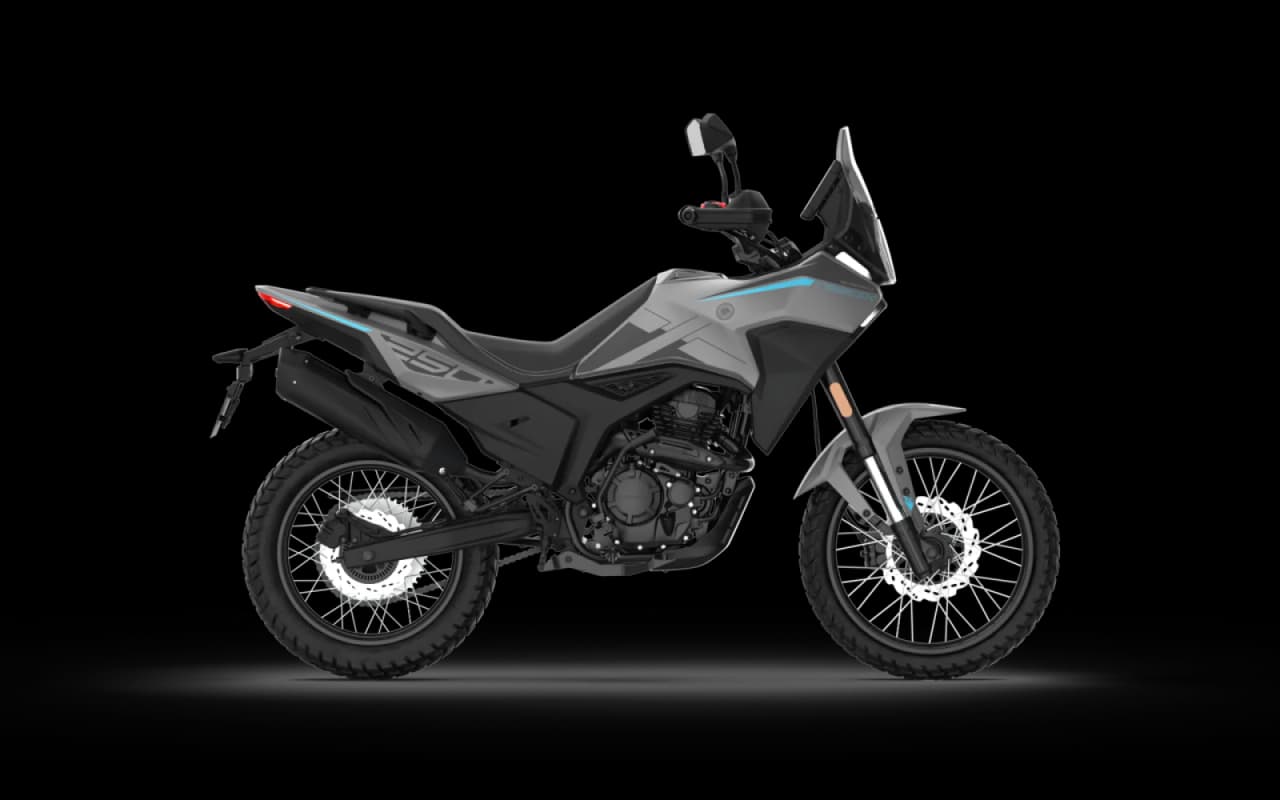
The T250X wears its adventure-bike ambitions openly. The body is finished in matte grey and black, lifted by sporty yellow accents that give it a rally-inspired look rather than a generic streetbike-with-tall-suspension approach. The front end carries a sharp beak and an upright mudguard, both styling cues borrowed straight from dirt-focused machines rather than road-biased tourers. MBP branding runs across the fairings and mudguard, and a tinted windscreen sits ahead of the cockpit alongside a matte black exhaust cover that finishes off the look neatly.
Build quality reads as solid rather than premium, which is fair at this price point. The panel gaps and fit are what you'd expect from a bike aimed at getting dirty rather than one polished for showroom photography. Nepal's Tarai heat and monsoon grime are going to test the matte finish over time, and buyers should expect the usual annual detailing costs that come with a matte paint job rather than a glossier one.
Only One Look, But It's The Right One
Nepal gets the T250X in a single colourway: matte grey and black with yellow decals. There's no multi-colour lineup to choose from, no variant-specific paint scheme. For a bike built around an adventure-touring identity, the muted grey-and-black scheme with yellow highlights suits the character well enough that the lack of choice doesn't feel like a major loss. Buyers wanting a brighter or more urban-friendly colour will simply have to look elsewhere.
What's On The Dash, And What Nepal Buyers Don't Yet Know
This is where the picture gets murkier for Nepal specifically. The instrument cluster type hasn't been officially disclosed for the local market, nor have USB charging or smartphone connectivity features. That's a gap buyers should walk in aware of, since press coverage elsewhere has mentioned a vertical digital screen with switchable ABS toggles and backlit switchgear, but none of that can be confirmed as standard on the Nepal-spec bike from what's been officially shared so far.
What is confirmed is a fuel tank with a flush-fitting, flat cap design, a practical touch that keeps the tank profile slim, useful for riders who like to grip the tank with their knees while standing on the pegs. The suspension is tuned for dual-purpose use, and the front forks carry manual adjusters, letting riders dial in stiffness before a trail ride or a long tarmac stretch. Until Nepal-spec instrumentation and connectivity are formally confirmed, we'd advise buyers to physically check the dash at the showroom rather than assume features seen in overseas coverage carry over here.
An Air-Cooled Single That Trades Outright Pace For Usability
Power comes from a 249.4cc single-cylinder, 4-valve, air-cooled engine with EFI, producing 22.4 hp at 7,500 rpm and 22.3 Nm of torque at 6,000 rpm, run through a 6-speed manual gearbox. Claimed top speed sits around 115 km/h. These numbers put it in a sensible middle ground for a 250cc adventure machine, enough for confident highway cruising without chasing outright top-end numbers.
The air-cooled design keeps servicing simpler and cheaper than a liquid-cooled equivalent, a real consideration for buyers in Nepal where after-sales infrastructure for a new brand is still being built out. The gearbox's six ratios should help keep the engine in its sweet spot whether crawling through Kathmandu traffic or holding a steady pace on the Prithvi Highway. Exhaust character on single-cylinder adventure engines in this class tends to be a clean, purposeful thrum rather than anything showy, and there's no reason to expect the T250X breaks that pattern.
Light Kerb Weight Makes It Easy To Manage, On Road And Off
At 154 kg kerb weight, the T250X sits on the lighter side for a 250cc adventure bike, and that number does a lot of work in how the bike is likely to be experienced day to day. A lighter machine is easier to pick up after a low-speed drop on a gravel trail, easier to filter through Kathmandu's traffic, and less intimidating for riders stepping up from a 150cc commuter.
The 19-inch front and 17-inch rear spoked wheel combination, wrapped in 90/90-19 front and 110/90-17 rear dual-purpose tyres, is a genuinely sensible setup for Nepal's road conditions, where tarmac can turn to gravel and back again within a single ride. Spoked wheels also mean easier and cheaper repairs if a rim takes a hit on a rough trail, compared to cast alloy wheels that need full replacement after serious damage. Ground clearance of 220 mm gives real breathing room over rocks and ruts on the way to places like Mustang or Rukum, terrain where a lower-slung streetbike would struggle.
A Riding Position Built For Standing, Not For Sitting All Day

This is the section that matters most for anyone considering the T250X for long highway rides. The seat height of 820 mm is manageable for most Nepali riders, and the upright riding position with wide handlebars gives a relaxed reach that works well in slow traffic and on technical trails. But the seat itself has been flagged repeatedly as the bike's weak point: it narrows and rises toward the tank, a shape designed for a rider standing on the pegs rather than sitting through a long seated stretch.
For a rider planning weekend trail rides with short seated sections in between standing stints, this won't be an issue and may even suit the riding style better. For someone planning a Kathmandu-to-Pokhara seated cruise, or a long haul toward Mustang without much off-seat riding, this is a real comfort compromise worth test-sitting before committing. A preload-adjustable rear monoshock helps soften the ride over rough surfaces, but it doesn't change the seat's shape. Buyers used to touring-focused ergonomics, the kind found on bikes like the Himalayan, will notice the difference within the first hour.
Braking Hardware That Matches The Bike's Off-Road Brief
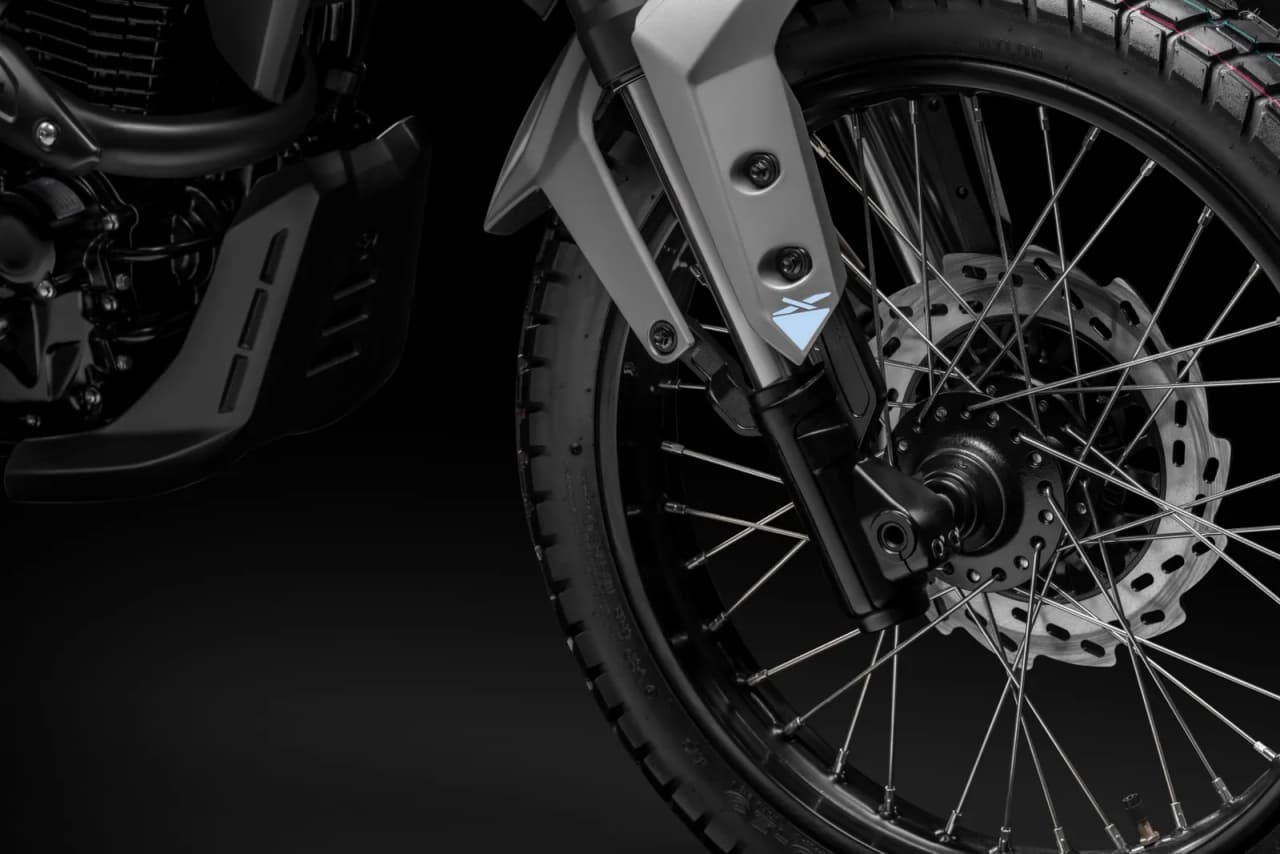
The T250X carries a 265 mm front disc and a 220 mm rear disc, with dual-channel ABS offered as standard across the Nepal-spec range. That's a meaningful inclusion at this price point, since dual-channel ABS isn't universal in the 250cc adventure segment locally. The disc sizing is sensible for a bike of this weight and power output, giving confident stopping without feeling over-specced for a machine that isn't chasing sportbike braking loads.
Whether the ABS is switchable for off-road use hasn't been officially confirmed for the Nepal market, so riders who want to lock the rear wheel deliberately on loose gravel descents should check this at the dealership rather than assume it. Additional rider aids beyond ABS haven't been disclosed either. What's clear is that the fundamentals, dual discs and dual-channel ABS as standard, are in place, and that's the part that matters most for everyday safety on Nepali roads.
Fuel Costs That Should Keep Ownership Sensible
With an 11.7-litre tank and a claimed real-world mileage of 20-25 km/l, the T250X should return a usable range of roughly 230 to 290 km per tank, comfortable for most weekend trips without constant fuel stops. That mileage figure sits in a reasonable band for an air-cooled 250cc single, and running costs should stay manageable for owners doing a mix of city commuting and highway or trail riding.
Air-cooled engines also tend to be cheaper to service than liquid-cooled rivals, since there's no coolant system to maintain. For a brand still establishing its service network in Nepal, that simplicity is a genuine practical advantage rather than an afterthought.
One Variant, One Price, No Real Decision To Make
Nepal gets the T250X in a single configuration priced at Rs 6.19 lakh ex-showroom, with 249cc displacement. There's no lower or higher trim to weigh up, no feature-stripped base model to save money on. That simplifies the buying decision considerably: if the spec sheet and seat ergonomics work for you, this is the price of entry, full stop.
The absence of variant choice does mean buyers can't trade features for a lower price if budget is tight. At just under Rs 6.2 lakh, it sits close to entry-level Royal Enfield territory, which is worth weighing carefully given how different the two bikes are in character and market presence.
The Royal Enfield Himalayan Still Owns This Space On Reputation
The Royal Enfield Himalayan remains the bike most Nepali adventure-riding buyers will cross-shop against the T250X. The Himalayan has years of on-ground presence in Nepal, a wide service network, and a proven reputation for handling Himalayan terrain, quite literally. Where the T250X counters is with a lighter kerb weight and a more aggressive, rally-styled stance that some buyers will find more visually exciting than the Himalayan's utilitarian look.
The Himalayan's seat and ergonomics are built with longer seated touring in mind, an area where the T250X's standing-biased seat shape puts it at a real disadvantage. For buyers planning long seated highway stretches, the Himalayan's touring-first design is likely to win out. For buyers who ride standing more than seated and prioritise a lighter, flickable machine, the T250X has a genuine case.
The Bajaj Dominar 250 Undercuts It On Road-Touring Comfort
The Bajaj Dominar 250 takes a different approach entirely, leaning into street-tourer comfort and highway stability rather than off-road capability. It's a heavier, more road-focused machine, and its seating position is built around long seated stretches rather than standing-up trail riding.
Against the T250X, the Dominar 250 makes more sense for a buyer whose riding is mostly paved roads and highway distance, while the T250X makes more sense for a buyer who wants genuine off-road ground clearance and a lighter, dirt-capable chassis. Neither bike does the other's job particularly well, so the choice mostly comes down to which kind of riding dominates your week.
The Verdict
The Morbidelli T250X is a genuinely capable, well-specced first offering for a new name in Nepal's adventure-bike segment. The engine numbers are sound, the brakes and ABS setup are properly specced for the price, and the light kerb weight makes it an easier bike to live with than its displacement class usually suggests. Ground clearance and wheel setup show real intent for Nepali trail conditions.
But the seat is the deciding factor here, and buyers need to sit on one before committing to anything beyond weekend trail use. This is a bike built for riders who spend real time standing on the pegs, not one designed around long seated highway stretches. Anyone drawn to the price and the spec sheet should also confirm, in person, exactly what instrumentation and connectivity features Nepal's units actually carry, since that detail hasn't been nailed down officially yet. Buy it as a trail-focused adventure machine and it earns its price. Buy it expecting a comfortable long-haul tourer and you'll be disappointed by the second hour in the saddle.
Writes on vehicle pricing, taxation and the Nepali auto market from ongoing tracking of distributor price lists. Editorial policy.