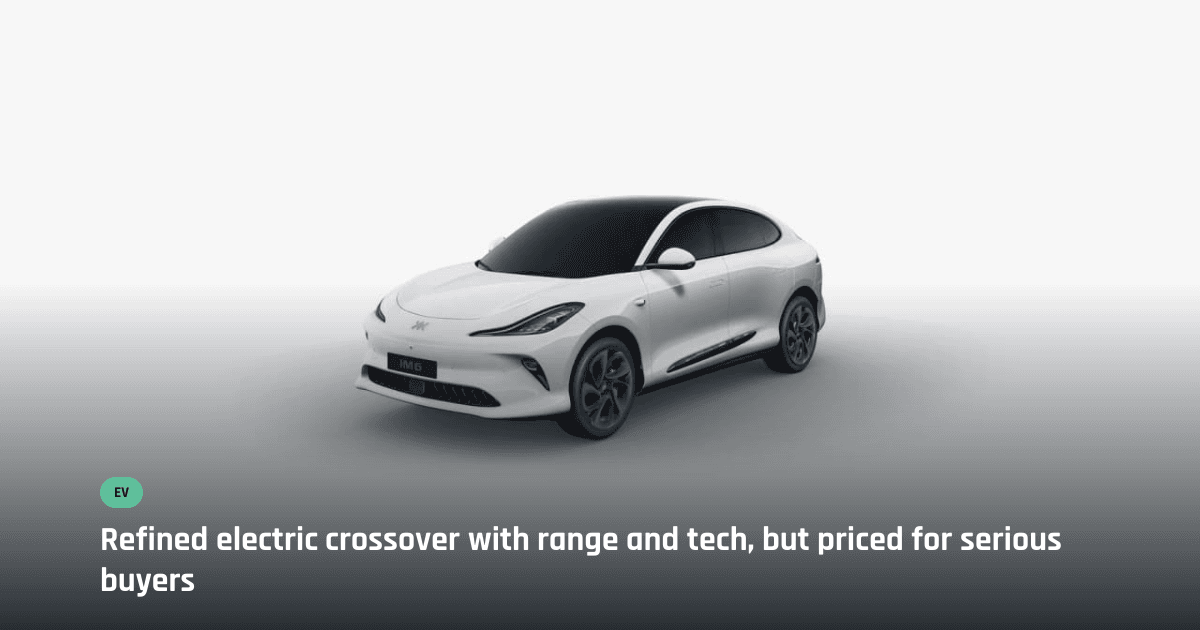
Where the MG IM6 sits in the Nepali market
The MG IM6 arrives in Nepal as a premium electric crossover aimed squarely at buyers who want more range, technology and comfort than mainstream compact EVs, but who do not necessarily want to pay full luxury-brand money.
With an ex-showroom price of Rs 81.99 lakh for the single IM6 variant, it sits above smaller city-focused EVs and below high-end luxury SUVs. Paramount Motors, the authorized distributor for MG in Nepal, is clearly positioning the IM6 as a flagship lifestyle EV for urban families and professionals who value technology and a refined cabin.
MG’s growing EV lineup and Paramount Motors’ investment in the brand are evident in the 38 showrooms and 99 service centers across the country. That level of network coverage matters for EV buyers who are still understandably cautious about service access and parts support.
In the current landscape, the IM6 competes most directly with other mid-to-large electric crossovers and SUVs in Nepal that emphasize range, comfort and tech-heavy interiors rather than bare‑bones affordability.
Looks, design and build
The IM6 is designed to look and feel like a modern, upscale electric crossover rather than a converted petrol model. Its exterior proportions are more crossover than sedan, with a sleek roofline, pronounced shoulder line and a clean EV front fascia that avoids oversized grilles.
One stand-out design element is the frameless power-release doors. This is a clear signal that MG wants the IM6 to feel more premium and futuristic than conventional crossovers. The power-release mechanism adds theatre when entering the car, and frameless doors give the side profile a coupe-like elegance.
The car also features a panoramic silver thermal glassroof, which not only brightens the cabin but also reinforces its high-end positioning. The thermal treatment is important in the Nepali context, where strong sun and high cabin temperatures are a real concern; a panoramic roof without proper thermal management can quickly become a liability.
From showroom observation, panel gaps and paint finish appear consistent with MG’s recent global products. The integration of the glassroof, frameless doors and flush design elements suggest a more sophisticated body structure and sealing, which can help with wind noise and perceived quality.
Overall, the IM6 projects a clean, minimalist, EV-first design with just enough drama (frameless doors, large glassroof) to stand out in a crowded urban parking lot.
Features and equipment
MG clearly intends the IM6 to be a feature-rich EV, particularly inside the cabin. The highlight is the 256-color ambient lighting system, which plays a big role in setting the cabin mood. For buyers who value a sense of occasion on evening drives, this level of configurable lighting is more often seen in premium German brands than in mainstream EVs.
The rear seats are described as POPO sofa-inspired, hinting at a focus on lounge-like comfort rather than simple bench seating. This aligns with the IM6’s role as a family-oriented crossover, where rear passenger comfort is as important as front-seat ergonomics.
The panoramic silver thermal glassroof complements the ambient lighting to create an airy, upmarket environment, especially during the day. At night, the combination of a large glass panel and layered ambient lighting can make the cabin feel like a high-end living space.
While detailed feature lists such as infotainment screen size, ADAS suite, sound system branding and seat ventilation are not officially disclosed in the data, MG’s recent products have generally leaned heavily into large screens, connected features and multiple drive modes. Prospective buyers should confirm specifics at the showroom, but the overall positioning and known features already indicate a tech-forward interior with a focus on visual drama and comfort.
Motor, platform and performance
Powering the MG IM6 is a rear-wheel-drive electric motor rated at 109 kW. That translates to about 146 horsepower, which is adequate for a family crossover and should provide brisk urban performance with typical EV immediacy from a standstill.
The powertrain operates on a 400V platform, which is the mainstream standard for most current EVs. While some flagship EVs globally have shifted to higher-voltage systems for faster charging, a well-executed 400V architecture remains more than sufficient for daily use in Nepal, especially considering current charging infrastructure.
MG refers to an intelligent four-wheel steering system, which is unusual in this price band and indicates a strong tech focus. Four-wheel steering can significantly improve low-speed maneuverability and high-speed stability by allowing the rear wheels to turn slightly opposite or in the same direction as the front wheels, depending on speed and conditions. In tight city lanes and parking scenarios common in Nepali cities, this can make a sizable crossover feel much more manageable.
The IM6 also sits on a digital chassis platform. In practical terms, this suggests close integration between the suspension, steering, braking and electronic control systems, potentially enabling multiple configurable drive modes, adaptive responses and smoother integration of driver-assistance features.
In everyday use, the rear-wheel-drive layout should give the IM6 a more dynamic balance than front-driven counterparts, especially under acceleration. For most buyers, the key takeaway is that the IM6 offers adequate power, a sophisticated platform and advanced steering technology that differentiates it from more basic EV crossovers.
Battery, range and charging
The IM6 is equipped with a 75 kWh LFP battery. Using an LFP (lithium iron phosphate) chemistry brings several advantages: good cycle life, robust thermal stability and typically more predictable degradation over time compared with some alternative chemistries.
The verified data lists a 450 km range and a 460 km figure as well. This likely reflects different test standards or internal metrics rather than two distinct variants. Regardless, this puts the IM6 in the upper tier of EV range in the Nepali market, comfortably exceeding the typical daily needs of most owners.
In real-world conditions, Nepali buyers should reasonably expect lower figures than headline numbers once factors like gradients, traffic, air-conditioning use and load are taken into account. However, a 75 kWh pack with a quoted 450–460 km range suggests that even with conservative assumptions, the IM6 should be capable of long intercity runs with fewer charging stops than many competitors.
Official DC fast-charging times and AC charging rates are not explicitly disclosed in the available data. Buyers who plan regular long trips should clarify these details at the showroom, but the combination of a 400V platform and a sizeable pack usually indicates compatibility with standard fast chargers being deployed across the country.
Ride, handling and comfort
Although a detailed suspension layout is not provided in the dataset, the combination of a digital chassis platform and intelligent four-wheel steering gives some clear hints about the IM6’s ride and handling character.
Four-wheel steering can significantly reduce the turning circle at low speeds, making the IM6 feel much more compact in city traffic and parking garages than its footprint might suggest. This is a tangible advantage in dense urban environments like Kathmandu, where U-turns and tight corners are daily realities.
At higher speeds, subtle steering of the rear wheels in the same direction as the front can enhance stability and driver confidence. Coupled with rear-wheel drive, this can give the IM6 a composed, slightly sportier feel than a typical front-driven crossover.
Inside, comfort is clearly a priority. The POPO sofa-inspired rear seats point towards softer cushioning and a more relaxed back-seat environment. Combined with the 256-color ambient lighting and panoramic glassroof, the IM6 is designed to feel like an upscale lounge on wheels rather than a strictly utilitarian family hauler.
Noise isolation, tyre roar and suspension tuning can only be fully judged through road tests, but the overall hardware package and positioning strongly suggest a comfort-first approach, with a layer of dynamic sophistication from the four-wheel steering and digital chassis.
Practicality and running costs
On the practicality front, the IM6’s crossover body style and lounge-like rear seats make it suitable for family use and longer trips. While exact boot volume, seat-folding configurations and interior storage details are not officially listed in the data, the IM6 is clearly not a small hatchback; buyers should expect a usefully sized cargo area and generous rear legroom.
Running costs are where EVs like the IM6 can shine. A 75 kWh battery charged primarily at home or office rates will typically cost far less per kilometre than an equivalent petrol or diesel SUV, especially with rising fuel prices. Regenerative braking also reduces brake wear over time.
MG’s network footprint via Paramount Motors—38 showrooms and 99 service centers—is a major practical advantage. This coverage is crucial for EV buyers outside Kathmandu Valley, where access to authorized service and EV-trained technicians can be a deciding factor.
Battery warranty details, service intervals and long-term maintenance packages are not specified in the dataset and should be confirmed at purchase. That said, the use of LFP chemistry generally gives buyers confidence in long-term durability and predictable degradation, assuming reasonable usage and charging habits.
Price, variant and which one to pick
The MG IM6 in Nepal is currently available in a single variant:
- IM6 — Rs 81,99,000 (ex-showroom)
This simplifies the buying decision but also means there is no lower-spec, more affordable entry point or higher-spec, performance-focused variant within the IM6 line itself.
At Rs 81.99 lakh, the IM6 is not a budget EV. It is aimed at buyers who are ready to invest in a high-range, tech-rich electric crossover and who value design, comfort and advanced chassis technology.
Given that there is only one variant, the real decision for buyers becomes whether the IM6’s package—75 kWh LFP battery, 450–460 km range, rear-wheel drive, intelligent four-wheel steering, digital chassis platform, ambient lighting and premium interior design—justifies the price compared with other EVs and even some similarly priced ICE SUVs.
For buyers who:
- regularly drive intercity routes,
- want a single-car garage EV that can handle family duties,
- and prioritize interior ambience and tech,
the IM6 makes a compelling case within its segment.
How it compares with real rivals in Nepal
In the Nepali context, the MG IM6’s real rivals are other mid-to-large electric crossovers and SUVs in a similar price band, often from Chinese and global brands that emphasize range and tech.
Compared with smaller, more affordable EVs, the IM6 offers:
- a much larger 75 kWh battery,
- significantly longer 450–460 km claimed range,
- a more sophisticated chassis with intelligent four-wheel steering, and
- a more premium interior with 256-color ambient lighting and lounge-like rear seating.
Against similarly priced EV crossovers, the IM6’s strengths lie in its combination of LFP battery chemistry, rear-wheel drive and four-wheel steering—an unusual mix in this price range. Many rivals may rely on front-wheel drive and lack advanced steering systems, instead emphasizing raw power or larger screens.
The extensive MG sales and service network via Paramount Motors is another differentiator. Buyers outside major cities often have to factor in service access; on this front, 38 showrooms and 99 service centers nationwide give the IM6 a practical edge over brands with a smaller footprint.
Where some rivals may pull ahead is in brand perception or specific feature highlights like fully loaded ADAS suites, branded audio systems or ultra-fast charging on higher-voltage platforms. Buyers should cross-check these aspects for the specific models they are cross-shopping.
Verdict: who the MG IM6 suits
The MG IM6 is best seen as a premium, tech-rich electric crossover for Nepali buyers who want a single EV that can comfortably handle city commutes, family duties and occasional long drives.
Its core strengths are clear:
- A 75 kWh LFP battery with 450–460 km claimed range, making it suitable for longer routes and reducing range anxiety.
- Rear-wheel drive and an intelligent four-wheel steering system, offering a more sophisticated driving experience and easier maneuverability.
- A premium-feeling cabin with 256-color ambient lighting, POPO sofa-inspired rear seats and a panoramic silver thermal glassroof, delivering a genuine sense of occasion.
- Strong nationwide support through Paramount Motors with 38 showrooms and 99 service centers.
It will particularly suit:
- Urban professionals and families upgrading from mid-sized ICE SUVs who want to move into EVs without sacrificing space or comfort.
- Buyers who prioritize design, interior ambience and tech features as much as raw performance.
- Owners living in or frequently traveling between major urban centres who can benefit from the existing MG network and emerging charging infrastructure.
On the other hand, buyers on a tighter budget, or those who simply want a basic city EV for short commutes, will likely find better value in smaller, more affordable models. The IM6 is not about minimum entry cost; it is about delivering a higher-end electric crossover experience at a price that, while substantial, undercuts many traditional luxury-brand alternatives.
In summary, for Nepali buyers seeking a refined, long-range EV crossover with advanced chassis tech and a genuinely premium cabin, the MG IM6 deserves a close look.
Writes on vehicle pricing, taxation and the Nepali auto market from ongoing tracking of distributor price lists. Editorial policy.