Start with the numbers
Compare at a glance
Top available variants, with prices in Nepalese rupees. Expand details to choose another variant.
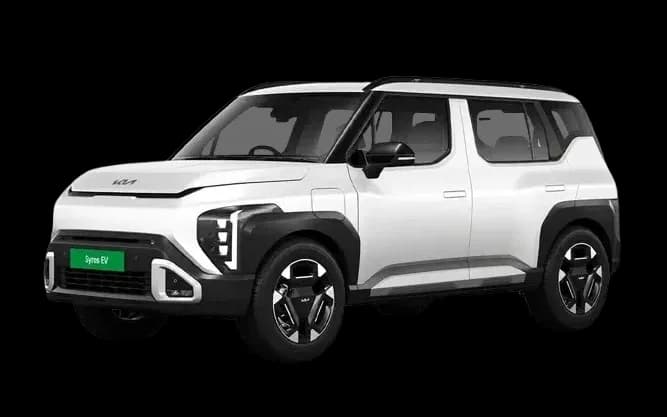
| At a glance | Kia Syros EV | Arcfox T1 |
|---|---|---|
| Ex-showroom price | Rs 37.9 lakh | Rs 35.96 lakh |
| Fuel | Electric | Electric |
| Selected variant | HTK | LV3 |
Ex-showroom prices exclude registration, road tax and insurance. Specifications can vary by trim. See individual source-check dates ↓
Where They Sit in the Nepali EV Market
Kia Syros EV and Arcfox T1 are aimed at the same broad segment: compact electric crossovers under Rs 40 lakh that promise everyday usability and family practicality.
- Kia Syros EV: Single variant at Rs 37.9 lakh ex-showroom, distributed by Continental Trading Enterprises (Kia Nepal), with 36 showrooms and 29 service centres nationwide.
- Arcfox T1: Two variants — LV2 at Rs 32.96 lakh and LV3 at Rs 35.96 lakh ex-showroom, imported and distributed by Laxmi e-Mobility, with 10 showrooms and 2 service centres.
In simple terms, the Syros EV costs more but leans heavily on brand strength, nationwide after-sales coverage and a very polished tech package. The Arcfox T1 undercuts it on price, offers more cabin and boot space, and uses LFP battery tech with fast DC charging, but comes from a newer brand with a smaller network.
For Nepali buyers, the choice is less about basic viability — both cars clear that bar — and more about how much you value brand assurance and cabin polish versus outright space, range confidence and price.
Design and Road Presence
Kia Syros EV: Familiar Small Crossover, Subtle EV Cues
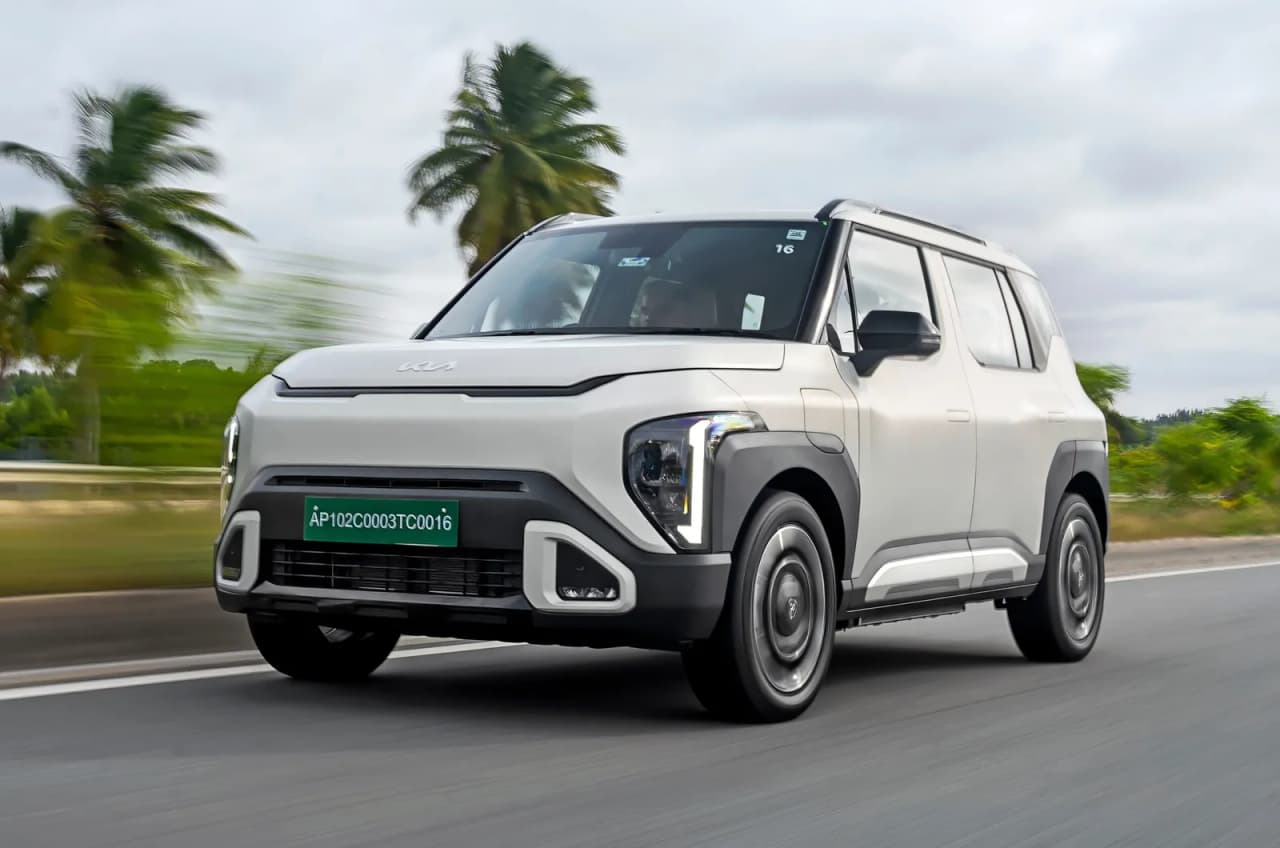
The Syros EV keeps the basic proportions of the ICE Syros: a compact city crossover footprint that feels well suited to narrow city roads and tight parking spots. The EV gets a revised front bumper with a slimmer cooling slot above the number plate and triangular pods for the LED fog lamps. The charging port on the front left fender and tri-spoke alloy wheels exclusive to the EV quietly signal that this is the electric version, while the rear is differentiated mainly by an EV badge.
The battery pack protrudes slightly and is visible beside the car, which some buyers will notice, but overall the Syros EV presents as a familiar, conventionally styled crossover rather than a futuristic experiment. That conservatism will appeal to buyers who do not want their EV to shout for attention.
Arcfox T1: Youthful, Lower Crossover-Hatchback Blend
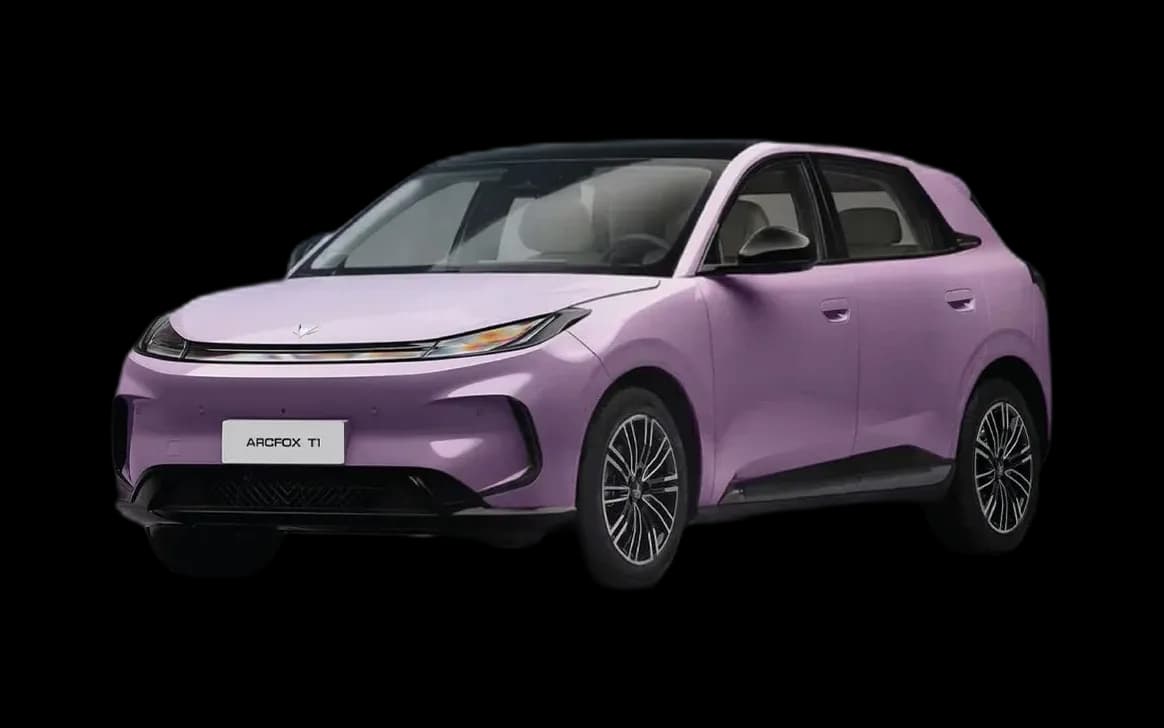
Arcfox T1 takes a different visual route. Both LV2 and LV3 combine hatchback practicality with SUV-style cues, but the profile is lower and more hatchback-like. The design is clearly pitched at younger, urban buyers who want something distinctive without going full SUV.
With length around 4,337 mm, width 1,850 mm and height about 1,573 mm, the T1 looks wider and more planted than the Syros EV, and the long ≈2,750 mm wheelbase gives it a stretched, premium stance. The styling is not boxy; it is more of a sleek compact crossover that should stand out in Nepali traffic.
Verdict on Design
- Pick Kia Syros EV if you want a conventional, understated small crossover that blends into the mainstream landscape and looks reassuringly familiar.
- Pick Arcfox T1 if you prefer a wider, lower, youth-oriented crossover-hatchback with more visual presence and a slightly more avant-garde feel.
Cabin, Features and Equipment
Kia Syros EV: Rich Tech and Clever Packaging
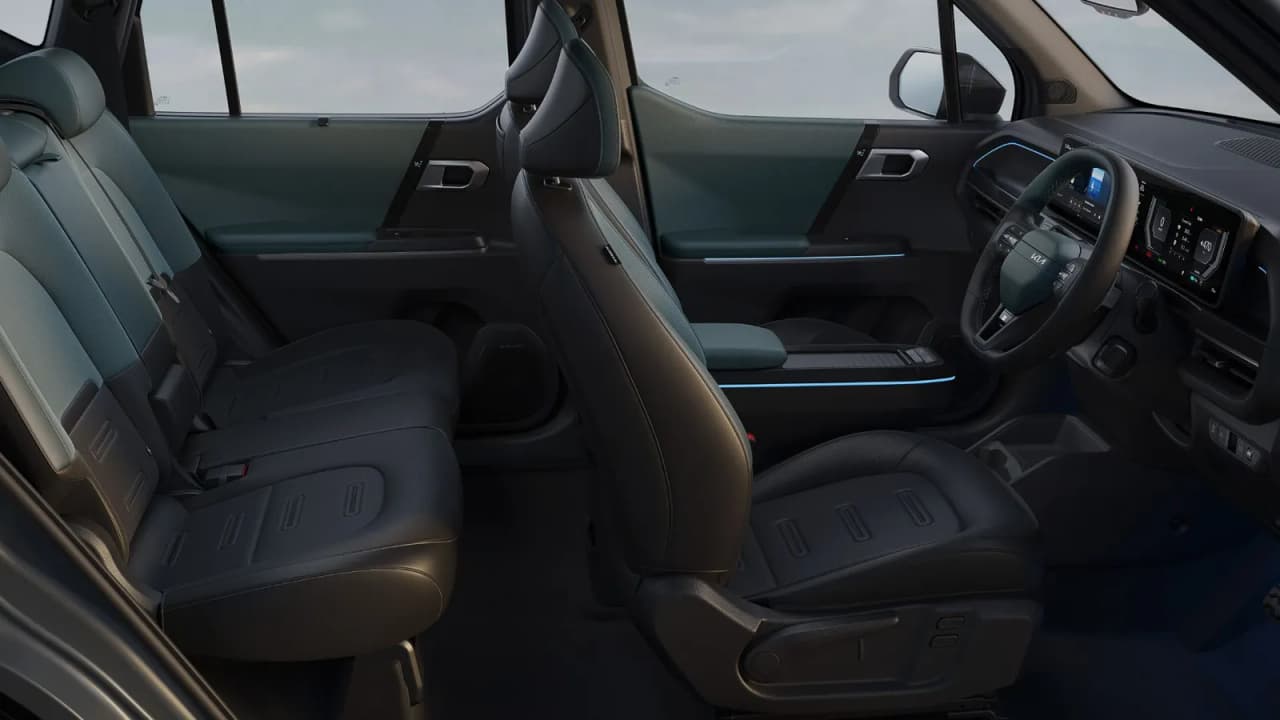
For the price, the Syros EV’s cabin is one of its strongest cards.
- Layout and space:
- No traditional transmission tunnel or gear selector;
- Drive mode selector on a stalk behind the steering wheel, which also houses the start/stop switch;
- Fully flat rear floor and rear seats that slide forward and backward, allowing you to balance legroom and boot space.
- Comfort:
- Ventilated front seats with partial power adjustment for fore/aft movement and recline;
- Rear bench can accommodate a passenger over six feet tall, although the raised floor and lack of rear centre headrest compromise ideal posture for a third passenger.
- Ambience and storage:
- Ambient lighting with 64 colours, extending into the footwells;
- A genuinely practical set of cubbies: large glovebox, dashboard shelf, generous door pockets, two adjustable cup holders, storage box beneath the armrest and a floating centre console with shelf underneath.
- Infotainment and connectivity:
- Dual 12.3-inch screens — one for instrumentation, one for infotainment;
- Separate 5-inch climate control display;
- EV-specific interface with battery status, nearby charging points and energy consumption data;
- Wireless Android Auto and Apple CarPlay;
- Connected car features: remote start, remote cooling, phone-as-key, scheduled charging and remote battery preconditioning.
For a sub–Rs 40 lakh car, this is a remarkably tech-rich and well-thought-out cabin. The only notable omission is the rear centre headrest, which matters for safety and comfort if three adults sit in the back.
Arcfox T1: Minimalist Dashboard, Big Screen, Space First

Arcfox T1 takes a more minimalist route but allocates resources smartly.
- Space and seating:
- Both LV2 and LV3 seat five, and that long wheelbase noticeably enhances cabin space;
- The T1 has been packaged as a spacious compact crossover, prioritising cabin practicality over fancy trim.
- Cargo and practicality:
- 459 L boot in both variants, which is large for this segment and suits family use and airport runs;
- The crossover packaging makes it easy to live with in the city while still feeling roomy.
- Infotainment:
- Both variants get a 15.6-inch touchscreen, which becomes the focal point of the dashboard.
Equipment splits between LV2 and LV3 are not fully disclosed, but the market positioning is clear: LV2 is the value-focused variant with the same core EV hardware, LV3 adds convenience and safety features.
Verdict on Features and Cabin
- Kia Syros EV is the better choice for buyers who want a premium-feeling cabin, strong connectivity, and a modern two-screen layout plus thoughtful storage solutions.
- Arcfox T1 wins for buyers who prioritise space, a big central screen and a simple, airy cabin over feature count, accepting that LV2 in particular may feel lighter on luxuries than LV3.
Motor, Battery and Performance
Kia Syros EV: Refined FWD with Strong Regeneration
The Syros EV uses a permanent magnet synchronous motor driving the front wheels, with a regenerative braking system offering four levels (0 to 3) controlled via paddle shifters. A long press on the left paddle activates one-pedal driving mode.
Key takeaways:
- The motor and single-speed drivetrain are clearly tuned for smooth, quiet urban commuting rather than outright performance.
- The adjustable regen and one-pedal mode are excellent for city use, allowing you to largely drive with the accelerator in traffic and recover energy on the fly.
- The battery pack adds roughly 200 kg to the vehicle’s weight, which you will feel slightly in acceleration and braking versus the ICE Syros, but the EV calibration is designed to mask that in everyday driving.
Range figures are not officially detailed in the dataset, but the notes around the car consistently frame it as having a city-focused range, better suited to urban and peri-urban use than long highway hauls.
A standout point is the 15-year or unlimited kilometre battery warranty for the first owner — a very strong assurance in the Nepali context.
Arcfox T1: LFP Battery, Fast Charging and Stronger Output
Both T1 variants share the same core powertrain:
- Battery: 42.3 kWh Lithium Iron Phosphate (LFP) pack;
- Motor: Front-mounted permanent magnet synchronous motor, 70 kW power and 176 Nm torque;
- Charging: Fast DC charging from roughly 30% to 80% in under 20 minutes on suitable chargers.
The T1’s WLTP claimed range around 310 km has been repeatedly highlighted as a strength, positioning it as a spacious urban EV with credible real-world range.
Compared with the Syros EV, the T1’s documented 70 kW / 176 Nm output makes it the stronger performer on paper, especially when loaded with passengers or climbing gradients.
Verdict on Powertrain
- Pick Kia Syros EV for refinement, clever regeneration, and exceptional long-term battery warranty. It suits buyers whose driving is largely within city limits and nearby towns.
- Pick Arcfox T1 if you value LFP battery chemistry, faster DC charging, stronger motor output and more comfortable highway or intercity range for the price.
Ride, Handling and Comfort
Direct back-to-back test data is not available, but the packaging and equipment allow some clear inferences.
Kia Syros EV
The Syros EV’s compact footprint and 197 mm ground clearance (7 mm higher than the ICE version) point to a car tuned for urban agility and bad-road resilience. The elevated ground clearance is very helpful on broken Nepali roads, speed breakers and unpaved lanes.
Comfort highlights include:
- Ventilated front seats with partial electric adjustment — a major plus in hot weather;
- Fully flat rear floor and sliding rear bench, helping legroom management;
- Quiet, smooth EV drivetrain character with strong regen to reduce brake-pedal effort in traffic.
The main comfort compromise is the rear seating posture, affected by the raised floor and absence of a rear centre headrest. Larger families or frequent five-up journeys may feel this more.
Arcfox T1

The T1’s long wheelbase (~2,750 mm) and larger footprint naturally favour straight-line stability and cabin comfort over razor-sharp city nimbleness. For highway runs between major cities or long days in the car, that extra wheelbase and width should translate into more relaxed seating and ride comfort.
It is explicitly framed as spacious, with cabin and boot space suited to families. Front-seat comfort features are described as unusually rich at this price, especially on the LV2 value variant, indicating that Arcfox has not skimped on the basics like seat support and driving position.
Ground clearance numbers are not specified, but the crossover positioning suggests it is adequate for most urban and semi-urban Nepali use, albeit probably not as generous as the Syros EV’s 197 mm.
Verdict on Comfort and Dynamics
- Syros EV suits buyers who live mostly in dense city conditions and value ease of parking, high ground clearance and a plush front row.
- Arcfox T1 feels better aligned with family comfort, longer drives and more relaxed cabin space, particularly if you routinely carry four or five adults.
Practicality, Boot Space and Running Costs
Kia Syros EV
Practicality is very intelligently handled:
- Boot space: 390 L with rear seats slid fully back, expandable to 465 L with seats slid forward. This flexibility is valuable if you often switch between carrying people and luggage.
- Frunk: 16 L storage under the bonnet, handy for cables or small items.
- Spare tyre: Space-saver spare under the boot floor, important for road-trip peace of mind.
- Multiple storage points inside the cabin, as already noted.
Running-cost considerations:
- The battery warranty (15 years / unlimited km for first owner) is a major long-term cost buffer, lowering anxiety around battery replacement.
- Charging and efficiency data are not fully spelled out, but the car is clearly framed as optimised for everyday commuting, which usually equates to predictable low running costs if you charge at home or office.
Arcfox T1
Arcfox T1 leans heavily into practicality:
- Boot space: 459 L, notably larger than the Syros EV’s boot in most seat positions.
- Cabin space: The long wheelbase and wide body give strong rear-seat room and overall practicality, making it more natural for larger families.
Running-cost aspects:
- LFP battery chemistry is known for longevity and thermal stability, which is reassuring in hot and high-altitude conditions.
- The 42.3 kWh capacity and 310 km WLTP range together suggest good efficiency for the size, and under-20-minute 30–80% DC fast charge means lower time cost if you rely on public charging.
The trade-off is the smaller sales and service network, which can add logistical overhead for servicing or warranty work if you live far from an Arcfox outlet.
Verdict on Practicality
- Syros EV offers a more flexible boot (390–465 L), a small frunk, and extensive storage inside, plus the reassurance of a much larger after-sales network.
- Arcfox T1 wins on raw boot volume (459 L), cabin space and LFP battery tech but demands that you are comfortable with a newer brand and limited service reach.
Price, Variants and Value
Side-by-Side Table
| Model | Variant | Ex-showroom price (NPR) | Battery & motor | Boot space |
|---|---|---|---|---|
| Kia Syros EV | Single | Rs 37.9 lakh | PMSM FWD, battery adds ~200 kg | 390–465 L |
| Arcfox T1 | LV2 | Rs 32.96 lakh | 42.3 kWh LFP, 70 kW, 176 Nm, FWD | 459 L |
| Arcfox T1 | LV3 | Rs 35.96 lakh | 42.3 kWh LFP, 70 kW, 176 Nm, FWD | 459 L |
Value Positioning
- Arcfox T1 LV2:
- Lowest entry price at Rs 32.96 lakh.
- Same 42.3 kWh battery, 310 km WLTP range and 70 kW motor as LV3.
- Strong value for buyers who prioritise space and range over having every feature.
- Arcfox T1 LV3:
- At Rs 35.96 lakh, still undercuts the Syros EV while offering higher-spec equipment.
- Feels like the more rounded T1 if you want extra convenience and safety and are okay getting close to the price of larger rivals.
- Kia Syros EV:
- Single variant at Rs 37.9 lakh; you pay a premium over both T1 variants.
- That premium buys stronger brand pull, a significantly wider dealer and service footprint, richer tech and connectivity, and a very strong battery warranty.
For many buyers, the decision pivots on whether the rough Rs 2–5 lakh premium over the T1 is justified by Kia’s brand, network and cabin polish. Those who are highly price- and space-sensitive will likely see the T1 LV2 as a standout deal.
Which Wins for Which Kind of Nepali Buyer?
Choose Kia Syros EV if you:
- Live in or around major cities and drive mostly urban and short intercity routes.
- Value brand assurance, resale confidence and a mature nationwide service network.
- Want a refined, tech-heavy cabin with dual 12.3-inch screens, wireless smartphone integration and connected-car features.
- Appreciate ventilated front seats, ambient lighting and thoughtful storage design.
- Are reassured by a 15-year / unlimited km battery warranty and accept that the range is more city-focused.
Choose Arcfox T1 (LV2 or LV3) if you:
- Prioritise space and range — regularly carrying family, luggage or doing longer runs.
- Want LFP battery tech with a solid WLTP range claim and fast DC charging.
- Are willing to trade a bigger brand name for significant price savings and stronger performance on paper.
- Live close enough to an Arcfox outlet to be comfortable with a smaller service network.
- Prefer a youthful, wide-stance crossover-hatchback look and a large central touchscreen.
Between LV2 and LV3:
- Pick LV2 if your priority is maximum value with the same core hardware and you can accept a lighter feature set.
- Pick LV3 if you want the fuller equipment mix and are ready to pay the premium for convenience and safety.
Editorial Verdict
Viewed through a Nepali buyer’s lens, the comparison is tight but not confusing.
- For most urban, tech-loving buyers who want a worry-free EV from a familiar brand with an extensive dealer and service network, the Kia Syros EV is the safer and more polished choice, despite its higher price and city-centric range.
- For families and value-focused buyers who care more about space, battery tech, range and price than brand cachet, the Arcfox T1, especially LV2, is the better deal, provided you are comfortable with a smaller, newer network.
If we had to distil it: Syros for peace of mind and polished tech; T1 for space, performance on paper and bang-for-buck value.
Explore full specifications, variants & ownership context
Compare the exact variants
Specifications, features & ownership context
Choose a variant for each vehicle. The facts below follow that exact trim; the article explains the trade-offs.
Latest catalog and directory records supplement the original analysis. Figures may have changed since publication; individual specification and price-check dates appear below.
Kia Syros EV
Rs 37.9 lakh ex-showroom · source-check date not recorded
Arcfox T1
Rs 35.96 lakh ex-showroom · source-check date not recorded
Battery & charging
| Specification / feature | Kia Syros EV | Arcfox T1 |
|---|---|---|
| Battery | 42 kWhResearched · confirm · 14 Sept 2026 | 42.3 kWhResearched · confirm · 15 Sept 2026 |
| Claimed range | 443 km (MIDC)Researched · confirm · 14 Sept 2026 | 310 km (WLTP)Researched · confirm · 15 Sept 2026 |
Safety & driver assistance
| Specification / feature | Kia Syros EV | Arcfox T1 |
|---|---|---|
| Airbags | 6 airbagsResearched · confirm · 9 Sept 2026 | 6 airbagsResearched · confirm · 5 Sept 2026 |
Dimensions & weight
| Specification / feature | Kia Syros EV | Arcfox T1 |
|---|---|---|
| Ground clearance | 197 mmResearched · confirm · 23 Oct 2026 | 181 mmResearched · confirm · 15 Sept 2026 |
Claimed range uses the stated test cycle. Different cycles are not a like-for-like range comparison; actual range depends on roads, load, speed and weather.
Kia Syros EV
Showroom & service support
Distributor: Continental Trading Enterprises Pvt. Ltd. (Kia Nepal)
44 listed brand showrooms · 30 listed brand service locations
Listed cities include Bhairahawa, Bhaktapur, Bharatpur, Biratnagar, Birtamode, Butwal and 13 more.
Brand-wide directory coverage. Confirm that your nearest workshop supports this exact model, powertrain and warranty work; ask about parts availability and booking time.
Market buzz & buyer priorities
Compiled discussion, including buyer reactions and ownership reports; this is not a verified owner survey or a reliability score. Research dated 13 Oct 2026.
What people like
- Features of Syros are better than Vigo
- Spare parts and service for Syros are cheaper
- Build quality of Syros is good
Concerns to investigate
- lack of rear camera and parking sensors
- NMC battery in Syros is less reliable than LFP battery in Vigo
- After-sales service for Syros is not good
More feedback
- Vigo E2 is preferred for better charging cycles
What buyers ask for
- features like rear camera and parking sensors
Nepal ownership context
- Continental Trading Enterprises is the authorized distributor for Kia in Nepal.
- The 197 mm ground clearance is frequently highlighted as a key advantage for navigating varied Nepali road conditions.
- Resale value and long-term service network remain key considerations for buyers given the model's recent entry into the market.
More feedback
- Its Nepal specification uses a 42 kWh liquid-cooled battery, a 99 kW motor, 255 Nm of torque and a claimed 443 km MIDC range.
- The 197 mm ground clearance, taller tyres and compact spare wheel are useful for uneven roads and long-distance travel in Nepal.
Arcfox T1
Showroom & service support
Distributor: Laxmi e-Mobility (Laxmi Group)
14 listed brand showrooms · 2 listed brand service locations
Listed cities include Bhaktapur, Bharatpur, Kathmandu, Lalitpur, Pokhara.
Brand-wide directory coverage. Confirm that your nearest workshop supports this exact model, powertrain and warranty work; ask about parts availability and booking time.
Market buzz & buyer priorities
Compiled discussion, including buyer reactions and ownership reports; this is not a verified owner survey or a reliability score. Research dated 14 Oct 2026.
What people like
- excellent after sales service by Laxmi Group
- Good to have more entrants into the market
- good ground clearance of 181 mm
More feedback
- backed by state-owned BAIC and Huawei tech
- Competitive pricing in the mid-range EV segment
- Spacious cabin with a 2,750 mm wheelbase
Concerns to investigate
- Expensive for its battery capacity and low performance
- Not premium, lacks basic features like a glove box
- many options available in the same price range
More feedback
- concerns about service booking and response
- Doesn't offer more usability than similar models
- uncertainty about warranty claim process and service center availability
Nepal ownership context
- Imported and distributed by Laxmi MotorHub
- Well-suited for urban and highway driving in Nepal
- Lower monthly running costs compared to petrol vehicles
More feedback
- Nepali buyers are weighing the T1’s price and equipment against local service coverage, spare-parts access, charging convenience and resale uncertainty.
- The T1’s compact dimensions and parking technology suit Kathmandu use, while the LV3’s extra ground clearance is more useful on rougher Nepali roads.
- The quoted 310 km range is a test-cycle figure; actual range will vary with traffic, hills, weather, driving style and use of air conditioning.
Use these facts alongside the article’s full analysis. Check the final quotation, warranty terms and exact equipment before booking.
Evidence & next steps
Check the details before you buy
Use this guide to build a shortlist. Ask for a written quotation for your chosen variant, including registration, taxes, insurance, finance charges and any charger installation. Confirm the nearest authorised workshop supports that model.
Price sources and dates
These are the recorded distributor-source checks for the selected overview trims. They are separate from the article update and catalog read dates; they do not mean every trim was rechecked today. Confirm the final price with the distributor.
Overview photos come from the corresponding model records; additional article photos carry their own credits. Running costs depend on usage, energy prices, maintenance, insurance and resale value.