Start with the numbers
The model, at a glance
Available variants, with prices in Nepalese rupees.
| Vehicle | Ex-showroom price | Fuel | Selected variant |
|---|---|---|---|
| 01Hero Xpulse 210 | Rs 6.15 lakh | Petrol | Xpulse 210 |
Ex-showroom prices exclude registration, road tax and insurance. Specifications can vary by trim. See individual source-check dates ↓
Where the Xpulse 210 sits in the Nepali market
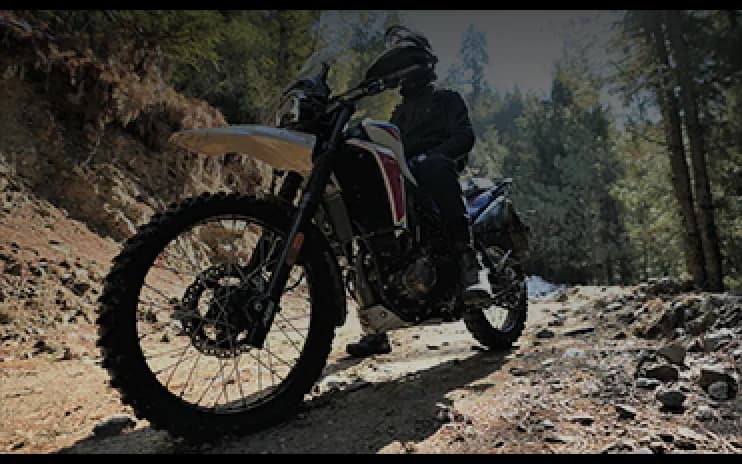
Hero’s Xpulse 210 arrives in Nepal as a focused dual-sport / entry adventure motorcycle, sitting above the earlier Xpulse 200 series and targeting riders who split their time between city riding and light to moderate off-road trails.
With an ex-showroom price of Rs 6.09 lakh for the Xpulse 210 variant, it occupies a niche between basic 150–160 cc commuter motorcycles and the larger, significantly more expensive adventure tourers. CG Motors Pvt. Ltd. is the authorised distributor, backed by a strong footprint for sales and aftersales across Nepal.
This positioning makes the Xpulse 210 particularly interesting for:
- Riders upgrading from 150–200 cc commuters who now want proper trail ability.
- Enthusiasts in hill districts where rough roads are a daily reality.
- Buyers who cannot stretch to big-capacity adventure bikes but still want genuine off-road hardware.
Looks, design and build
Visually, the Xpulse 210 stays true to the Xpulse family’s adventure theme: tall stance, high front fender, upswept exhaust and spoke wheels. The variant shares a robust semi-double cradle frame in high-tensile steel, engineered for stiffness and durability on mixed surfaces.
Key design elements include:
- Upswept exhaust, which helps with ground clearance and water crossings.
- Spoke wheel setup (21-inch front, 18-inch rear) with 90/90-21 front and 120/80-18 rear tyres, classic adventure-bike proportions that improve bump absorption and stability on loose surfaces.
- A new signature LED taillight, LED winkers with hazard switch, and a Class-D LED projector headlamp with DRL, giving a modern, functional lighting package.
The Base variant is offered in at least Glacier White and Wild Red colour options, emphasising a more youthful, trail-ready look. The Pro variant has a slightly taller and wider presence (overall width 884 mm and height 1348 mm) and a marginally higher kerb mass of 170 kg, which visually and physically makes it feel more substantial than the 168 kg Base.
Build quality, judged from showroom inspection and the specification sheet, is solid and purposeful rather than flashy. The semi-double cradle frame, rectangular swingarm with linkage rod, and long-travel suspension all indicate a design meant to take punishment from bad roads, rather than merely looking rugged.
Features and equipment
In equipment terms, the Xpulse 210 is properly modern for its class.
Shared safety and lighting equipment across Top, Base and Pro:
- Dual-channel ABS with three selectable ABS modes, allowing riders to tailor braking behaviour for tarmac and off-road.
- Front disc brake 276 mm (petal) and rear disc 220 mm (petal), giving confident stopping power.
- Class-D LED projector headlight with DRL, LED taillight, LED winkers, and hazard indicator switch.
Infotainment and convenience are a strong point:
- All variants get Bluetooth connectivity with call and SMS alerts, plus turn-by-turn navigation.
- The Base uses a 4.2" LCD instrument cluster, which keeps things simple and functional.
- The Pro steps up to a 4.2" TFT display, adding a more premium feel and clearer graphics, especially useful for navigation and riding data.
In terms of utility:
- The Top variant comes with a fitted luggage plate, a useful touch for carrying small bags or installing a top box.
- The Base variant does not get this luggage plate from the factory.
- The Pro variant’s underseat storage has not been officially disclosed, so buyers should check in person if underseat space is important.
Overall, the equipment list is well-judged for a dual-sport bike at this price: safety, core adventure hardware and basic connected features are all ticked.
Engine and performance
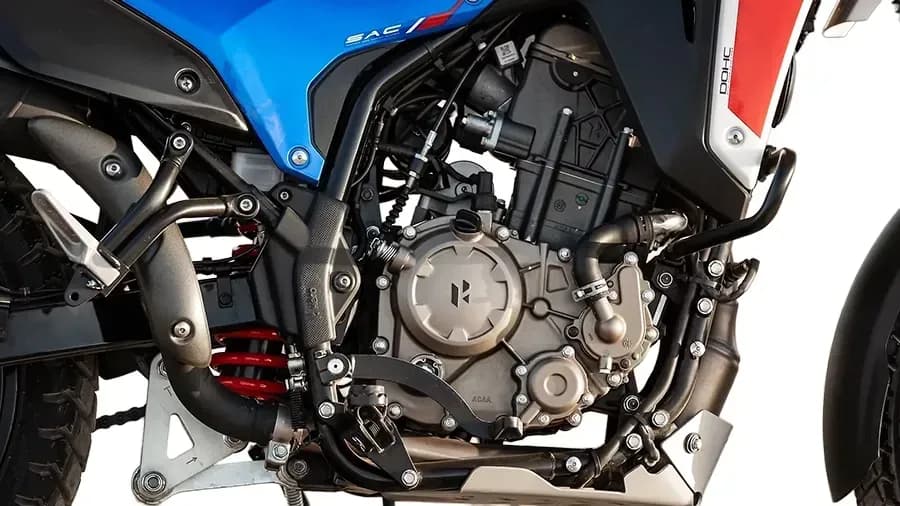
All variants of the Xpulse 210 share the same mechanical heart and drivetrain, which is the highlight of this motorcycle.
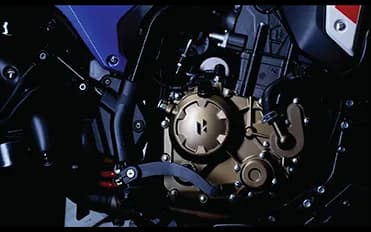
Engine and core specs:
- 210 cc, 4-stroke, 4-valve, single-cylinder, liquid-cooled DOHC engine.
- Bore and stroke: 73 mm x 50 mm.
- Compression ratio: 12:1, relatively high for this segment.
- Max power: 24.6 ps @ 9250 rpm.
- Max torque: 20.7 Nm @ 7250 rpm.
- Fuel delivery via fuel injection.
Transmission and drivetrain:
- 6-speed gearbox, a welcome upgrade over older 5-speed units in many 200 cc bikes.
- Wet, assist and slip clutch, reducing lever effort and helping smoother downshifts.
- Rectangular swingarm with linkage rod, emphasising control and feel over rough terrain.
On paper, this is a strong package for both highway and trail. The power figure and relatively high rev ceiling suggest a motor that likes to be revved, while the torque curve should give adequate punch for hill climbs and overtakes with luggage. Combined with a 6-speed gearbox, the Xpulse 210 should cruise reasonably at highway speeds, though it remains a 210 cc single, so expectations should be moderate compared with larger adventure tourers.
Fuel efficiency and official mileage figures for Nepal have not been clearly disclosed, which is a notable omission in a value-conscious market. Buyers will need to rely on dealer guidance and real-world owner feedback over time.
Ride, handling and comfort
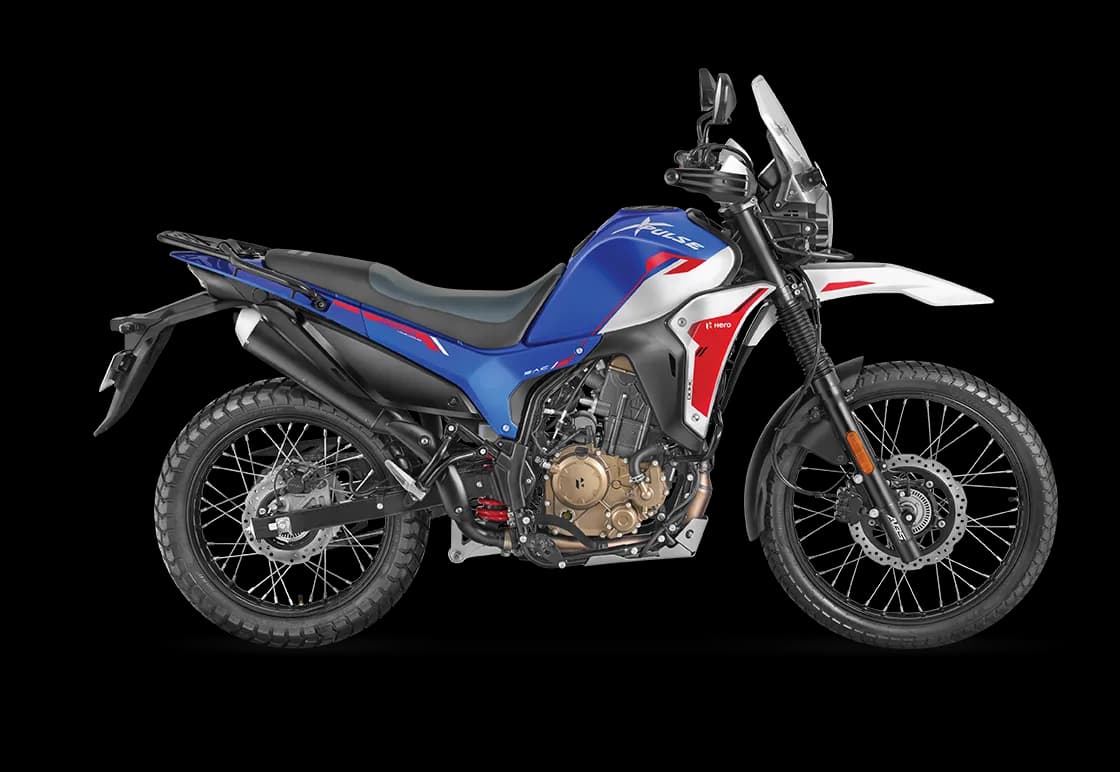
Adventure motorcycles live or die on how they ride over broken surfaces, and the Xpulse 210’s chassis numbers are encouraging.
Suspension setup (all variants):
- Front: Telescopic front forks, 41 mm diameter, with anti-friction bush and 210 mm travel.
- Rear: Rectangular swingarm with 10-step adjustable, gas-charged monoshock, 205 mm travel.
Geometry and dimensions:
- Wheelbase: 1446 mm for all variants.
- Ground clearance: 220 mm, which is generous and well in line with trail-bike expectations.
- Seat height: 830 mm, which gives the upright, commanding stance many adventure riders like.
The combination of long-travel suspension and high ground clearance should translate to confident rough-road performance: rutted village roads, construction zones and rocky hill tracks are exactly the environments this bike is designed for. The 21/18 spoke wheel setup improves bump absorption and control over gravel compared with typical 17-inch alloys.
Comfort, however, will depend heavily on rider height and experience. At 830 mm seat height and around 168–170 kg kerb mass, the Xpulse 210 can feel tall and a bit demanding for shorter or new riders, especially during low-speed manoeuvres or off-road sections. Experienced riders will appreciate the stance and suspension, but first-time buyers moving up from low-seat commuters should sit on the bike and test its weight balance at the showroom.
The adjustable rear monoshock is a plus: riders can tune the suspension somewhat for solo, pillion or light luggage use, improving comfort and control.
Practicality and running costs
From a practicality standpoint, the Xpulse 210 is designed more as a dual-sport tool than a pure commuter.
Positives:
- 13-litre fuel tank across variants, offering decent range even if the mileage is average.
- Strong ground clearance and suspension travel make daily bad roads less stressful.
- Dual-channel ABS with off-road modes boosts safety in mixed conditions.
Limitations:
- Official mileage figures for Nepal are not disclosed, which complicates running-cost calculations at buying time.
- Cargo and underseat storage are limited: only the Top variant gets a factory luggage plate; underseat storage information is incomplete.
- The seat height and overall weight make it less convenient for frequent short hops or heavy urban stop-go traffic for shorter riders.
On the ownership side, Hero’s network via CG Motors is a strong plus in Nepal, especially outside the Kathmandu Valley. Spares and service availability should be reasonable, given Hero’s broader presence, though the Xpulse 210’s more specialised hardware (like long-travel suspension components) will be worth tracking over time.
Price, variants and which one to pick
As per current data, the Xpulse 210 range in Nepal is priced at Rs 6,09,900 ex-showroom for the Xpulse 210 variant.
How the variants stack up:
- Xpulse 210: Mechanically identical to the others, with luggage plate fitted and the full safety and connectivity package. Our value judgement is that Xpulse 210 offers strong hardware for the price, especially for riders who will genuinely use the off-road capabilities.
For most buyers, the decision should be driven by how much they care about the instrument cluster and small practicality touches. If the budget allows, the Pro is arguably the sweet spot thanks to the TFT and presence; if you value the luggage plate more and find a good deal, the Top makes strong sense. The Base is the more no-frills choice, but its price being close to Top means you should carefully compare on-road quotes.
How it compares with real rivals in Nepal
Direct rivals to the Xpulse 210 in Nepal are other entry-level adventure or dual-sport bikes in the 180–250 cc band. Many of them use air- or oil-cooled single-cylinder engines, 17-inch wheels and more modest suspension travel.
Against that backdrop, the Xpulse 210’s liquid-cooled 210 cc DOHC engine, long-travel suspension (210 mm front, 205 mm rear), 21/18 spoke wheel setup, and 220 mm ground clearance give it a clear mechanical advantage for genuine trail riding.
In equipment terms, dual-channel ABS with three modes, Bluetooth connectivity, turn-by-turn navigation and LED lighting also put it ahead of older or more basic rivals that may only offer single-channel ABS and simple analogue/digital consoles.
Price-wise, sitting at Rs 6.1 lakh, it will often be slightly more expensive than basic 200 cc road bikes but cheaper than larger 250 cc or twin-cylinder adventure machines. For riders in Nepal who prioritise off-road competence and modern features over outright power or touring luxury, the Xpulse 210 is one of the more compelling options currently available.
Verdict: who the Xpulse 210 suits
The Hero Xpulse 210 is best viewed as a serious dual-sport motorcycle for riders who will truly exploit its capabilities. Its strengths lie in:
- A robust, modern 210 cc liquid-cooled DOHC engine with healthy performance.
- Long-travel suspension, high ground clearance and 21/18 spoke wheels tuned for rough terrain.
- Dual-channel ABS with off-road modes and useful connectivity features.
It is not the ideal choice for every Nepali rider. Those who mainly ride short city commutes, rarely leave smooth tarmac, or are concerned about high seat height and weight may find a more conventional commuter or street bike easier to live with. The incomplete official mileage information and limited cargo solutions also mean dedicated tourers will need to plan more carefully.
However, for the enthusiast who enjoys weekend trails, frequently travels on broken hill roads, or simply wants a motorcycle that feels ready for Nepal’s unpredictable surfaces, the Xpulse 210 offers a genuinely capable package at around Rs 6 lakh. Among entry-level adventure bikes in the country, it stands out as a thoughtfully equipped, mechanically serious option — provided you are ready to grow into its height and off-road focus.
Explore full specifications, variants & ownership context
Know the product
Key specifications, features & ownership context
Choose a variant to see its recorded specifications and features. Equipment and prices can change across trims.
Latest catalog and directory records supplement the original analysis. Figures may have changed since publication; individual specification and price-check dates appear below.
Rs 6.15 lakh ex-showroom · source checked 18 Oct 2026
Engine & performance
| Specification / feature | Xpulse 210 |
|---|---|
| Engine displacement | 210 ccVerified specification · 31 Jul 2026 |
| Max power | 24.6 PSVerified specification · 31 Jul 2026 |
Brakes, tyres & suspension
| Specification / feature | Xpulse 210 |
|---|---|
| ABS | ABSVerified specification · 31 Jul 2026 |
Dimensions & weight
| Specification / feature | Xpulse 210 |
|---|---|
| Ground clearance | 220 mmVerified specification · 31 Jul 2026 |
Showroom & service support
Distributor: CG Motors Pvt. Ltd.
93 listed brand showrooms · 33 listed brand service locations
Listed cities include Baglung, Banepa, Banganga, Bhairahawa, Bhaktapur, Bharatpur and 41 more.
Brand-wide directory coverage. Confirm that your nearest workshop supports this exact model, powertrain and warranty work; ask about parts availability and booking time.
Market buzz & buyer priorities
Compiled discussion, including buyer reactions and ownership reports; this is not a verified owner survey or a reliability score. Research dated 30 Sept 2026.
What people like
- Significant performance upgrade over the 200cc model with the new liquid-cooled engine
- Excellent off-road capability with 220mm ground clearance and 21-inch front wheel
- Improved highway cruising comfort due to the 6-speed gearbox
More feedback
- Modern features like the TFT display and switchable dual-channel ABS
- Nepali riders see the Xpulse 210 as a practical all-rounder for Kathmandu commuting, highway trips, hill roads and occasional trails.
Concerns to investigate
- out of stock for a month
- Reports of early engine oil leakage issues near the coolant pump
- Concerns regarding high cost of spare parts and maintenance
More feedback
- Increased weight (170 kg) compared to the previous Xpulse 200
- Tall seat height (830 mm) can be challenging for shorter riders
- Delivery timing and the arrival of new batches have been recurring concerns among Nepali buyers.
What buyers ask for
- Ground clearance for rough mountain roads
- Service network and spare parts cost
- Real-world mileage in Kathmandu traffic and on hill roads
Nepal ownership context
- Widely seen as a superior choice for Nepal's diverse terrain compared to the CFMoto 250 Dual due to Hero's established service network
- Buyers frequently compare it against the CFMoto 250 Dual and Honda XR190L
- Service and parts availability are major decision factors for Nepali buyers
More feedback
- Nepali buyers value its 220mm ground clearance, long-travel suspension and dual-purpose setup for broken urban roads, hill routes and light off-road use.
- The bike is available through Hero's Nepal sales and service network, but buyers continue to ask about delivery batches, spare-part timing and long-term service experience.
- Its 830mm seat height is viewed as more manageable than the Xpulse 200 Pro for many riders, although shorter riders still need to check reach and balance in person.
Use these facts alongside the article’s full analysis. Check the final quotation, warranty terms and exact equipment before booking.
Evidence & next steps
Check the details before you buy
Use this guide to build a shortlist. Ask for a written quotation for your chosen variant, including registration, taxes, insurance and finance charges. Confirm the nearest authorised workshop supports that model.
Price sources and dates
These are the recorded distributor-source checks for the selected overview trims. They are separate from the article update and catalog read dates; they do not mean every trim was rechecked today. Confirm the final price with the distributor.
Overview photos come from the corresponding model records; additional article photos carry their own credits. Running costs depend on usage, energy prices, maintenance, insurance and resale value.