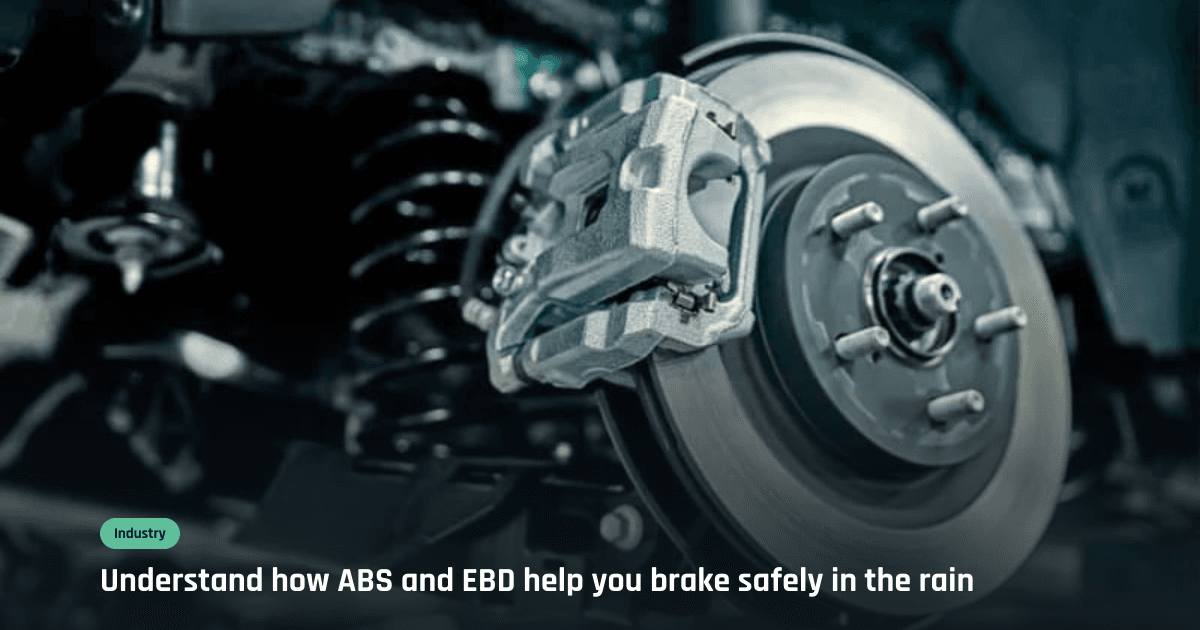
As monsoon rain makes Nepali roads wet and slippery, sudden braking becomes much more risky. Hard braking on a slick surface can quickly lead to wheel lock, skidding and loss of steering control.
What ABS does
Anti-lock Braking System (ABS) is designed to stop the wheels from fully locking during emergency braking.
- Sensors monitor the speed of each wheel.
- The system rapidly increases and decreases brake pressure several times per second.
- Because the wheels keep rotating instead of locking, the driver can still steer the vehicle while braking hard, helping avoid obstacles and reduce accidents on slippery roads.
What EBD adds
Electronic Brakeforce Distribution (EBD) adjusts how much braking force goes to each wheel.
- It looks at vehicle speed, load distribution and whether the vehicle is turning.
- Since passengers, cargo and road grip are rarely equal at all four wheels, EBD sends more or less braking power where it is needed.
- This helps the car stay balanced and stable under braking, especially when the road is patchy, uneven or partly flooded.
Which is safer: ABS or EBD?
Instead of choosing one, buyers should understand that ABS and EBD work best together.
- With only ABS, the car is less likely to skid and the driver keeps steering control.
- With ABS plus EBD, the vehicle can usually stop in a shorter distance and remain more stable because the braking force is distributed correctly to each wheel.
For Nepali car and bike shoppers, looking for models equipped with both ABS and EBD is one of the most effective ways to improve safety during the rainy season and on unpredictable rural roads.
Writes on vehicle pricing, taxation and the Nepali auto market from ongoing tracking of distributor price lists. Editorial policy.