Home / New Car Prices / Geely / Galaxy EX5 EV
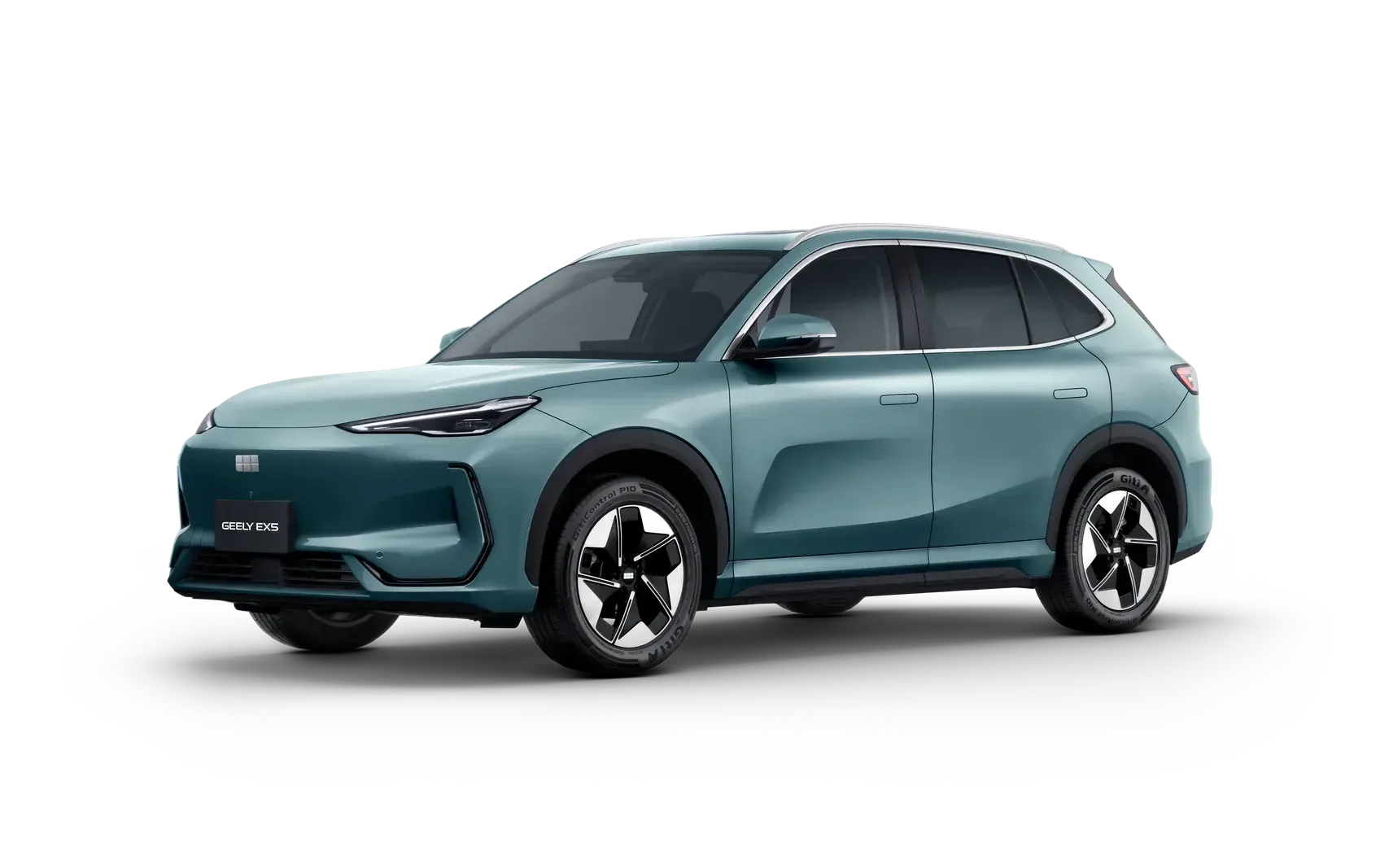
Geely Galaxy EX5 EV Price in Nepal
The Geely Galaxy EX5 EV price in Nepal ranges from Rs 57.99 lakh to Rs 67.99 lakh (ex-showroom), across 2 variants.
About the Geely Galaxy EX5 EV
The Geely Galaxy EX5 makes a decent value case for Nepal's electric SUV buyers. It pairs a single-motor, front-wheel-drive setup with a large battery and a long features list, most of which shows up properly in the higher trim. In the current Nepal lineup, the Pro is priced at Rs 57,99,000 and the Max at Rs 67,99,000. The Max carries the fuller equipment set and most of the visual and comfort highlights.
Editorial overview compiled from official specs and Nepali/Indian auto sources · as of 16 Aug 2026.
Design & styling
The EX5 has the clean, modern proportions of a mainstream electric SUV. It doesn't try to look like a flashy crossover, which should suit Nepali buyers who want something premium without shouting about it. Dimensions sit firmly in the mid-size SUV bracket, with a long wheelbase that makes it look planted on the road. That wheelbase should also mean better cabin packaging than smaller, city-focused EVs. On the Max, the extra visual appeal comes less from bodywork and more from upscale details and equipment. It simply feels like the better-appointed version in the range.
Performance & drivetrain
Both Nepal variants use the same single front motor, 160 kW and 320 Nm. The Max is not the faster car. The real difference between the two trims is equipment, not powertrain. The claimed 0-100 km/h time is quick enough for city passing and highway merging. Front-wheel-drive layout and instant EV torque should make it easy to live with in Kathmandu traffic and on the highway corridors that matter most here. The battery is a 60.22 kWh LFP pack, and Geely claims a WLTP range of around 425 km on the Max. That's a practical figure for daily use and occasional intercity runs, as long as charging access is planned properly.
Variant-wise price list
Every Geely Galaxy EX5 EV trim on sale in Nepal, at ex-showroom prices.
| Variant | Ex-showroom price |
|---|---|
| Pro | रु 57,99,000 |
| Max | रु 67,99,000 |
Ex-showroom prices researched from official LRR Motors Pvt. Ltd. sources.
What it actually costs
Pick a variant and a province — ex-showroom, tax, insurance and EMI all update together.
Ex-showroom prices as published by LRR Motors Pvt. Ltd. Road tax follows the selected province's schedule; third-party insurance follows the fixed NIA motor tariff.
Based on a 160 kW engine/motor. Non-Bagmati province rates are single-source/indicative. Third-party cover is compulsory and priced at the fixed NIA tariff — identical at every insurer. Bank lending rates vary (Asar 2083 (June/July 2026)).
Or open the tax calculator for the full provincial schedule.
Key specs & features
The figures buyers ask for first, per variant — drivetrain, seating, safety kit, screen, charging and clearance. Only what we hold a real source for is listed; anything we have not confirmed is left out rather than guessed.
Figures marked with a source come from the distributor's own specification sheet or official brochure. Specifications can change without notice — confirm the exact trim with the distributor before you buy.
Where the variants actually differ
7 categories separate these variants. Everything else is shared across the range.
Variants differ in: Motor, Power & Drivetrain, Dimensions, Cargo, Comfort & Interior, Infotainment & Convenience, Safety, Design & Exterior — highlighted below.
| SPEC | Pro रु 57,99,000 | Max रु 67,99,000 |
|---|---|---|
Motor, Power & Drivetrain varies by variant |
|
|
Dimensions varies by variant |
|
|
Cargo varies by variant |
|
|
Comfort & Interior varies by variant |
|
|
Infotainment & Convenience varies by variant |
|
|
Safety varies by variant |
|
|
Design & Exterior varies by variant |
|
|
Amber rows mark a genuine difference between variants. Grey italic means the figure has not been published for Nepal — we leave the gap visible rather than filling it from another market's spec sheet. Specs verified against the official brochure. Anything the brochure does not print is researched from official sources and Nepali auto portals.
Buying the Pro
Geely Galaxy EX5 EV rivals in Nepal
Other cars in Nepal priced close to the Geely Galaxy EX5 EV.
What Nepali buyers & owners are saying — Geely Galaxy EX5 EV
Compiled from Reddit, Quora, YouTube comments, Nepali auto groups and forums.
- Most discussion is speculative because the Galaxy EX5 is not yet widely delivered or reviewed by Nepali owners; people refer to Chinese/foreign reviews and try to map to Nepali conditions
- Buyers worry about ground clearance and suspension durability on rural and hilly Nepali roads
- Potential buyers repeatedly ask about fast-charging options along highways like Kathmandu–Pokhara and Kathmandu–Biratnagar before considering a large EV SUV for family use
- Service network and availability of Geely-trained technicians beyond Kathmandu/Lalitpur is a key hesitation point
- Price expectations are benchmarked against other EV SUVs like BYD Atto 3 and MG ZS EV rather than small EV hatchbacks
- LRR Motors is the authorized distributor in Nepal
- Price starts at Rs 59.99 Lakh for the Pro variant
- Availability of service centers is limited to major cities
“Too expensive.. There are much better option in this price range..”
“Worst design for this price”
“People are saying this Geely Galaxy EX5 looks good, but without clear Nepal price and service info it’s hard to trust a new Chinese EV brand compared to BYD, which is already here.”
“If Geely brings Galaxy EX5 to Nepal, ground clearance and battery performance on hills will matter more than its fancy interior.”
“Nice specs on paper, but unless there’s a proper Geely showroom and EV service center outside Kathmandu, I won’t risk buying this SUV.”
“The Geely EX5's range is impressive, but I'm concerned about the limited service centers in Nepal.”
AI-compiled from publicly available online discussion (YouTube review comments, forums and Q&A sites) · confidence: medium · as of 26 Jul 2026. Quotes are paraphrased summaries of common opinions, not verbatim. Sources: youtube.com, youtube.com, youtube.com, youtube.com, facebook.com, facebook.com
Owners in China have lived with this for 2 years
The Geely Galaxy EX5 EV has been on sale in China longer than in Nepal, so owners there have answered questions Nepali owners are only starting to. This sits alongside the Nepali sentiment above — it does not replace it. It is sold there as the Geely Galaxy E5.
- Chinese sources state that the Galaxy E5 (EX5 globally) uses a single front motor with about 160 kW output and multiple battery options; Nepali listings often mention a specific trim such as EX5 Pro, so battery capacity, wheel size, and driver‑assist feature sets may differ between the Chinese range and the Nepal‑spec configuration.
- Chinese models are sold across five main trim levels with varying equipment (such as advanced driver‑assist, interior materials, and wheel designs), while Nepal appears to offer a narrower selection, so some Chinese owner complaints or praise may relate to features or options not fitted to the Nepal version.
- Nepal version may get different battery sizes or trim levels; some high-tech features (like LiDAR or roof-mounted lexars) available in updated Chinese versions may not be included in Nepal imports; local suspension tuning may be adjusted for road-conditions; RHD/LHD variants differ.
Resale value, service and spare-part costs, warranty terms and charging coverage are set by each market — different duty, different dealer networks, a different used-car market. Read these as context on the vehicle's reputation, never as figures for Nepal.
- Chinese discussions place strong emphasis on the Galaxy E5’s value relative to local competitors and taxation, but those price and tax judgments do not apply to Nepal.
- Owner comments about ease of getting warranty service, spare parts availability, and dealer coverage are specific to Geely’s Chinese network and cannot be assumed for Nepal.
- Resale expectations and insurance packages discussed by Chinese owners are tied to China’s used‑EV market and regulatory environment and should not be extrapolated to Nepal.
- Chinese charging‑network experiences (including density of fast chargers and integration with local apps) reflect China’s infrastructure and will differ from Nepal’s situation.
- Resale values are specific to Chinese subsidies and demand; service cost lower in China with local parts and dealer network; charging infrastructure density is much greater in China; warranty terms may differ by market.
Owner satisfaction in China: 81/100. This is a reading of China owners only — it is not a Nepal sentiment score and is not counted in one. AI-compiled from publicly available owner discussion in China · confidence: medium · as of 29 Aug 2026. Sources: paultan.org, paultan.org, guanshanhu.english.guiyang.gov.cn, carnewschina.com, carnewschina.com, en.wikipedia.org
No customer reviews yet. Owned or driven the Geely Galaxy EX5 EV? Be the first to review it.
Where to buy it
Every outlet below is an authorised Geely dealer. We show what we can verify — an outlet with no published number is listed separately rather than shown as a dead card.
Showing the 6 most contactable outlets of 15 in Nepal — see all Geely outlets →
Frequently asked questions
Reviewed by Ajit Narayan Singh, Editor · prices & specs compiled from official brand and distributor sources, last verified August 21, 2026 · how we verify